

 1 hour ago
6
1 hour ago
6
ARTICLE AD BOX
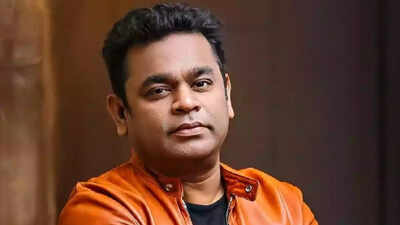
'I compose for the human emotions': A.R. Rahman opens up on Hans Zimmer collaboration for 'Ramayana' and 'Batwara 1947'
For more than three decades, A.R. Rahman has remained one of the most influential forces in music, constantly reinventing himself while staying rooted in emotion. From transforming the soundscape of Indian cinema with 'Roja' to earning global acclaim through international collaborations and Academy Awards, Rahman has built a career defined by innovation.
Yet, despite embracing new technology and musical trends, he continues to believe that authentic emotions remain the foundation of every memorable composition.Currently, the composer is juggling several ambitious projects, including 'Main Vaapas Aaunga', 'Batwara 1947', and director Nitesh Tiwari's 'Ramayana', for which he is collaborating with acclaimed composer Hans Zimmer. Amid these ventures, he is also preparing to release a special independent track recorded with legendary singer Asha Bhosle, a collaboration he describes as a celebration of one of music's most enduring voices.
A.R. Rahman on why some songs survive changing trends
The music industry has witnessed dramatic changes in the way audiences consume songs, moving from cassette tapes and compact discs to streaming platforms that offer unlimited access. However, Rahman believes that the emotional impact of music has remained constant despite these technological shifts.“If a song has the emotion it will always find place in the heart. Human emotions have not changed. A person today can still hear a song at the right moment in life and carry it forever," said the composer in a conversation with Variety India.
According to him, while music is now more accessible and released at a much faster pace, genuine artistry continues to resonate with listeners long after trends fade away. “Today music has faster access and more songs are released than before, but if the song carries honesty and truth, it will survive beyond just being a trend.”A.R. Rahman's upcoming projects 'Main Vaapas Aaunga' and 'Batwara 1947' explore narratives linked to the Partition of India, one of the most painful chapters in the subcontinent's history.
Rather than focusing on historical events alone, Rahman says he is drawn to the deeply personal emotions embedded within these stories.“I am fortunate to work with filmmakers who explain and create the world the way they are seeing it. A lot comes from the directors vision, what they see in the story and the emotions they want the audience to carry become the backbone of what the music then has to communicate.”For him, music serves as a bridge to universal feelings of longing, loss and belonging.
“So when I approach a story like this, I don’t try to compose for the historical event itself, I compose for the human emotions within it. A mother’s longing, a friend’s separation, a shared memory of home. Those feelings are timeless. If the music can capture that humanity, it allows us to remember not only what was broken, but also what survived.
”Throughout his career, Rahman has consistently introduced emerging artists and new voices to mainstream audiences.
He credits his own breakthrough to the trust placed in him by filmmaker Mani Ratnam and believes established artists have a responsibility to support newcomers.“I think each generation has the responsibility to create space for the next one. Mani sir trusted me with Roja at a time when I had only done jingles. That kind of faith can change a person’s life.”The feted music composer further explained that fresh talent plays a crucial role in keeping music vibrant and relevant.“So when I hear a fresh voice or discover a young musician with something unique, I remember those opportunities I received. Familiarity becomes boring beyond a point, everyone is looking for what’s new, what’s next and then newer talent brings fresh perspectives, new influences and energy that keeps music evolving. So I try and balance both.”
A.R. Rahman's take on why AI cannot replace human creativity
As discussions around artificial intelligence continue to reshape creative industries, Rahman remains optimistic about the role technology can play in music.
Having embraced technological advancements throughout his career, he views AI as another tool that can assist artists rather than replace them.“Any form of technology helps us push our creative boundaries, but it cannot replace creativity itself. It learns from the environment we have built, it continues to learn from our shared experiences.”Drawing parallels with earlier innovations such as synthesizers and digital recording, he believes technological progress has historically expanded artistic possibilities.“When synthesizers arrived, people were worried. When digital recording came in again people were concerned. But these tools gave artists new ways to express themselves. I see AI in a similar way. It can help musicians experiment, learn, and work more efficiently, but it cannot replace the heart of it all, the human emotion.”“It is not about humans versus technology, it’s about how the two can work together to create something meaningful.”Despite achieving extraordinary success and recognition, Rahman says he is still motivated by curiosity and inspiration rather than any sense of incompleteness. Whether it comes from a story, a sound, a prayer or even silence itself, inspiration continues to drive his creative process. Even after decades of redefining musical boundaries, A.R. Rahman continues to approach every new project with the curiosity of a newcomer, proving that true artistry lies not in reaching a destination, but in constantly discovering new ways to listen.








 English (US) ·