

 1 hour ago
5
1 hour ago
5
ARTICLE AD BOX
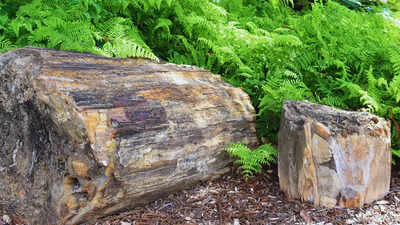
Petrified tree fossil - Representative Image
I never shied away from telling people that for me, personally, Madhya Pradesh is easily in the top 3 best destinations in India for travellers of all kinds and budget. I will not be naming the other two for peace’s sake! From the big cats of Kanha to the river islands of Hanuwantiya and more, Madhya Pradesh has never failed to impress me as a traveller, and a solo one at that.I had planned for a 15-day long holiday in Madhya Pradesh, with no set itinerary. “Let’s see where the road takes me,” was what I had in mind. This part of my MP trip started from Kanha. The drive from Kanha National Park went without any problems. Smooth, scenic, solitary was the vibe. My target destination was Bandhavgarh National Park.The taxi driver shared whatever information he could on things to do in Madhya Pradesh, places to visit, food to try…The gentleman aced as an unofficial tourist guide.
It was also him who brought me to the place that we are going to explore here. “Pathar ke ped” he said. For the life of me, I could not guess. About 70 km or so from Kanha National Park, on the way to Bandhavgarh (if you don’t mind a slight detour) there lies Ghughwa Fossil National Park.
Unheard of, I checked on Google what this place was all about. Google showed a dinosaur head, and even thought, “is this man taking me to some local amusement park with a styrofoam dinosaur head and whatnot?”
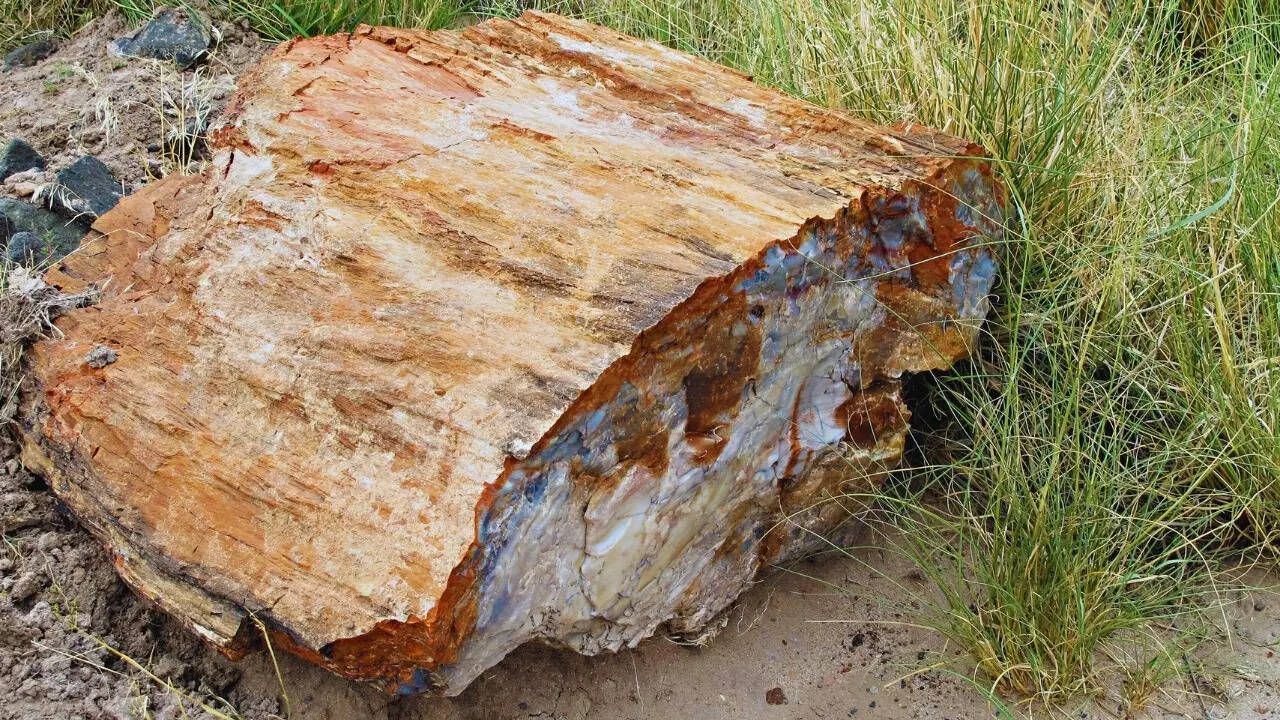
Petrified wood - Representative Image
Ghughwa Fossil National Park was anything but that.
For someone who truly believes in the phrase, “old is gold,” I was soon going to see what I could only describe later as one of the best trips in my life.So, back in the 1970s, Dr. Dharmendra Prasad, a researcher and an archaeologist, discovered the site we now know was Ghughwa. Ghughwa Fossil National Park in Dindori was officially established as a National Park in 1983 to protect rare plant and animal fossils dating back 40 to 150 million years.
And I was there to see.I bought myself a ticket at the entrance and just wandered off to the nearest building I could find. You see, Ghughwa is unlike any other national park. When you hear ‘national park’, you instantaneously imagine forest, animals, birds. This was all that but in a different way. The ‘forest’ we will come to in a bit, and for animals and birds, all I had was a dead bat hanging from the electrical lines running overhead.I entered what looked like an old school classroom, and saw some ‘rocks’ on display. Since I didn't know what exactly they were, I had to read the information box. Turns out, these were fossils dating millions of years. Some were eggs! Dinosaur eggs? We don’t know, but fossilised eggs nonetheless. Things were starting to change for me, the “old rocks” captured my attention and I ended up spending a good half an hour reading every little information and looking at the fossils they had on display.
I was the only visitor there. I honestly thought this was it, my Ghughwa fossil tour was over. Little did I know that this was just the beginning.A guide appeared outside the display room and asked me if I would like to now see the site. Of course I said yes! A short walk from the building, there was, what seemed to be, a very dry forest. Sun was up, the dead bat was hanging right above me, things were looking a bit un-lively to me.
We walked and the forest floor rustled a lot. “Noisy forest,” I grumbled. By now, we were joined by a couple more visitors, and the park guide was giving out all very interesting things about the park.
I thought knowledge can also be had whilst sitting down, so why not sit down on one of the many rocks lying there. Just as I began to stretch my legs and adjust my back, the guide turned the group’s attention towards the general direction of where I was sitting.
“So the rocks (air quotes!) you see here, like this one….they are approximately 65 million years old.” Oh dear Lord, I was sitting on a 65-million-year-old fossil.
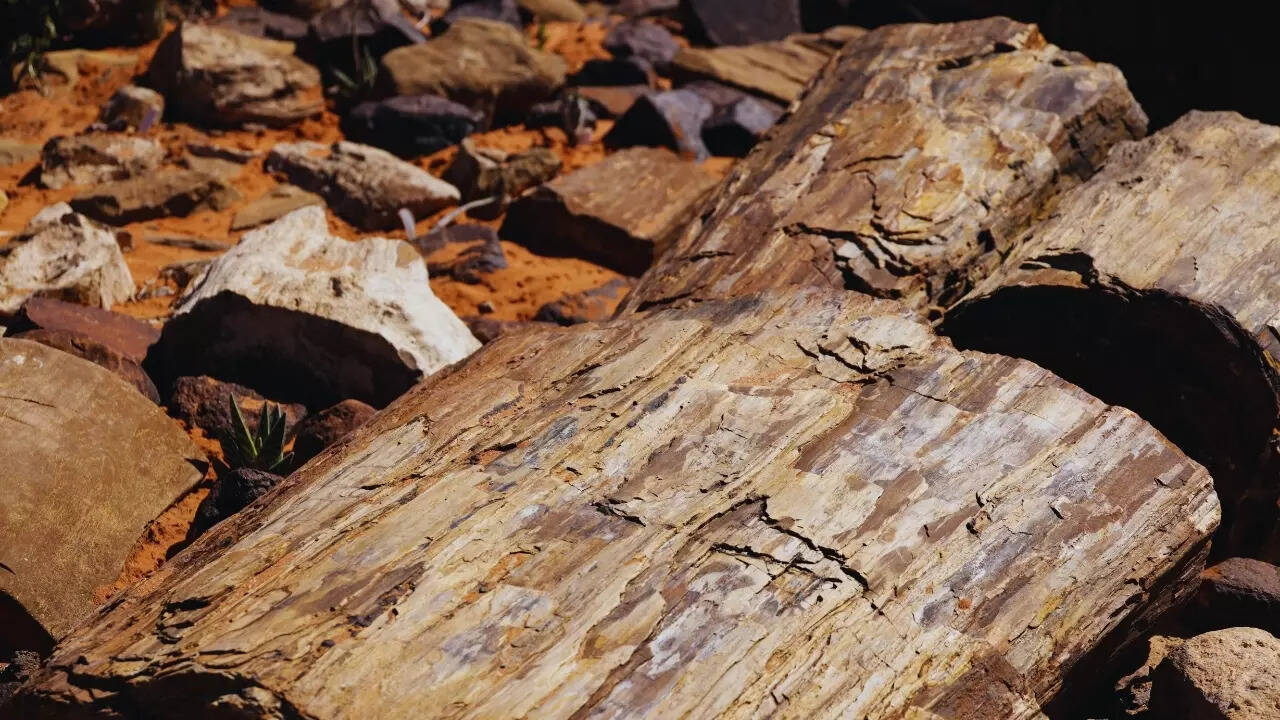
Tree fossil - Representative Image
Yes, I sat on a 65-million-year-old fossil, and why I’d do it again: It almost felt like I was a part of this incredible drama of continent shifting, and millions of years of history getting imprinted on the rocks. Right then and there, I was a part of the Earth’s history, a teeny tiny part, but a part nonetheless. To be precise, it was a fossilised eucalyptus tree from the time when this particular spot was a part of the southern supercontinent – the Gondwanaland. We have all read about this in school. That day I came to know that the present-day Indian landmass was once connected to Africa and Australia, forming a vast supercontinent. The petrified fossil that we have in front of us belonged to a tree species now found only in India.
Its presence in Ghughwa, so far away from present-day Australia only proves this theory of a supercontinent. Over time, this enormous landmass split apart due to continental drift, eventually giving rise to separate continents - Africa, South America, Antarctica, Australia and the Indian subcontinent.That day I learned about petrified fossils. For those new to this, petrified tree fossils form through a process called permineralization, in which a fallen tree is rapidly buried by sediment, volcanic ash, or mud, protecting it from decay.
Over time, mineral-rich groundwater containing silica seeps into the buried wood and gradually replaces the organic material cell by cell. As the original tissues dissolve, minerals crystallize in their place, preserving fine details such as tree rings and cellular structures.Besides me sitting on a fossilised tree, everything was so interesting, informative and so different from our normal national park trips. In front of me lay a very dried up forest (due to the season I am sure) and heaps of some incredibly old ‘former trees’ from what is now land down under and land far far away.Did I love the experience? Absolutely.Will I visit again? Absolutely.Should travellers consider this national park? Absolutely.







 English (US) ·