

 1 week ago
14
1 week ago
14
ARTICLE AD BOX
4 min readNew DelhiUpdated: Feb 27, 2026 07:31 PM IST
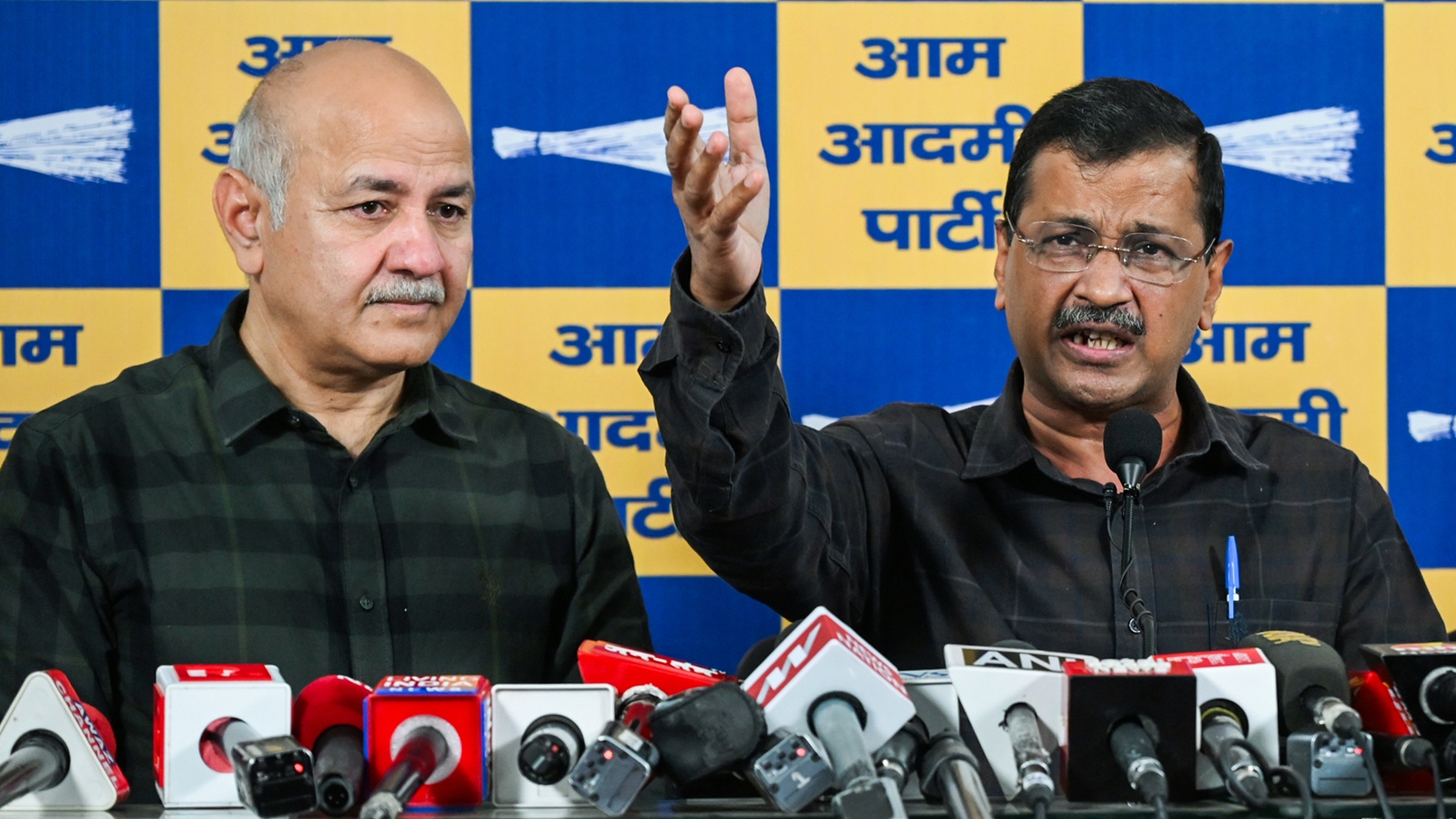 Aam Aadmi Party national convener, Arvind Kejriwal, addresses a press conference after a Delhi court acquits him in the Delhi excise policy case, at the party's office in New Delhi on Friday. Party leader Manish Sisodia also present. (ANI Photo/Jitender Gupta)
The Delhi trial court’s order Friday discharging former Delhi Chief Minister Arvind Kejriwal and his former deputy Manish Sisodia, along with 21 others, in the CBI case in the alleged liquor policy scandal is also a blow to the Enforcement Directorate’s money laundering probe in the matter.
The Supreme Court’s landmark 2022 ruling in Vijay Madanlal Chaudhary v Union of India held that once an accused is discharged or acquitted in the predicate offence, the money laundering cannot be sustained.
Citing the 2022 ruling, the trial court, in its 598-page order, said “if the foundation crumbles, the superstructure must necessarily fall”.
“The offence under the PMLA (Prevention of Money Laundering Act, 2002) is not autonomous in its origin, but is inextricably linked to the existence of a legally sustainable scheduled offence. The predicate offence constitutes the foundational edifice upon which the allegation of money laundering rests; if the foundation crumbles, the superstructure must necessarily fall,” it said.
The discharge is a shot in the arm for AAP leaders and the other accused in the case. While 23 individuals, including Kejriwal and Sisodia, were named as accused in the CBI case, the ED case has 40 accused. Several companies and, in a first-of-its kind move, even the AAP was named as accused in the ED case.
An ED case under the PMLA is often termed both a “standalone” offence and “linked to the predicate offence”. Essentially, this means that the ED can begin an inquiry for alleged generation or use of “proceeds of crime” against a person even without a conviction in the predicate offence. The predicate offence can be ongoing or undecided while the ED establishes its case.
In the alleged excise policy scandal, the ED had summoned Kejriwal when he was not even named as an accused in the CBI case, arguing that money laundering is a standalone case. Given that bail conditions under the PMLA are stringent and carry a reverse burden of proof, arrest in ED cases, even when the trial in predicate offence is yet to move, is onerous on the accused.
Story continues below this ad
“It is noticed that, in several cases, the Enforcement Directorate proceeds to file a prosecution complaint primarily to obviate the statutory consequence of default bail, without the investigation in the scheduled offence having attained finality. In such situations, while the proceedings under the PMLA are set in motion, the investigation in the predicate offence continues to remain inconclusive, and in many cases even the filing of a charge-sheet therein is awaited. This Court itself is a witness to a case where the proceedings relating to money laundering have reached the final stage of arguments on charge, whereas, in the predicate offence, the investigation is still underway to determine whether any offence has been committed at all,” the trial court said.
However, ED offences are essentially anchored to the predicate offence. It means that the ED case has to necessarily stem from a predicate offence. When a court discharges or acquits the accused, then the ED case cannot be sustained.
According to the 2022 Supreme Court ruling, the ED cannot prosecute any person on “notional basis” or on the assumption that a scheduled offence has been committed, unless it is so registered with the jurisdictional police and/or pending enquiry/trial including by way of criminal complaint before the competent forum. This means the ED case has to necessarily follow a predicate offence case. Therefore, as a corollary, once the predicate offence goes, the ED case also must go.
In the ruling, the Supreme Court stated that “if the person is finally discharged/acquitted of the scheduled offence or the criminal case against him is quashed by the Court of competent jurisdiction, there can be no offence of money-laundering against him or anyone claiming such property, being the property linked to the stated scheduled offence through him”.
Story continues below this ad
Following the trial court ruling Friday, the CBI also moved an appeal in the High Court against the judgment. Unless the trial court order discharging the accused is stayed, the ED case cannot continue.

Apurva Vishwanath is the National Legal Editor at The Indian Express, where she leads the organization’s coverage of the Indian judiciary, constitutional law, and public policy. A law graduate with a B.A., LL.B (Hons) from Dr. Ram Manohar Lohiya National Law University, Apurva brings over a decade of specialized experience to her reporting. She is an authority on judicial appointments and the Supreme Court Collegium, providing critical analysis of the country’s legal landscape. Before joining The Indian Express in 2019, she honed her expertise at The Print and Mint. Follow her insights on the intersection of law and governance on Twitter ... Read More
Stay updated with the latest - Click here to follow us on Instagram
© The Indian Express Pvt Ltd






 English (US) ·