

 17 minutes ago
1
17 minutes ago
1
ARTICLE AD BOX
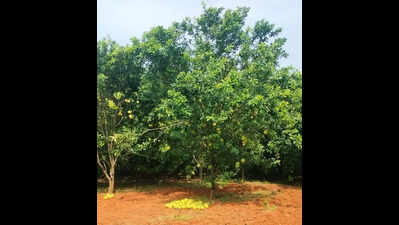
Scientists from the Bengaluru-based Indian Institute of Horticultural Research (IIHR) at Hesaraghatta have developed new variety of native Chakkota (Pummelo)--a large citrus fruit with more pulp and thin rind along with a flavour of sweet orange.
Bengaluru: Once a common sight in the orchards and homesteads around Devanahalli on the outskirts of Bengaluru, the GI-tagged Chakkota (Pummelo) has now largely disappeared from commercial cultivation, surviving mostly in backyard gardens.
In an effort to revive the nearly-forgotten citrus fruit and restore its commercial viability, scientists at the Indian Institute of Horticultural Research (IIHR), Hesaraghatta, have developed a new pummelo variety — Arka Siva — suited for large-scale cultivation in the dry landscapes of Bengaluru Rural, Chikkaballapura and Kolar districts.IIHR scientists said the new variety not only overcomes the major drawbacks associated with traditional pummelo varieties, but also introduces a distinctive sweet orange-like flavour aimed at improving consumer acceptance and market demand. Prof M Sankaran, a scientist at IIHR, told TOI the new variety was developed after years of research involving the collection and evaluation of seeds from several known pummelo varieties.
“The latest variety is a half-sib selection (best extracted seed with high yield and better growth) from Tirupati-2 variety. The major drawbacks in the existing varieties include bitterness, thick rind and too many seeds,” he said.According to scientists, the new variety records a total soluble solids (TSS) value of 12.2 Brix and acidity levels between 0.7% and 0.8%, resulting in a balanced sweetness with an overall sugar content of about 10.9%.
“Lower TSS means the fruit will be more bitter. The widely propagated ones around Bengaluru had TSS less than 10 and hence, they tasted bitter. Even the previous varieties that IIHR developed — Ananta and Chandra — also had TSS around 11 Brix.
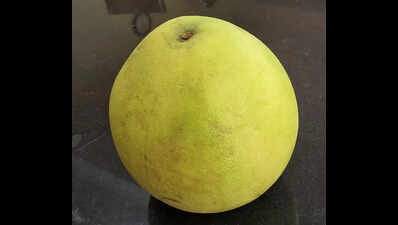
Unlike the regular pink flesh, the Siva variety is white flesh but has more juice due to thin (2.3cm) green or yellowish rind. Also, in a stark contrast to the tangy flavour, this variety will have sweet orange flavour,” Sankaran said.Scientists pointed out that rampant real estate expansion around Devanahalli had reduced pummelo cultivation from organised plantations to scattered backyard trees. They believe the new variety could help revive commercial cultivation because of its higher productivity and adaptability. “The tree grows up to 5.2 metres in height, suited for open orchards. The medium-sized fruits would weigh around 1.6 kg.
Evident to its antioxidant potential, the fruit has 38.8mg of ascorbic acid per 100ml along with 64.1mg and 3.49mg per 100g of phenol and flavonoids. Rich in minerals such as copper, zinc, manganese, calcium and potassium, the fruit is known for its medicinal and therapeutic properties. The antioxidants help lower cholesterol and triglycerides,” Sankaran said.Revival of Jamun berryWith diabetes cases rising, demand for jamun berries has increased significantly in recent years.
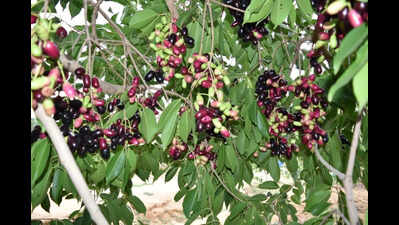
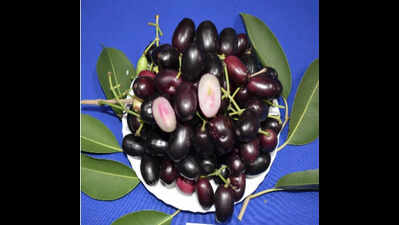
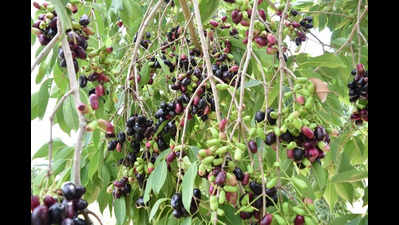
However, farmers and consumers alike have remained dissatisfied with existing varieties because of their thick seeds and low pulp content. To address the issue, IIHR scientists have developed a new jamun variety — Arka Jamun Pride — which offers significantly higher pulp recovery and larger fruit size.“Almost all existing varieties used to yield less than 50% pulp due to large-sized seeds. Unlike the popular berries in the market that weigh 15 to 18 grams, this variety berries weigh 23 to 25 grams and pulp recovery exceeds 74% with a TSS value of 14.5 Brix and anthocyanin content of 66.94mg/100 grams. Also, each tree of the latest variety will yield 100kg of fruits and has been successfully raised at IIHR Hesaraghatta and Hirehalli near Tumakuru,” said Prof Karunakaran, another scientist at IIHR.









 English (US) ·