

 1 day ago
4
1 day ago
4
ARTICLE AD BOX
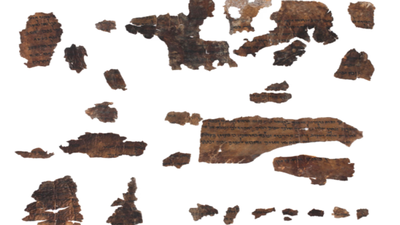
Ancient Dead Sea Scroll fragments preserving sacred texts. Image Credit: National Geographic
A seemingly routine activity in 1947 resulted in one of the greatest breakthroughs in the field of modern archaeology. It all began when a young Bedouin goatherd, Mohammed edh-Dhib, was looking for his stray sheep in the Judean Desert near Qumran.
As part of this routine search, he ended up in a cave where he discovered ancient jars containing old scrolls hidden inside. That ordinary day for the local goatherd led to a decade of cave exploration and manuscript recovery.The story of this discovery has become a legend in its own right. The most widely told version of the story involves a young goatherd who threw a rock into a dark cave. He heard the rock hit the ground and then heard something shatter.
Further investigation revealed large earthenware jars containing old manuscripts inside.Why the story has several versionsAlthough the visual image of the rock is deeply ingrained in collective consciousness, historians admit that the way this discovery is described may differ slightly depending on the version of the story. The Bedouin cousins who discovered the scrolls recalled hearing pottery break, but oral histories vary because the first witnesses left no written account.
In the same way, the West Semitic Research Project at the University of Southern California states that there are several versions of the story. In one version, the Bedouins were searching for a missing goat; in another, they were looking for hidden treasure. Still, these differences do not change the basic story: an accident in the desert revealed the ancient archive.The huge library buried within the cliffsThe first cave did not contain gold or precious stones, but the texts found there made it an important discovery. As per the information given by the Library of Congress, this particular 1947 discovery was only the beginning of a decade long process of excavations.
Archaeologists and local people cooperated to look for the texts that were found in several caves situated around the area of Qumran.These texts became known as the Dead Sea Scrolls. The scrolls quickly became important to paleography, the study of ancient scripts, and theology, the study of religious ideas. The dryness of the desert caves helped preserve the fragile organic materials. It should also be noted that the local knowledge of the geography of the area helped a lot in the discovery.
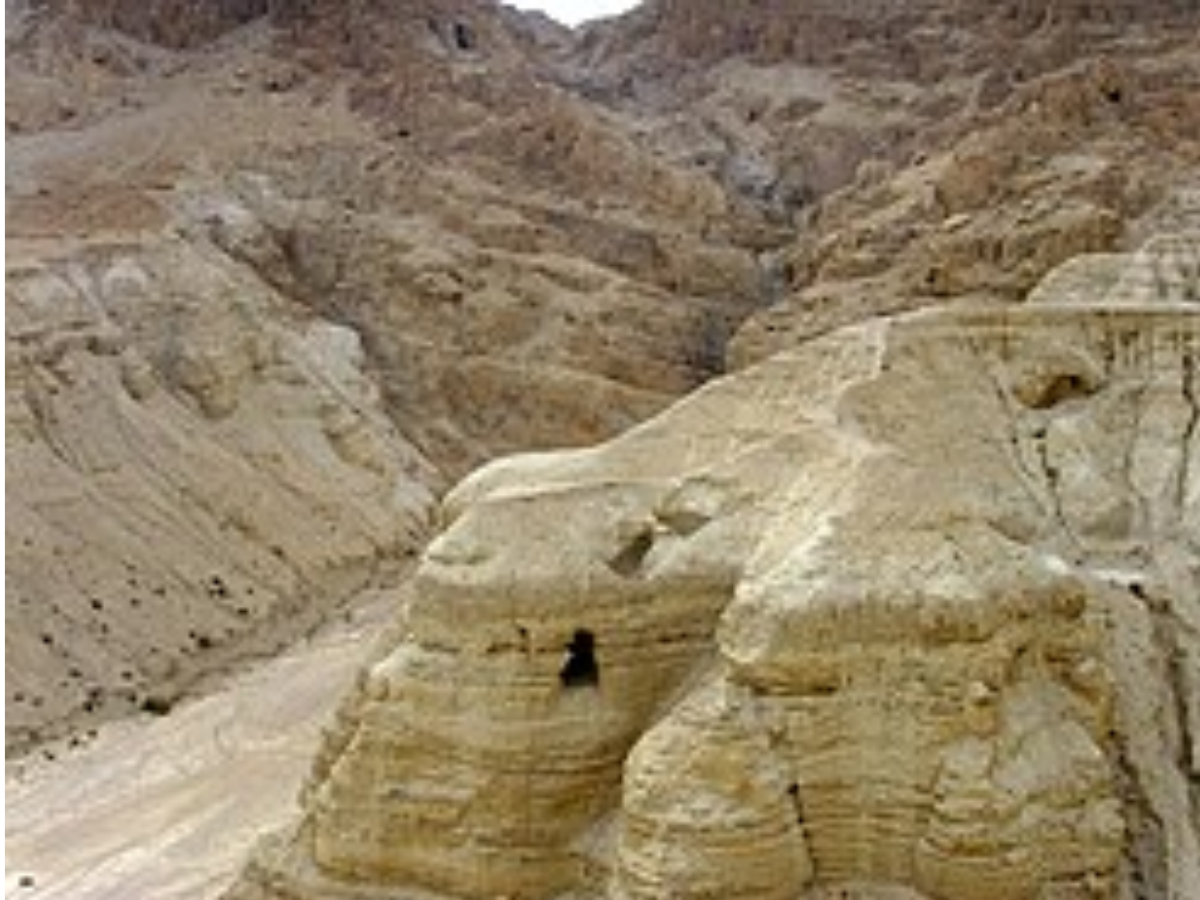
The Qumran Caves are a series of caves, both natural and artificial, found around the archaeological site of Qumran in the Judaean Desert. Image Credit: Wikipedia
A new way of reading ancient documentsThe effects of the discovery of the Dead Sea Scrolls went way beyond archaeology. This collection significantly changed our understanding of religious history, especially ancient Judaism. Before this find, historians had less direct evidence about how texts were transmitted across generations.This finding gave researchers a stronger framework for interpreting ancient texts.
Through comparison of ancient texts and their subsequent versions, scholars could better trace how biblical documents were preserved, translated, or edited over time. Although they did not solve all historical problems, the scrolls enabled scholars to ask new questions about the development of religious traditions.High-tech helps determine new datesResearch on the Dead Sea Scrolls is far from complete. Today, scholars are using advanced technology to analyze ancient artifacts from a new perspective. As stated in the 2025 study in the journal PLOS One, scholars have already started to use artificial intelligence in combination with conventional radiocarbon dating to redefine the dates of the scrolls.As the researchers point out, some fragments appear to be much older than previously thought. It suggests that there is still much to investigate regarding the Dead Sea Scrolls. New technology helps historians date documents, study handwriting features, and test theories about how the scrolls are classified.The 1947 incident involving Mohammed edh-Dhib and his friends remains a striking example of how an accidental discovery can lead to major historical findings









 English (US) ·