

 5 hours ago
6
5 hours ago
6
ARTICLE AD BOX
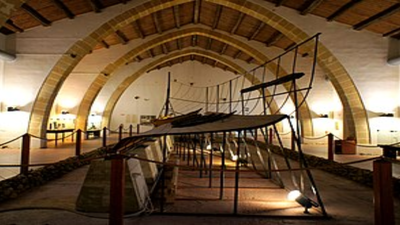
The Marsala Punic shipwreck is a third-century-BC shipwreck of two Punic ships. Image Credit: Wikipedia
In the early 1970s, a discovery in the waters off Sicily changed how scholars viewed ancient mariners. During a routine dive off Sicily, scientists found one of the most valuable Punic ships in the Mediterranean Sea.
The Marsala Punic Ship provided insight into ancient naval warfare and helped shape methods for preserving underwater artifacts.Surprise find under the seabedAccording to historical accounts, the ship was found accidentally in 1971. The underwater archaeological expedition team, which collaborated with the pioneer Honor Frost, discovered the wreckage off the coast of western Sicily. Although some historical outlines describe the discovery as taking place in the early 1970s, the archives show that the discovery shaped the next phase of regional research.The archaeologist Luigi Bernabò Brea was active in the Sicilian archaeological community in the early 1970s. Nevertheless, the specific information reveals that the discovery was connected with the survey conducted by Honor Frost and her team.The discovery was not the result of a deliberate treasure hunt. On the contrary, it was made accidentally in the course of a regular mapping process in the seabed near modern-day Marsala (Lilybaeum in antiquity).
The accidental nature of the discovery gives the story a modern feel.How this ship became a milestoneThe ship became a milestone not only because it was discovered, but also because of how it was salvaged. Salvaging an ancient wooden ship requires much effort. Once exposed to air, such materials may disintegrate, warp, and crack within days in a dry atmosphere.To preserve the wreck, specialists spent seven years excavating, salvaging, conserving, and reconstructing it fragment by fragment. In the peer-reviewed article published in the journal Molecules, scientists explain that this complicated procedure made the discovery one of the milestones of archaeology.
The work helped establish a multi-stage procedure for preserving submerged artifacts.The Marsala wreck provided a valuable case study for the team. The recovery process helped researchers understand how long submerged metals can survive over centuries. By carefully recording each stage of the recovery, the team showed how the ship could serve as a model for salvage operations worldwide.

Luigi Bernabò Brea (Genua, 27 September 1910 – Lipari, 4 February 1999) was an Italian archaeologist. Image Credit: Wikipedia
A lesson learned from the ancient seaHistorians could also infer that western Sicily was an active and well-connected region in antiquity.
It was a vibrant maritime passage through which trading, migrations, and wars were fought frequently in the western Mediterranean.The wreck site was not a lonely spot as some other shipwrecks were found by researchers near this coastline, as documented in another research paper titled Sensors. Some of the wrecks even included Phoenician war ships associated with the aftermath of the well-known Battle of the Egadi Islands.As such, the ship at Marsala becomes a window into the contentious space of naval warfare. Shipwrecks can preserve evidence of past events and material culture. Moreover, shipwrecks preserve information about ancient constructions and types of repairs and cargo which cannot be preserved through written historical sources. Investigations of the site suggest that Punic naval activity relied heavily on the waters of Sicily.
Although the ship was discovered by chance, later scientific study gave it renewed significance in the preservation of underwater heritage.









 English (US) ·