

 1 hour ago
3
1 hour ago
3
ARTICLE AD BOX
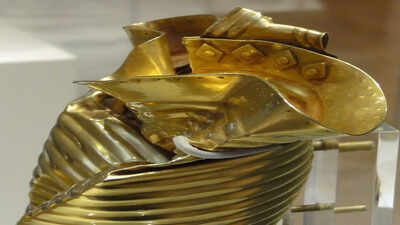
In 2001, a metal detectorist in Kent unearthed the Ringlemere Cup, a rare Bronze Age gold bowl. Image Credits: British Museum, via Wikimedia Commons
While searching an average field in Kent, Cliff Bradshaw was accustomed to seeing the typical pieces of metal waste and junk common to the English landscape. But on an uneventful day in 2001, Cliff’s detector emitted a beep that would alter the prehistoric map of Britain forever.
Lying buried underground was a shiny, yellow piece of material that was nearly impossible to recognise, due to the extent of damage it had undergone. Initially, the item appeared to be nothing more than a piece of agricultural equipment or a flattened-out tin can.Bradshaw made the decision to clean the object, and the gleam of gold shone forth as the dirt peeled off. It soon became apparent that this wasn’t just a scrap of metal, but rather the Ringlemere Cup, which may be one of the most unique and valuable finds in terms of prehistoric objects ever discovered on European soil.
This wasn’t some buried ornament, but rather a ceremonial cup that had lain buried underground for almost 4,000 years before anyone paid attention to the message it sent out from the Bronze Age.A unique gold bowl from an extinct ceremonial traditionOnce its significance was fully realised, experts soon determined that this find marked a new chapter in prehistoric history. According to the official listing in the British Museum Collection online database, the Ringlemere Cup is one of the very few examples of a gold bowl ever found on British and Irish soil.
In fact, before its discovery, the only other well-known example was the Rillaton Cup discovered in Cornwall during the early nineteenth century.It had been created using just one sheet of gold, which included a handle and beautiful corrugations. These things were status symbols in that time and could have been used by elite men, such as priests, during important religious ceremonies. Although the cup is now in poor condition, it is possible that the damage is actually part of the history of the cup.
It may either have been smashed after the passage of years under the pressure of the soil or killed ritually before being placed inside the earth.
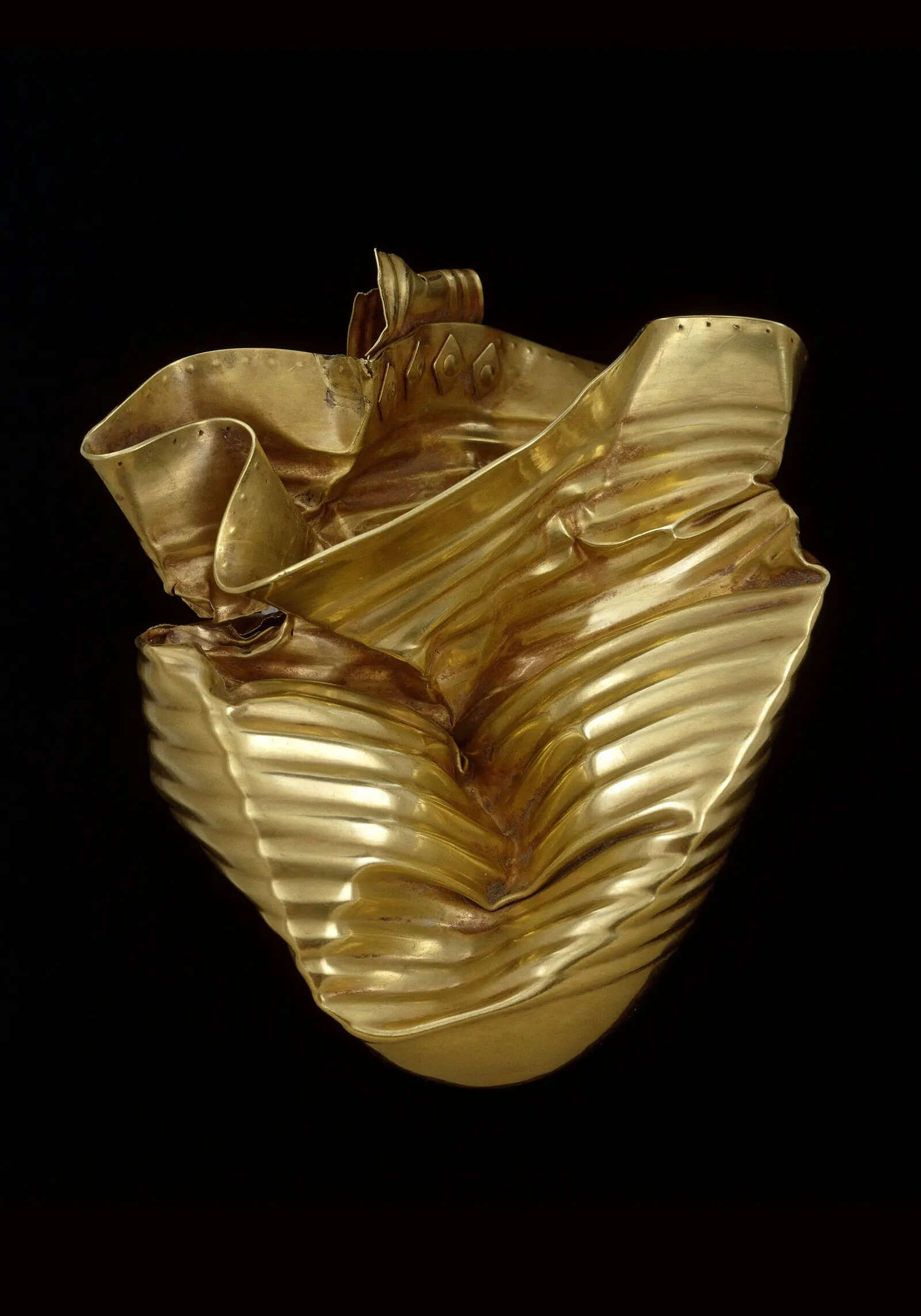
This significant find, initially mistaken for junk, revealed a prehistoric ceremonial complex, transforming an ordinary field into a monumental landscape. Image Credits: Portable Antiquities Scheme from London, England, via Wikimedia Commons
How a single discovery changed the whole landscapeIt turns out that in some cases, an excavation can be of huge importance for the area, despite the fact that initially only one valuable object was discovered there. Following the discovery of the cup, archaeologists started excavations on the site where it was found. As stated in the article Britain's greatest treasure finds on the official website of the British Museum, the cup was not an independent find, but rather belonged to the ceremonial prehistoric complex, which included barrows – special funeral mounds.This discovery made the farm field "a monumental landscape" as the cup became the key to the past of the whole territory, confirming that Ringlemere has been the site where rituals were conducted throughout generations. The individuals who used this place did not just come across it by chance, but they made special trips to conduct ceremonies, bury their relatives, and even leave valuable objects such as the cup in the soil.
This example proves that the agricultural land that we observe nowadays covers a layer of ancient monuments.The Ringlemere Cup can now be seen at the British Museum and no longer resembles an object that could be mistaken for something discarded carelessly. It is a constant reminder to everyone that history does not necessarily emerge from places where we least expect it to. At times, the greatest mysteries left behind by our predecessors are right before our eyes in the form of ordinary bits of metal in a desolate field.A chilling notion comes to mind that for thousands of years, humans have been treading on the field without being aware of the fact that there was a fortune lying beneath their feet. You get to realise the significance of every field in a different way, considering that maybe something else lies beneath the soil.






 English (US) ·