

 5 days ago
7
5 days ago
7
ARTICLE AD BOX
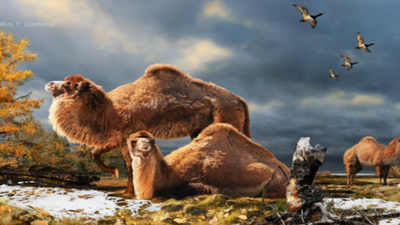
Artist's depiction of the High Arctic camel in a mid-Pliocene boreal forest ecosystem. Image Credit: National Geographic
Nonetheless, recent research has completely altered that common perception. A discovery published in 2013 revealed fossilized bone fragments of an extinct giant camel on Ellesmere Island in the Canadian High Arctic - the most northerly record of early camels discovered to date.
.The groundbreaking research took place in the High Arctic in Canada. Ellesmere Island was the site where the fossil was found, and the discovery has helped reshape our understanding of ancient climate and animal movement.Chemistry helping to solve the prehistoric puzzleThe fossilised remains turned out to be a badly damaged fragment of a leg bone. The bone itself consisted of numerous small pieces, which prevented scientists from identifying the species visually.This mystery was finally solved using a laboratory approach called collagen fingerprinting. Collagen fingerprinting examines distinct protein patterns in ancient bones. With this technique, scientists can often identify animals even from heavily fragmented bones.As per the report released by Nature Communications, the collagen fingerprint recovered from the fragmented remains matched that of camels. This was the first discovery of a camel in the High Arctic region, and this demonstrates how modern lab equipment can recover crucial information from unidentified fossilized specimens.
An ancient, green, and forested NorthThe importance of the fossil lies in its age, which serves as a big clue towards unraveling the climatic trends during that period. The fossils recovered were dated to be from the mid-Pliocene epoch, about three to five million years ago.It was a globally warm period that came before the ice ages reshaped the landscape. According to the study, the High Arctic may not have been an uninhabitable snow-and-ice tundra during this warm period.
Instead, it was home to an ecosystem characterized by greenery, trees, and large mammals that resembles present-day boreal forests.Although the polar area still had winters and a harsh environment, it was mild enough to support vegetation, trees, and large mammals. This fossil is considered a great climate indicator. The fossil provides tangible proof of how varied and green the Arctic ecosystem was when the Earth's temperatures were much higher.
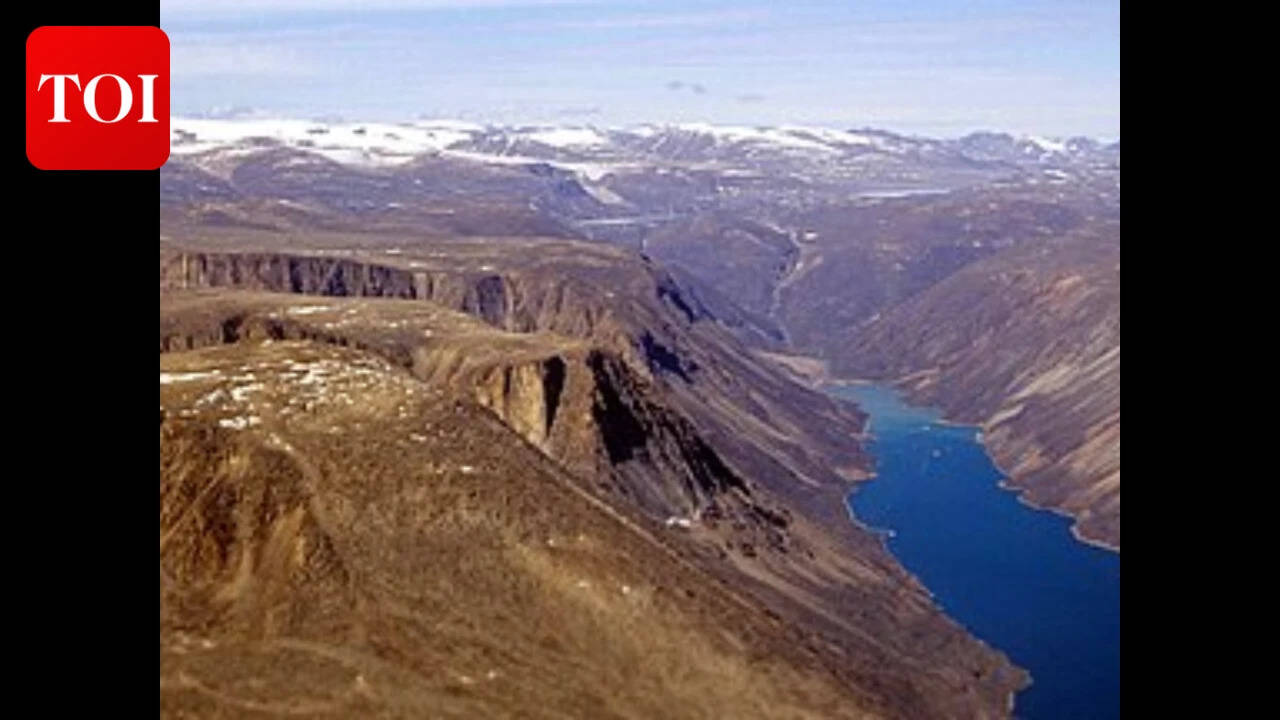
The Arctic Cordillera is a Level I terrestrial ecoregion of North America designated by the Commission for Environmental Cooperation (CEC) in its North American Environmental Atlas. Image Credit: Wikipedia
Extending the map for large mammalsUntil now, there was no evidence of the existence of camels in a habitat so far north. With the discovery of the fossil in the High Arctic on Ellesmere Island, the northernmost limit of the distribution of North American camels has been extended by about 1,200 kilometres.This discovery helped change paleontologists' understanding of the habitats these animals could live in. This discovery indicated that ancient camels were very versatile.
These animals did not have to live in warm and dry areas only because they easily adapted to living in the extremely northern climate, which was quite forested and seasonal.This information helps explain how animals migrated between continents during warm eras. As we can see from this discovery, the High Arctic was not an obstacle for animal migration because when the temperature increased, they simply moved further into the zone that became very cold later.The camel's native rangeMany people are surprised to learn that camels first evolved in North America. In other words, camels were evolving in North America for millions of years before they moved to Europe and Asia.This camel fossil is central to understanding camel evolution. This discovery fits right into the center of the evolution of the species. Such a conclusion can be made according to a study presented on the PubMed website.It serves as a good reminder about the constant changes in the environment on our planet. The modern Arctic climate is only one of many stages in a really long history of the planet. The findings suggest that the Arctic once supported conditions suitable for camel ancestors.









 English (US) ·