

 5 days ago
6
5 days ago
6
ARTICLE AD BOX
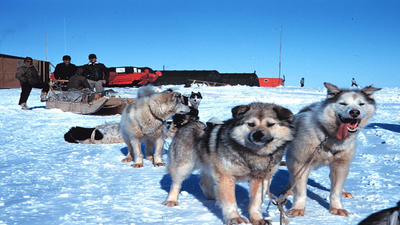
Image of sled dogs. Image Credit: Wikimedia Commons
Long before snowmobiles, and even before the wheel was widely used in some regions, people in the Arctic had already formed a close relationship with dogs. In 2020, scientists used ancient DNA to reveal that the ancient ancestry of modern sled dogs can be traced to Siberia around 9,500 years ago.
The study shed light on the history of working dogs and on how humans adapted to life in one of the world’s harshest environments.According to a 2020 study published in Science and indexed by PubMed, geneticists studied the genome of a roughly 9,500-year-old dog discovered on Zhokhov Island in northeastern Siberia and compared it with modern Greenland sled dogs and an ancient Siberian wolf.The findings suggest that modern sled dogs have Siberian ancestry and that key sled-dog traits existed 9,500 years ago.An ancient dog that has rewritten the narrativeThe dog used in the study predates modern dog breeds, and its DNA shows a genetic link to sled dogs in the Arctic region.Scientific research involved sequencing genomes from ten current Greenland sled dogs, the ancient Siberian dog from Zhokhov Island, and a dog estimated to be about 33,000 years old from Siberia. The analysis indicates that the Zhokhov dog is closely related to present-day sled dogs, suggesting a Siberian origin.
The research suggests that specialized sled dogs evolved about 9,500 years ago.Zhokhov Island is telling a much larger storyThe evidence from DNA is made even more convincing in light of the archaeological finds at the same site.According to the PubMed-indexed study, carved bone, antler, and ivory artifacts have been found at the site, which appear to be parts of the harnesses used with sleds. The site has also yielded evidence that dogs and sleds may have been used there around 9,000 to 8,000 years ago.
Taken together, all of these findings point to the fact that the dogs were much more than just pets. These dogs were most probably traction dogs used for moving humans and equipment across the ice.A review conducted in 2025 analyzing the long-term interactions between human beings and Arctic dogs came to the same conclusion. According to the review, Zhokhov may have been one of the earliest centers where traction dogs were used during the early Holocene, and cooperation between humans and dogs may have been crucial for survival.Why sled dogs changed the way of life in the ArcticRaising a pack of working dogs entailed many things apart from successful breeding. There had to be enough food for the dogs and enough people to sustain those dog populations over time. According to a 2024 archaeological study, sled dogs were particularly useful in areas with abundant aquatic life, which sustained both humans and dogs. Sled transport was not a standalone innovation but developed alongside a stable Arctic economy that allowed permanent or seasonal settlements.This helps explain why sled dogs were so important in the Arctic region. The sled dogs facilitated carrying heavy loads over frozen ground surfaces, access to distant locations for hunting purposes, and traversing lands that were difficult to walk upon.

Geographic location of the samples and overall genetic affinities. Image Credit: PubMed
Their lineage continued even as populations evolvedIt was not that the lineage of the sled dogs remained stagnant.According to an ancient DNA study published in 2021, Arctic Siberian dogs underwent phases of gene admixture over the past 2,000 years because of trade and migration across Eurasia.
Nevertheless, scientists have noted that the modern-day sled dogs possess an ancestral link with the ancient Zhokhov lineage.In simple terms, modern sled dogs have changed over time, but they still retain their ancient Arctic heritage.Dogs assisted people in spreading through the Arctic northFurther evidence for the crucial role of working dogs in Arctic development comes from North America.A 2019 study of Arctic North American dog genetics found that dogs associated with the Inuit period had different DNA from Palaeo-Inuit dogs.
This suggests that such dogs may have assisted in the expansion of the Inuit across the Arctic region of North America, dating back some 1,000 years. More recently, a 2025 study found that Greenland’s Qimmit sled dogs still carry a distinctive Arctic genetic history despite centuries of environmental change.A clearer picture of Arctic settlementsThis finding is significant due to the fact that it consists of three distinct strands of evidence. The ancient DNA analysis suggests the origins of the sled dogs.
The archaeological analysis shows that the technology of sledding was already around when these dogs were present. Finally, later genetic research shows how the descendants of those dogs may have helped human migration through the Arctic.From this, we can see that dogs were not simply man's best friend back then. They were an essential part of the transportation network that allowed people to travel further and transport more while adapting to their surroundings.The Zhokhov dog should be seen not only as ancient remains but also as evidence of the partnership between humans and dogs that helped both survive in the polar environment. This partnership survived through millennia, as shown by the genetic analysis of modern sled dogs, which carries the imprint of the ancient history of human-dog cooperation.









 English (US) ·