

 5 days ago
5
5 days ago
5
ARTICLE AD BOX
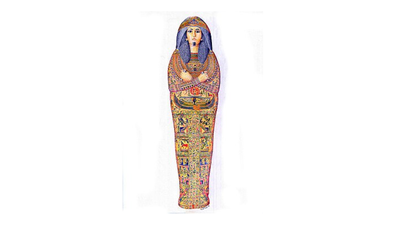
Nesyamun, also known as Natsef-Amun or The Leeds Mummy, was an ancient Egyptian priest who lived during the Twentieth Dynasty c. 1100 BC. Image Credit: Wikipedia
In 2020, a science-fiction-like story appeared. Scientists succeeded in recreating the voice of an ancient Egyptian mummy. Readers could hear a sound made by someone who lived about 3,000 years ago.
In particular, it is necessary to say that the name of the person whose voice the scientists were able to recreate was Nesyamun. He was an ancient Egyptian priest and scribe. Using modern medicine, computer scanning techniques, 3D printing technology, and vocal science of today, researchers have managed to produce one sustained vowel sound.The study was not a resurrection of the dead or a trick. Instead, it was a precise scientific link between modern acoustic engineering and the ancient past.
Historically, the research is important because it is tied to a specifically identified individual rather than unidentified remains. On the contrary, it is an exact reproduction that relates to a certain person who had an important role in the religious history of ancient Egypt.Who was Nesyamun in Ancient EgyptThe mummy used in the study has been documented extensively by researchers. According to an article in the journal Scientific Reports, Nesyamun is an important individual in history as he is believed to be a high-ranking priest and scribe in the famous Karnak Temple Complex during the turbulent rule of Ramesses XI.
Since the name and occupation of this individual have been properly identified in the inscriptions on his coffin, the experiment has been conducted based on authentic facts.The scientists also noted the cultural significance of their experiment. The inscriptions on the coffin of Nesyamun contained the term 'True of Voice', which means that the spirit of that person was believed to be judged worthy in the afterlife.
That inscription gave the experiment an important historical identity as well as a technical one. Not only were the scientists conducting studies on generic human remains.
The actual identity of a man from the late New Kingdom era of Egypt was involved.How engineers reconstructed a voice from the pastThe reconstruction process involved a complex combination of biology and technology. At first, the team carried out a computed tomography scan, more widely referred to as a CT scan, which allowed for getting accurate measurements of the dimensions of the vocal tract of the mummy.
Because the mummy was preserved extremely well for more than 3,000 years, the researchers could model the inner anatomy of the throat.After receiving the information about the digital measurements, the team created a replica of the vocal tract using a 3D printer. The model of the throat was attached to an artificially controlled larynx, which is called the Vocal Tract Organ. The sound passing through the artificial setup produced a voice based on the mummy's physical features.
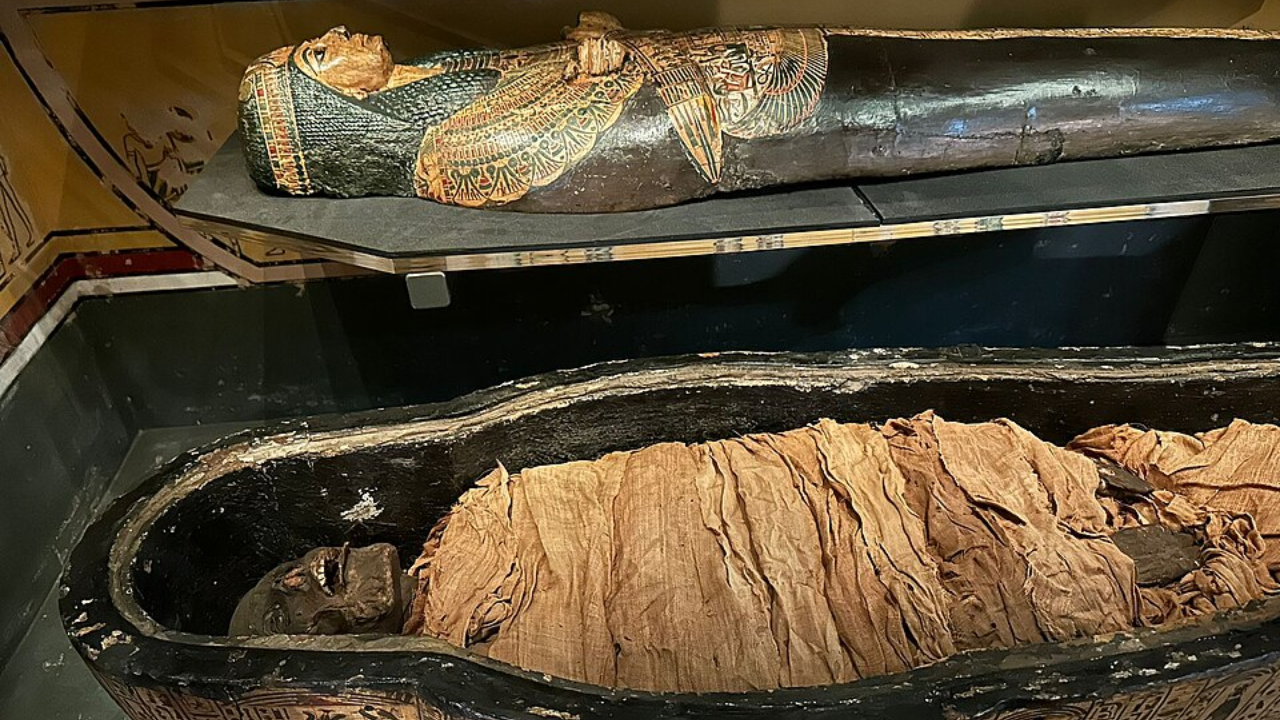
Nesyamun's mummy at the Leeds City Museum. Image Credit: Wikimedia Commons
What does the recreation of the sound really tell us?While the study became front-page news all around the world, scientists were very modest regarding their findings. The sound was a short vowel-like vocalisation, not a full phrase or sentence. The experiment managed to combine three techniques – scanning technologies, 3D printing, and speech synthesis equipment in order to create the sound; however, it failed to reproduce Nesyamun's language, accent, and vocabulary, according to the report from the University of York.A full voice needs much more than just the structure of the throat. In real life, speaking uses the fast movements of the tongue, breath control, and cognitive skills, which cannot be reconstructed on the basis of a dead body of a mummy. Thus, the produced sound is right at the border of being both scientific and historic. It is anatomically based, but it is also incomplete because it lacks human naturalness.The future of acoustic archaeologyThe Nesyamun project is an example of scientific restraint and has opened new perspectives for researching antiquity.
Because the publication was a proof of concept, the study should not be treated as a resurrection of ancient speech. But it proved that when human tissue is preserved in good condition, it is possible to measure and analyse its acoustic qualities using contemporary equipment.This interdisciplinary approach can change how the public sees the past. Archaeological discoveries are usually presented visually in museums or through hands-on displays. Hearing the sound makes historical figures feel more human than distant museum objects. Although the experiment did not reveal what Nesyamun was saying, it showed that aspects of voice shape can be preserved after death.









 English (US) ·