

 5 days ago
6
5 days ago
6
ARTICLE AD BOX
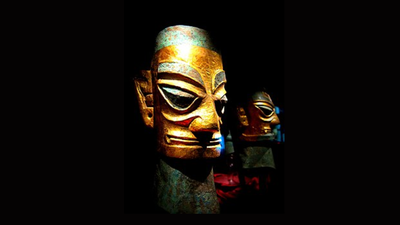
An iconic bronze head with a gold mask from Sanxingdui. Image Credit: Wikipedia
As Chinese archaeologists continued their work on the ancient sacrificial pits at Sanxingdui in 2021, the unearthed treasures were not merely aesthetic. The site, in southwest China, was already known for its long and mysterious history.
What was uncovered was even more striking: huge bronze masks, ash deposits, and clusters of ritual artifacts. This discovery has not turned the site into a simple treasure trove. Instead, the findings have given scholars a clearer view of a mysterious ancient world shaped by fire, ritual, and burial. Later laboratory analysis showed that the pits were not simply refuse dumps.Why were the newly excavated pits importantSanxingdui was already famous for its distinctive bronze artifacts before the 2021 excavation, but the new finds have reshaped understanding of the scale of ancient Chinese civilization.
Since the pits were closed for centuries, their content remained untouched and well-preserved. In the study of history, not only the objects themselves but also the way they were placed are important. After digging away the dirt, scientists found large bronze masks, ivory tusks, jade, gold artifacts, and burnt remains.They were arranged in several layers, showing that they had been carefully put there. This discovery led researchers to ask what kind of spiritual world produced these artifacts.
Nevertheless, the answer is far from complete, although the reopened pits have provided more solid grounds for the scientific research. For example, a scientific work published in 2023 in the journal npj Heritage Science claims that those pits emerged due to deliberate sacrificial practices. Specifically, this scientific paper presents information about the overlapping layers of soil, burning at various depths, as well as strict rituals of burying everything after burning.
Such kinds of evidence are important for changing the attention from artifacts exhibited in museums to the whole ceremonial process of how the ancient Shu people performed their sacrifices.The masks that changed the pictureThese enormous bronze masks very quickly turned into the main emblem of the reopened pits. They were so big and unusual to give a feeling that everything related to Sanxingdui is absolutely different from the standard art styles traditionally associated with ancient China.
Nonetheless, specialists claim that there is no need to make too much fuss about this discovery. These faces do not point to the existence of a previously unknown mysterious civilization.
These masks show that local Shu artisans used a distinctive artistic style unique to their region.The key point is the environment where these masks were discovered. Because the pits show clear signs of repeated burning and layering, these masks were likely part of some kind of religious ritual rather than simple decorative objects.
It means the find should be understood not as a single object but as an event. The masks were made to play an active role in rituals that ended with burning and burial under soil.
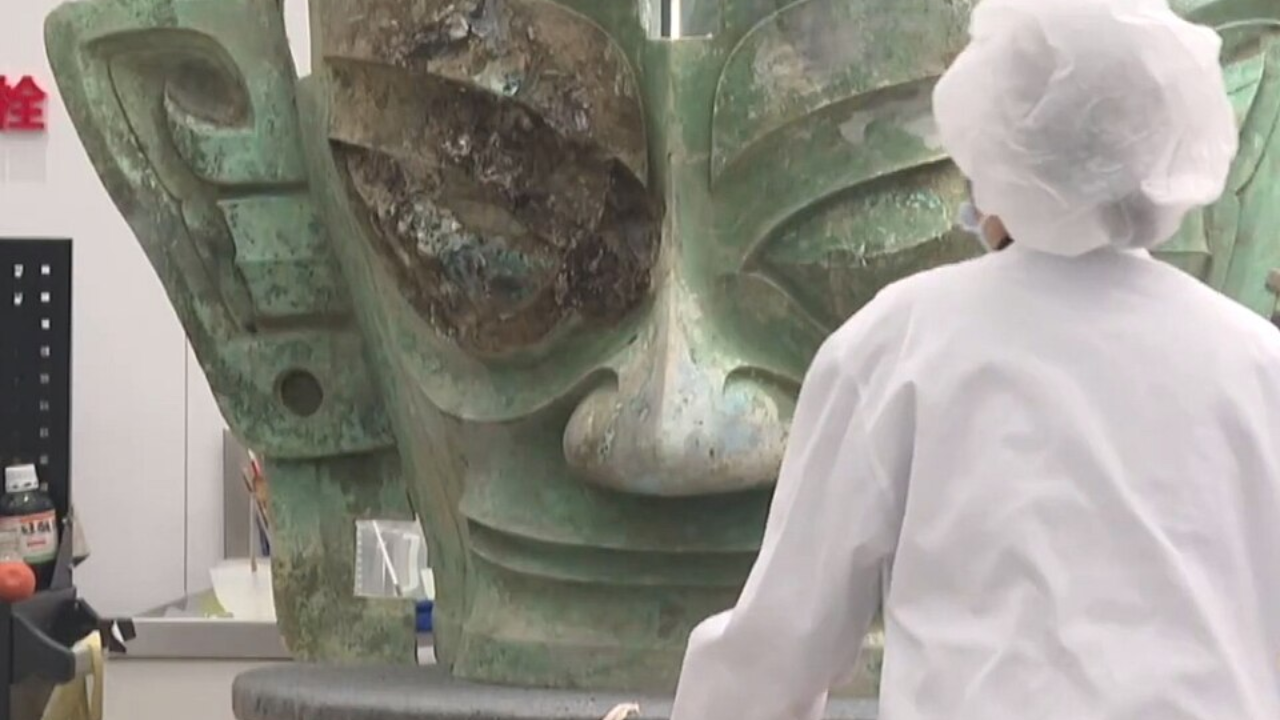
Ancient Sanxingdui Giant Bronze Mask from the mysterious Shu era. Image Credit: Wikimedia Commons
Fire, ashes, and holy silkFire plays an essential role in the Sanxingdui story. Researchers interpret the ashes and burn marks as evidence of a deliberate ritual act. By analyzing the exact position of the ash layer in relation to the bronze faces, scholars were able to trace the sequence of events: the object was placed down, burned, and then covered with soil.Organic evidence strongly supports that interpretation. As stated in Scientific Reports in 2024, the scientists managed to identify ancient silk residues among the Bronze Age sacrificial pits. The report notes ash directly above the artifacts and traces of fabric on the bronzes, both consistent with burning. This provides material support for the interpretation. Even if large bronze objects are moved or damaged, small organic residues can preserve evidence of the burning ritual.An incomplete storySanxingdui fascinates researchers because it is both clear and intriguing. The pits point to a highly developed culture centered on sacrifice, but the beliefs reflected in the giant masks and ivory remain uncertain.The pits at Sanxingdui can reveal physical actions such as burning and burial rituals, but they cannot tell us the names of the gods or the prayers used. The site shows a clear pattern, but it preserves no script to explain it. It is a reminder that ritual life in ancient civilizations was not culturally homogeneous and that different societies developed their own practices around spirituality.








 English (US) ·