

 5 days ago
6
5 days ago
6
ARTICLE AD BOX
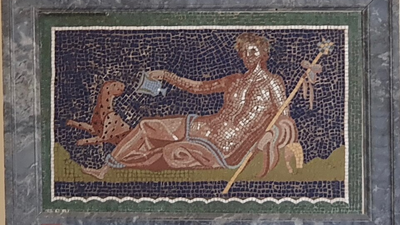
Dionysos with a leopard, from the House of the Skeleton, Herculaneum. Image Credit: Wikimedia Commons
Where the Roman Empire is concerned, images of lavish feasts, opulent marble structures, and well-to-do people indulging in exotic food easily come to mind. Yet the ancient Roman Empire was made up mostly of common people, whose way of life and diet received little mention in historical documents.
Now bioarchaeological studies offer insight into the eating practices of ancient Romans by examining an unexpected source: the latrines and sewers of Herculaneum. The town of Herculaneum, on the coast of the Bay of Naples, was destroyed in the eruption of Mount Vesuvius in AD 79. In addition to the great catastrophe that destroyed everything in the town, the eruption led to something unusual for us today. The intense heat and thick layers of ash sealed the town, preserving organic substances that would otherwise have survived only a few weeks. A sewer transformed into an archive For many years, archaeologists have focused on frescoes, sculptures, and other impressive monuments. But now scientists are looking beneath the paved streets of Pompeii to find out what lies there. Because the eruption buried the deposits immediately, the material remained untouched for almost two thousand years. In a detailed research paper published on the Springer Nature Link, scientists stated that there was a layer of human waste combined with food preparation refuse in the unique sewer system.
This suggests that people threw food remnants into the sewer drains. Rather than relying on elite texts or market scenes, scientists can now study what ordinary people cut up, prepare, and discard. The garbage provides a raw and democratic view into Roman meals, entirely untainted by any bias of the ancient elite authors. What can molecules reveal? The extraction of information from ancient garbage requires extremely advanced scientific methods.
Modern bioarchaeologists are no longer limited to identifying seeds or fish bones under a microscope. They have now started to analyze the materials of the past in terms of molecules to discover things that could never have been seen before. One crucial breakthrough in the field was the study of skeletal remains from people who died during the eruption of Vesuvius. As a scientific breakthrough, noted by the journal Nature, international researchers managed to analyze collagen amino acid isotopes in the ancient human skeletons. These markers allowed the scientists to distinguish among staple foods such as cereals, meat, marine fish, eggs, and dairy. Historians no longer have to guess at the menu. The foods ancient people ate can be estimated from chemical signals in their bones.
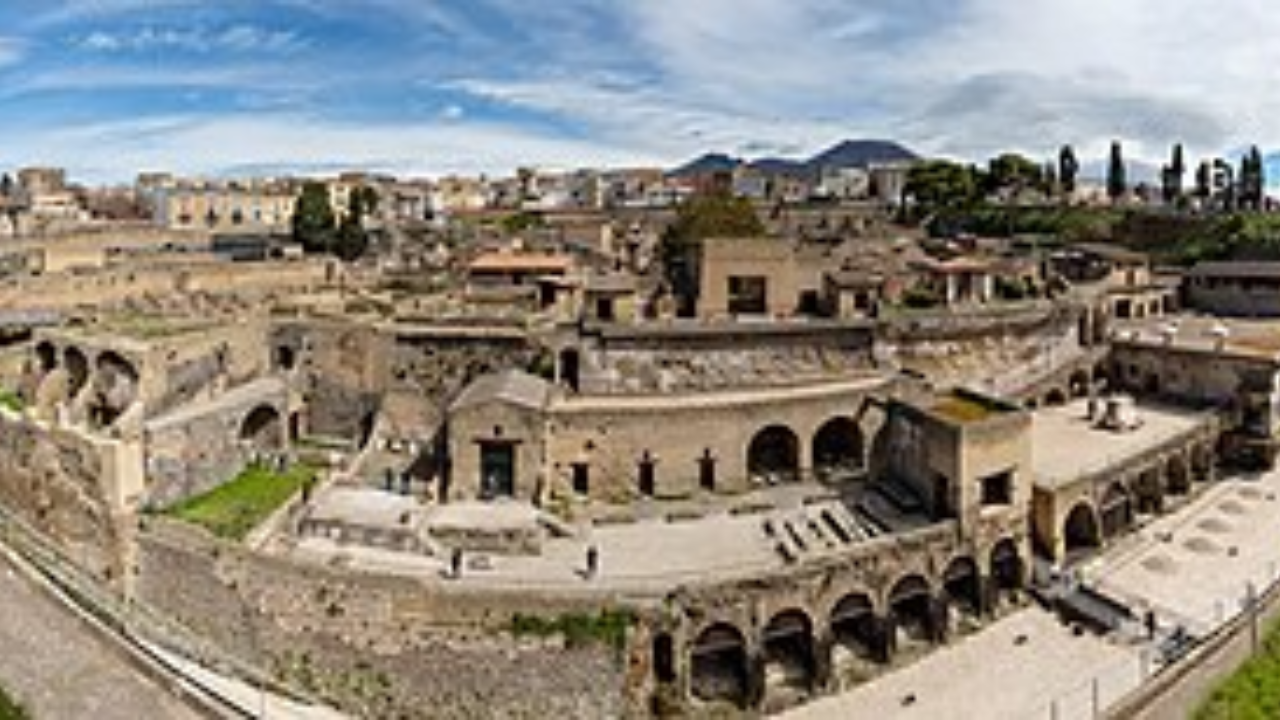
Herculaneum is an ancient Roman town located in the modern-day comune of Ercolano, Campania, Italy. Herculaneum was buried under a massive pyroclastic flow in the eruption of Mount Vesuvius in 79 AD. Image Credit: Wikipedia
A variety of diets According to the results, the Roman society was highly complex, and food choices had everything to do with class and culture. The obtained data prove that the people of Herculaneum did not eat the same kind of food.
There is significant variability in their diets, which depended heavily on who they were. The isotopic research shows gender-based differences in the diets of Herculaneum residents. It has been proven that men in the city eat considerably more seafood than women. This may reflect the value of seafood in a coastal city. Women ate more foods from agricultural sources, including eggs, meat, and dairy. Such differences add a human dimension to the archaeological record.
These variations reflect the reality that food sharing was affected by proximity to markets, household practices, and gender in the household. It also shows that the town was a vibrant place made up of individuals with different choices and unequal access to resources. Waste, health, and practice The analysis of Herculaneum's refuse also helps us understand ancient city planning and health concerns. Kitchen waste from the latrines was part of an extensive disposal network for household waste, street runoff, and other biological material. Through such an analysis, traces of parasites along with other components of the diet were identified. These results highlight the relationship between food processing, waste disposal, and disease exposure in densely populated cities. By studying this sewage, we can better understand the conditions in which ordinary Romans lived before the eruption. In conclusion, this scientific project may change how ancient history is understood. Herculaneum shows that some of the most durable records of human activity can be found in places people would rather ignore. By studying refuse, scientists have reconstructed aspects of Roman cuisine.







 English (US) ·