

 1 hour ago
4
1 hour ago
4
ARTICLE AD BOX
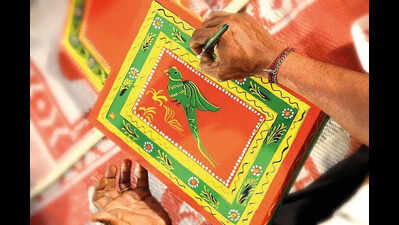
Panaji: For centuries, the art and craftsmanship of Chitari artists was an integral part of Goa’s Shigmo, Ganesh Chaturthi, and temple zatra celebrations. The responsibility was carried out faithfully by a single family based in Demani, Cuncolim, now residing in only four households.
The brightly-coloured, unique motifs signature to the chitari style, like parakeets, survived a lot, including Portuguese persecution.Now, for the first time, Chitari artists have started introducing the skill to lay Goans, in a bid to create a wider understanding of the art form.In Nov last year, Vinod Chitari and his elder brother, Nityanand, were persuaded for the first time by the curator of the Museum of Christian Art (MoCA), Old Goa, Natasha Fernandes, and others associated with the museum, to invite laypersons to see the technique up close.
After two workshops at the Chitaris’ studio in Cuncolim, recently, another group of Goans dabbled in the art at the MoCA premises.“The idea for the Chitari art workshop emerged when the museum team was introduced to Vinod through one of our volunteers, architect Noah Fernandes. During this interaction, Vinod told the story of his community and the rich tradition of Chitari art practised in Cuncolim,” said Fernandes.
As the museum was actively conducting workshops on diverse artistic techniques and forms, the team felt it was important to focus on and highlight this traditional Goan art form through a dedicated masterclass,” said Fernandes.She said the response to the masterclass was “very positive and encouraging”. Not only did Vinod guide participants step by step through the process of painting a ‘paat’ (a low traditional stool used during Ganesh Chaturthi and other Hindu festivities), the artisan also gave those present a glimpse into how the age-old craft is passed on from generation to generation.“As a 12-year-old, I would sneak into my father’s workshop and remove one of the paats, paint some motifs, and mix it up with the other stools so he did not find out. He taught us but did not like us messing with clients’ orders. It was only when I was 17 that I started working on pieces independently,” Vinod told the participants.The workshop at MoCA was held in collaboration with the Goa state chapter of INTACH.“We mix a tree resin with the colours, which makes them last.
Traditionally, the wood used was from a forest tree. Many of the original materials used became difficult to source now. We purchase the resin ourselves at market cost now. We now use jackfruit or mango tree wood as it is more easily available,” said Vinod.Many of the items made by the Chitaris, like a set of wooden fruits, lost their sheen for buyers, who prefer to purchase real fruit now to send as part of the ‘vhojem’, or gift sent to married daughters during Ganesh Chaturthi.
This also meant the artists had to diversify into more modern carving styles and designs, like for home prayer rooms.Now, MoCA is looking to further help Chitari artists create more widespread awareness about their art.“Given the encouraging response to the workshops, we hope to continue conducting these masterclasses with Vinod at the museum as well as at other locations across Goa. The museum also aims to support Vinod and his community by promoting Chitari art and facilitating the sale of Chitari products, including both traditional pieces and contemporary designs, in the near future,” said Fernandes.








 English (US) ·