

 43 minutes ago
4
43 minutes ago
4
ARTICLE AD BOX
4 min readNew DelhiJul 3, 2026 07:05 AM IST
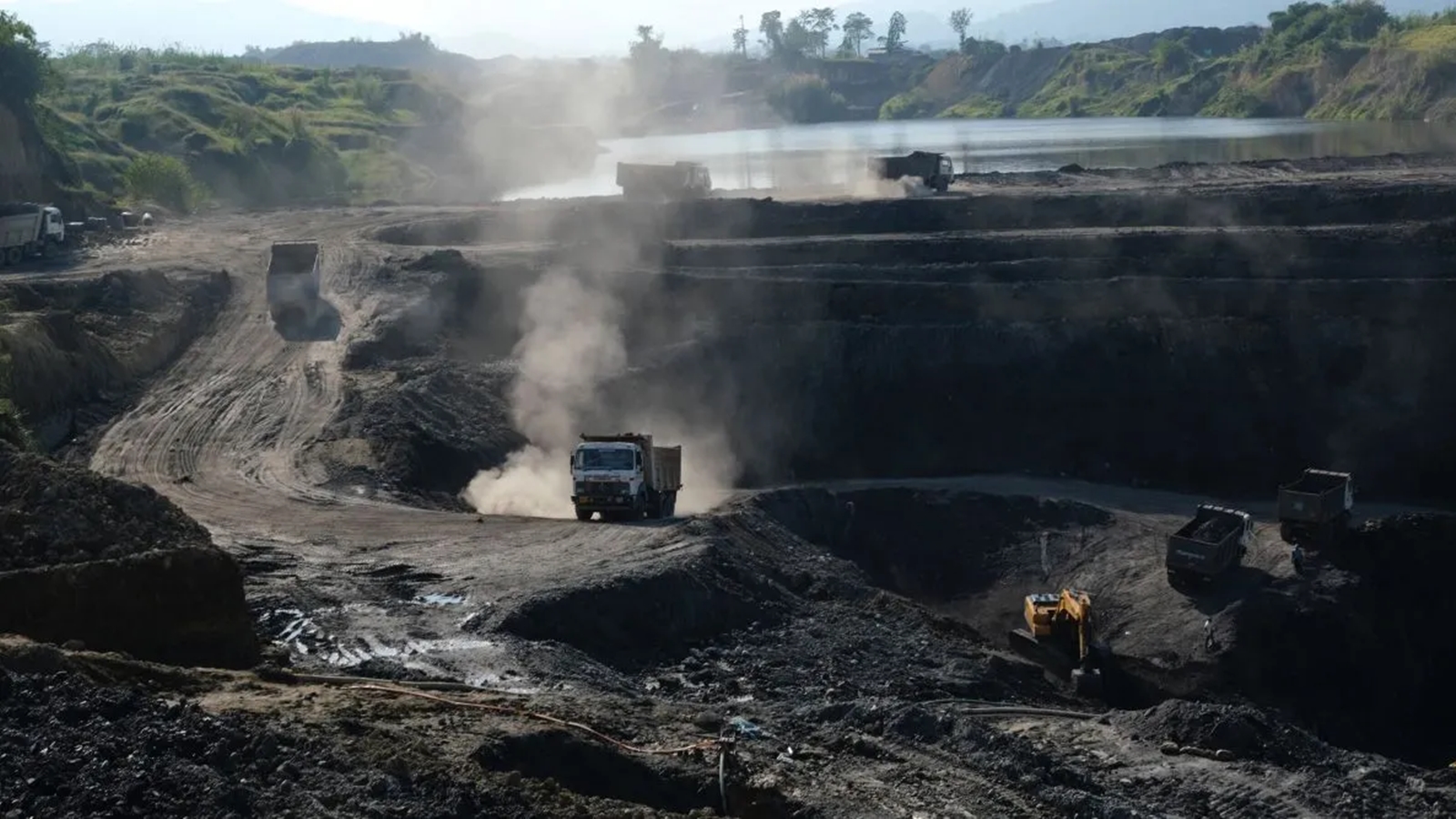 This is the third major coalfield that has been granted clearance in the Hasdeo forests.(AP/File)
In Chhattisgarh’s Hasdeo-Arand forests, the Environment Ministry has accorded environmental clearance for mining in the Kente extension integrated coal block ,with a projected production capacity of 9 million tonnes of coal per annum.
The environmental clearance (EC), issued on June 24, comes close on the heels of the in-principle forest clearance granted for the integrated open cast mining and washery proposal. The ministry’s sectoral expert appraisal committee on coal mining had recommended EC for the project in January 2025. The grant of final EC, though, was linked to the in-principle forest approval, which was issued on June 9.
This is the third major coalfield that has been granted clearance in the Hasdeo forests. Parsa and Parsa East Kente Basan (PEKB) open cast mines are already operational in the forests — once earmarked as a no-go zone for mining to protect forests and wildlife.
The Kente extension coal block, spread over 1,760 hectares in Surguja district, was allotted to Rajasthan Rajya Vidyut Utpadan Ltd in 2015. The Adani Group is the mine developer and operator. Coal extracted from this mine will be transported to Rajasthan to feed the Chhabra and Suratgarh coal plants.
The clearance comes even as a 2021 biodiversity assessment by the Wildlife Institute of India (WII) for the larger Hasdeo-Arand coalfield (HACF) had stated that no mining should be carried out in the forests there, except in the already operational Parsa East Kente Basan mine, due to the activity’s likely impact on biodiversity.
Explained
Central India’s green lungs
The Hasdeo-Arand forests are considered Central India’s green lungs. They are home to around 640 plant species and nine schedule-1 wildlife species, which are accorded highest legal protection. About 40-50 elephants are known to use the forests overlapping with the coal field area. Also, the forest is a catchment for Hasdeo river which joins the Mahanadi.
The coal-bearing areas of the HACF, spread over 1,502 sq km, are one of the largest unfragmented forests in Central India, consisting of pristine Sal and teak forest, which are rich in floral biodiversity and are home to elephants and leopards besides providing an important corridor for tigers and other mammals.
The Indian Council of Forestry Research and Education had said in the biodiversity assessment done with WII that the case of Kente extension may be decided with strict environmental safeguards related to surface water management and biodiversity conservation measures, considering the presence of very dense and moderately dense forest cover, and occurrence of wildlife.
Story continues below this ad
Local tribal communities and the Congress have opposed Chhattisgarh’s push for the proposal and Centre’s approvals, citing the large-scale deforestation entailed in coal mining. As per official documents, 1,742.6 hectares of forest land will be diverted for the purpose. Felling of 4.48 lakh trees is proposed, but only in phases, and subject to coal requirements. In the first phase covering five years, close to 98,000 trees are to be felled. Of these, nearly 60,000 trees will be felled from the sixth to 10th year of the project. The Chhattisgarh government has been directed to translocate 67,414 trees below 60 cm girth and fell trees strictly in a phased manner.
The project will affect 56 families in Kente, Basan, Chakeri and Parogia villages in Surguja’s Udaipur tehsil. They are to be rehabilitated as per the state government-approved relief and rehabilitation plan.
Impact on flora, fauna
In 2017, the Environment Ministry’s forest advisory committee had granted in-principle approval for prospecting of the coal in the Kente extension coal block, with the condition to include a biodiversity assessment study. This assessment, by ICFRE, in consultation with WII, had said that mining related land-use changes will have a negative impact on forest cover and density.








 English (US) ·