

 1 hour ago
5
1 hour ago
5
ARTICLE AD BOX
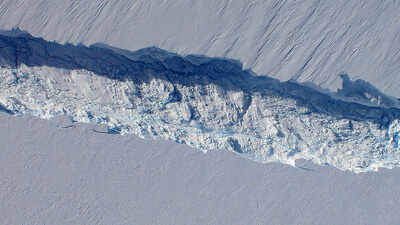
Human-induced ocean warming has significantly accelerated the retreat of Antarctica's Pine Island Glacier, adding an estimated four kilometers of inland loss by 2015. Image Credit: Wikimedia Commons
When people think about industrial emissions, they often picture smoggy skylines, heatwaves, or stronger storms along coastlines. These visible changes make it easier to understand how human activities affect the climate.
Far from urban centres, human influence is reshaping some of the world's most remote landscapes. Antarctica's ice sheets are undergoing major structural changes linked to human activity.Unlocking the historical secrets of these distant ice sheets has long been a major challenge for the global scientific community. Because satellites have monitored the polar regions only for a few decades, researchers have had to reconstruct earlier changes from indirect evidence.
Researchers long debated whether polar ice loss was part of a natural cycle or being accelerated by human activity.This historic climate mystery was recently resolved in a landmark study published in the journal The Cryosphere. The research, led by Dr Alex Bradley of King's College London with teams from the British Antarctic Survey, is among the first to isolate and measure the human fingerprint on a major Antarctic glacier. By analysing historical records, the study confirms that while the immense Pine Island Glacier originally began a rapid retreat in the 1940s due to natural ocean shifts, human-driven ocean warming added four kilometres of inland loss by the year 2015.
The long memory of Antarctica's fastest melting iceTo appreciate the scale of this discovery, it helps to look at how the Pine Island Glacier behaves and why it matters to the rest of the world. This massive frozen river acts as a primary drainage pathway for the West Antarctic Ice Sheet, dumping vast quantities of ice into the Amundsen Sea. Because it flows quickly and loses a great deal of mass, it is widely regarded as one of the fastest-changing glaciers on Earth.
It is considered a major contributor to global sea level rise.The modelling suggests the glacier's recent retreat began nearly a century ago. Geological sediment records pulled from deep beneath the floating ice reveal that the glacier sat firmly on a massive underwater ridge for hundreds of years. In the 1940s, a strong, natural intrusion of warm ocean water managed to lift the ice off this protective ridge, triggering an initial retreat.
However, the study shows that this natural process was fundamentally altered when human-induced greenhouse gas emissions began to significantly warm the surrounding southern oceans a few decades later.To estimate the human contribution, the research team used physical climate models and machine learning. A report released by King's College London explains how the scientists compared two distinct scenarios. They simulated a reconstructed model of our actual history and weighed it against a hypothetical world where human-driven climate change never existed.
The comparative analysis revealed that greenhouse gas emissions increased the overall retreat of the glacier by approximately 18 to 20 per cent, pushing the grounding line several kilometres farther inland than it would have gone otherwise.
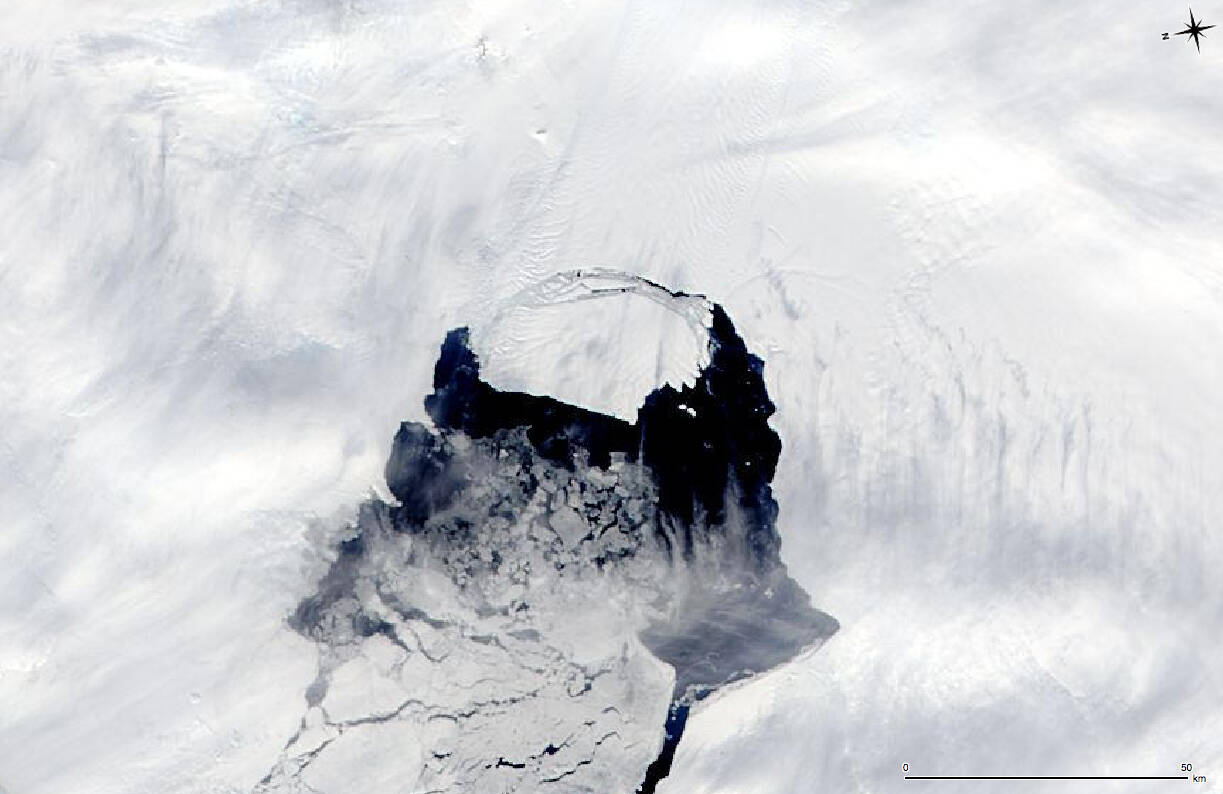
While natural ocean shifts initiated the glacier's rapid melt in the 1940s, greenhouse gas emissions have amplified this process, contributing 18-20% to the overall retreat. This discovery highlights how even remote regions are impacted by global emissions, with future ice loss likely dominated by human influence. Image Credit: Wikimedia Commons
The enduring legacy of modern emissions on global coastlinesThe polar modelling project adds new detail to our understanding of the modern environmental footprint. While human-driven ocean warming began affecting West Antarctica around the 1960s, its compounding effects have worsened an existing vulnerability.
The scale of the inland retreat is unlikely to have occurred without sustained human influence, suggesting that emissions can affect even the most isolated corners of the globe.According to the King's College London report, Pine Island Glacier may briefly stabilise later this century as it reaches a higher ridge in the bedrock. However, Dr Alex Bradley says any pause would be temporary if global temperatures continue to rise.
By the twenty-second century, human-driven warming is projected to become the dominant force driving ice loss, outweighing natural stabilisation mechanisms.The study suggests that Antarctica's ice sheets respond slowly to long-term climate changes. Understanding that human activity has already added kilometres of inland ice loss underscores the need for a more sustainable path forward and shows how today's choices can influence future coastlines.







 English (US) ·