

 1 hour ago
5
1 hour ago
5
ARTICLE AD BOX
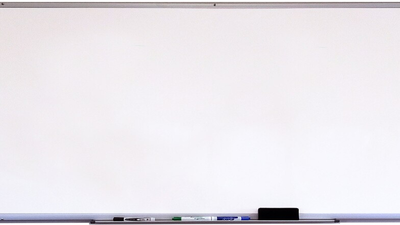
blank whiteboard with markers and eraser. Image Credit: Wikimedia Commons
Every day, millions of people enter an office or a classroom and look directly at a smooth white rectangle. The whiteboard has become so ubiquitous today that we hardly pay any attention to it.
It simply hangs there waiting for a person to pick up a marker and sketch their business strategy, solve a problem in math, or illustrate a foreign language lesson.Nevertheless, the history of such an ordinary product can be quite fascinating. A widespread belief holds that office-supplies manufacturers stumbled on the idea in 1989 while experimenting with a smooth white coating for a writing surface. However, it is documented that the real development of a whiteboard was a process of gradual improvement that took many years to achieve.The roots of a reusable writing surfaceEven long before the last years of the 20th century, attempts were made to find a more convenient solution to writing and erasing messages than the one based on dust-producing chalk. In fact, the history of the first steps taken in order to design a device similar to today's whiteboards goes back to the middle years of the past century. According to a historical review on education provided by the University at Buffalo, Martin Heit discovered the basics of the future product in the late 1950s.
He discovered that notes could be written on film negatives and erased easily with water.This discovery gave rise to the first attempts to create a reusable surface for writing. Even though Heit's experiments had nothing to do with modern products in terms of their appearance and material, they proved that such a device could be created. It should be noted that accounts of the whiteboard's origin differ, especially over which materials were tried first.The steel revolution that made all the differenceThe idea required better materials before it could become a workable commercial product that could withstand daily use. Again, the University at Buffalo history resource suggests one of the major breakthroughs was made by Albert Stallion in the steel industry. It turned out that enameled steel can be used as a highly durable and smooth surface to write on.It was a big leap for the invention. An enameled steel surface would resist constant use and help prevent ghosting, the faint residue left behind after erasing.
In other words, the inventors made a material suitable for real-life use by transforming an industrial one.
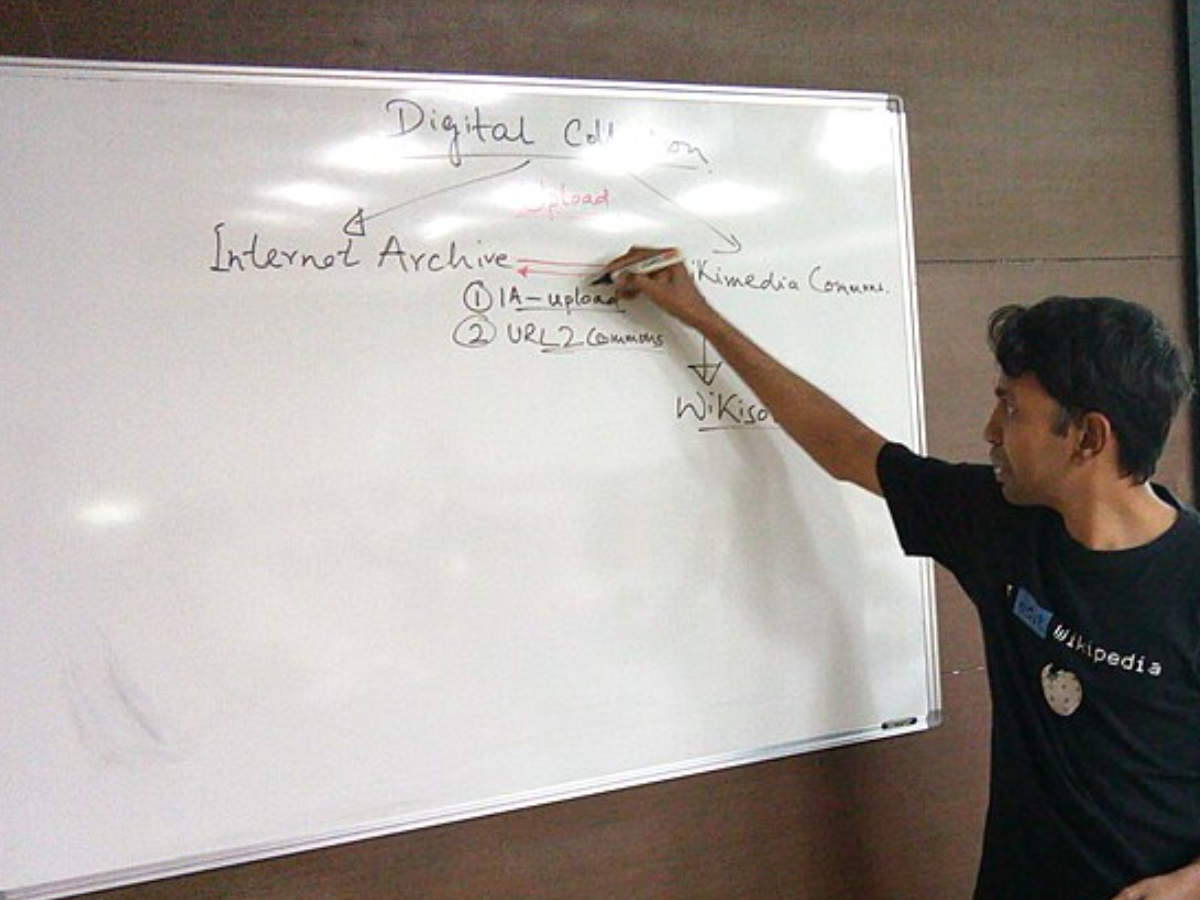
blank whiteboard with markers and eraser. Image Credit: Wikimedia Commons
The clean revolution in schools and officesDespite all these revolutionary inventions, however, whiteboards have not spread around the world at once. For many years, good old blackboard and greenboard have been used traditionally by teachers, professors and managers of companies. However, everything changed much later when the office environment and schools started to become more modernised.As can be seen from the research review in Scientific Reports, whiteboards have been put into widespread usage only in the late 1980s. What is important, according to this research review, is that this period should be seen not as the invention of whiteboards but as their commercialisation. Finally, manufacturers managed to make the coating material smooth and the dry-erase markers cheap and easy-to-use.It was a fortunate moment, because offices were filling with new electronic computers and other devices that chalk dust could damage.
The dry-erase board was very convenient in this regard because it was clean and smooth.How whiteboards spread rapidlyOnce the product proved reliable, it was adopted worldwide at impressive speed. The study says classroom use boomed in the 1990s, when schools began replacing chalkboards with whiteboards.Teachers and students liked the invention, as it helped to get rid of dust and coughing in class. It also made it easier to distinguish colours such as red, blue and green against the white background.The product emerged from several decades of incremental improvements, from film negatives to steel coatings. It is an outstanding illustration of how the most functional office appliances are never invented in a sudden moment of inspiration but gradually created out of necessity.









 English (US) ·