

 1 week ago
14
1 week ago
14
ARTICLE AD BOX
3 min readNew DelhiUpdated: Feb 11, 2026 02:24 PM IST
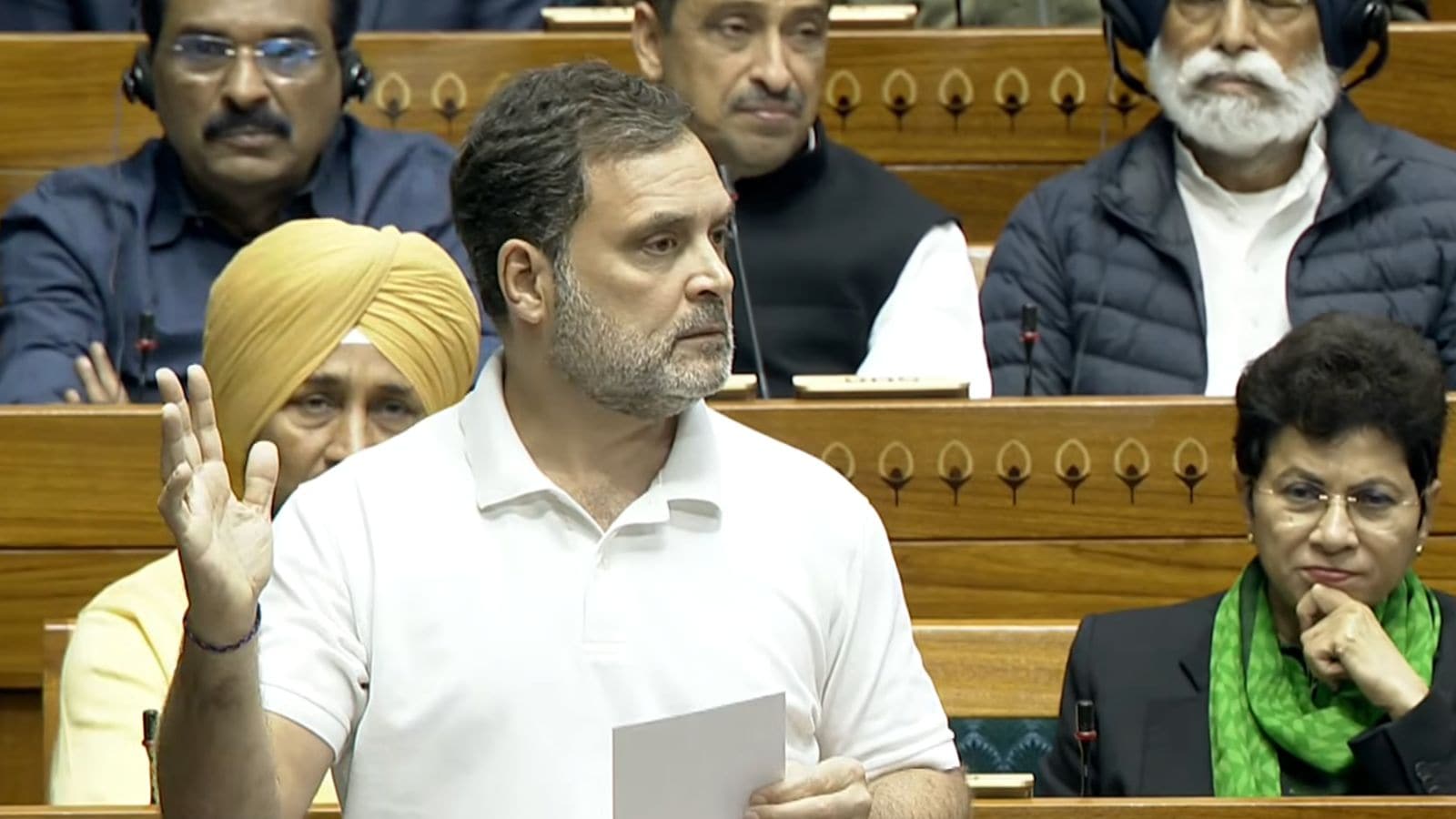 Gandhi noted that the Survey suggests the world is moving from stability to instability. (Screengrab)
Leader of the Opposition in Lok Sabha Rahul Gandhi on Wednesday said he had found two “solid and profound” points while examining the government’s recent Economic Survey. Gandhi said that the Survey suggests the world is moving from stability to instability. Referring to earlier remarks by Prime Minister Narendra Modi and National Security Advisor Ajit Doval he said that the two had claimed that the “era of war” was over but the current developments indicate the opposite.
Gandhi cited the wars in Ukraine and Gaza, tensions in the Middle East, the threat of war involving Iran, and referred to Operation Sindoor as part of the emerging security landscape. “We are moving into an era of war,” he said, adding that the US dollar and American supremacy are being challenged as the world transitions from one superpower to multiple power centres.
At the centre of this global contest, Gandhi said, is artificial intelligence. He warned that AI will have significant consequences and said discussing AI without data is like talking about an internal combustion engine without petrol. “The petrol for AI is data. If you have AI and not data, you have nothing,” he said, adding that information technology companies could face challenges.
Rahul Gandhi identifies India’s core strengths
He further identified three core strengths that India must protect in turbulent times: its people and their data, its food supply driven by farmers and labourers, and its energy systems. Calling India’s 1.4 billion population its biggest strength, he said the data generated by them is the country’s most valuable asset. “In a contest between the US and China, the single most valuable asset is Indian data,” he said, noting that China also has data from 1.4 billion people.
Gandhi argued that India must recognise data as its strength and negotiate globally as an equal. Referring to the government’s trade approach, he alleged that India had given up control over its digital trade rules. He claimed that tariffs had risen from an average of 3 per cent to 18 per cent, a six-fold increase, and that US imports were projected to rise from USD 46 billion to USD 146 billion. He further alleged that India’s tariffs had increased from 3 per cent to 18 per cent while US tariffs had fallen from 16 per cent to zero.
Referring to the textile sector, Gandhi said that during a visit to a factory in Gurugram, workers told him they were “finished”, claiming Bangladesh’s tariff had been reduced to zero while India’s stood at 18 per cent.
On energy security, Gandhi alleged that the United States would decide and monitor from whom India buys oil, including Russia and Iran. He said energy security is critical for sustaining data and warned that allowing such oversight amounts to the weaponisation of energy and finance against India.



 English (US) ·