

 1 hour ago
3
1 hour ago
3
ARTICLE AD BOX
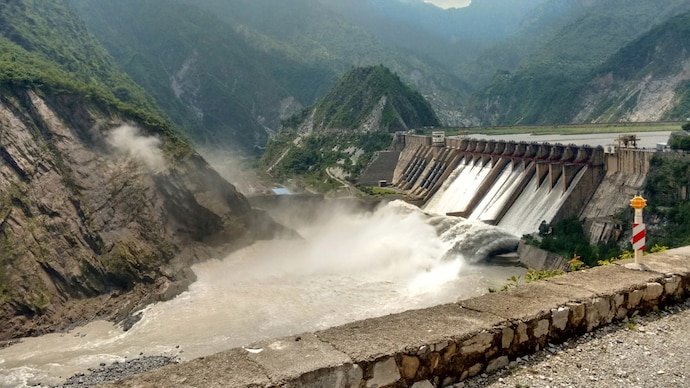
India has alerted Pakistan to possible flooding in the Chenab after opening the Salal Dam spillway gates in Jammu and Kashmir. The warning comes despite a freeze of the Indus Waters Treaty and Pakistan continuing to vilify India globally.
Pakistan Indus Waters Treaty
New Delhi,UPDATED: May 27, 2026 15:02 IST
Ever since India suspended the Indus Waters Treaty (IWT) after the Pahalgam terror attack last year, Pakistan has been running pillar to post, accusing Delhi of weaponising water. Despite the smear campaign and caustic remarks by Pakistan, Delhi has recently alerted Islamabad about possible cross-border flooding in the River Chenab. This is believed to be the second significant communication from India over possible flooding in downstream Pakistan since the hostilities last year.
Being a lower riparian state, Pakistan is affected by any disruption in water flows in the Indus basin. Earlier this week, after being alerted by Indian authorities, Pakistan put Punjab province on flood alert and activated its rescue teams, PTI reported. India has alerted Pakistan of increased inflow of water from the Chenab till May 30 after it opened the spillway gates of the Salal Dam in Jammu and Kashmir.
The Chenab is one of six rivers in the Indus basin shared by India and Pakistan. Under the Indus treaty, India has unrestricted rights to the waters of the Sutlej, Beas and Ravi. Pakistan received rights over the western rivers - Indus, Jhelum, and Chenab. However, over the years, India has used these rivers for irrigation and run-of-the-river hydropower projects, much to the chagrin of Pakistan.
Last week, the District Magistrate of J&K's Reasi district announced the opening of the spillway gates of Salal Dam for flushing of silt ahead of the monsoon. This was shared with the Punjab province's agriculture department.
"The water level in the Chenab may rise by two to three metres due to the opening of the spillway gates of the dam by India," Sialkot's deputy commissioner said while alerting the disaster management authorities.
Authorities have been directed to ensure 24-hour monitoring of the river and restrict public movement on the banks of the Chenab.
Interestingly, despite the gesture by India, Islamabad has continued to vilify Delhi on the global stage. Its anxiety is palpable ahead of an unforgiving summer. Being an agrarian economy, Pakistan is heavily reliant on water flow from the Indus rivers for agricultural and irrigation purposes in Punjab, known as the country's "food basket".
Over the past couple of days, Pakistan has vehemently raised the issue at global forums to get India to relent on sharing the waters of the Indus basin.
On Tuesday, Pakistani minister Dr Musadik Malik accused India of politicising shared water resources at the water conference in Tajikistan.
The same day, its foreign minister, Ishaq Dar, underlined at the United Nations that "durable peace" in South Asia cannot be built by keeping the Indus treaty in abeyance. "Water must never be weaponised," Dar further said.
In fact, this is the second time in eight months that India has extended such a gesture. In August last year, India alerted Pakistan about potential flooding in the River Sutlej after it released water from overflowing dams and swollen rivers. The gesture by India allowed Pakistan to evacuate tens of thousands of people, residing in low-lying regions, in time.
At that time, too, there was no acknowledgement by Pakistan as it continued its smear campaign.
The suspension of the Indus treaty was among the punitive measures India took against Pakistan after the April 22, 2025, Pahalgam terror attack, which left 25 innocent tourists dead.
Signed in 1960, the treaty had successfully endured the 1965, 1971 and 1999 India-Pakistan conflicts. But after the Pahalgam attack, India took a hard stand. Prime Minister Narendra Modi maintained that "blood and water" cannot flow together.
With the suspension of the treaty, India also stopped sharing water-level data of the three western rivers with Pakistan.
Previously, during the monsoon, India's early warnings about a rise in water levels helped Pakistan to evacuate residents in low-lying areas in Punjab and Sindh provinces promptly.
The recent gesture by India underlines an uneasy diplomatic reality. Despite Pakistan's hostilities, the two countries remain bound by the realities of geography and shared rivers.
- Ends
Published By:
Abhishek De
Published On:
May 27, 2026 15:00 IST








 English (US) ·