

 1 week ago
9
1 week ago
9
ARTICLE AD BOX

India’s efforts to save the critically endangered Great Indian Bustard have recorded an important milestone with the hatching of two new chicks at a conservation breeding facility in Rajasthan.
The development has pushed the number of birds under captive care to 70 individuals, the highest recorded since the launch of the programme aimed at protecting the species. Bhupender Yadav (@byadavbjp) Union Cabinet Minister for Environment, Forest & Climate Change posted on X, “Another milestone achieved in Project GIB! Project Great Indian Bustard entered into the fourth year of its captive breeding with two new chicks hatched at the Conservation Breeding Centre of Rajasthan this week, one from natural mating and the other from artificial insemination, taking the tally of birds in captivity to 70.
In an important milestone for the species' conservation efforts, some of this year's captive-bred chicks will be soft released in the wild, marking a new challenging beginning for the project. I congratulate the forest officials of Rajasthan Forest Department ( @ForestRajasthan ) for this achievement.”
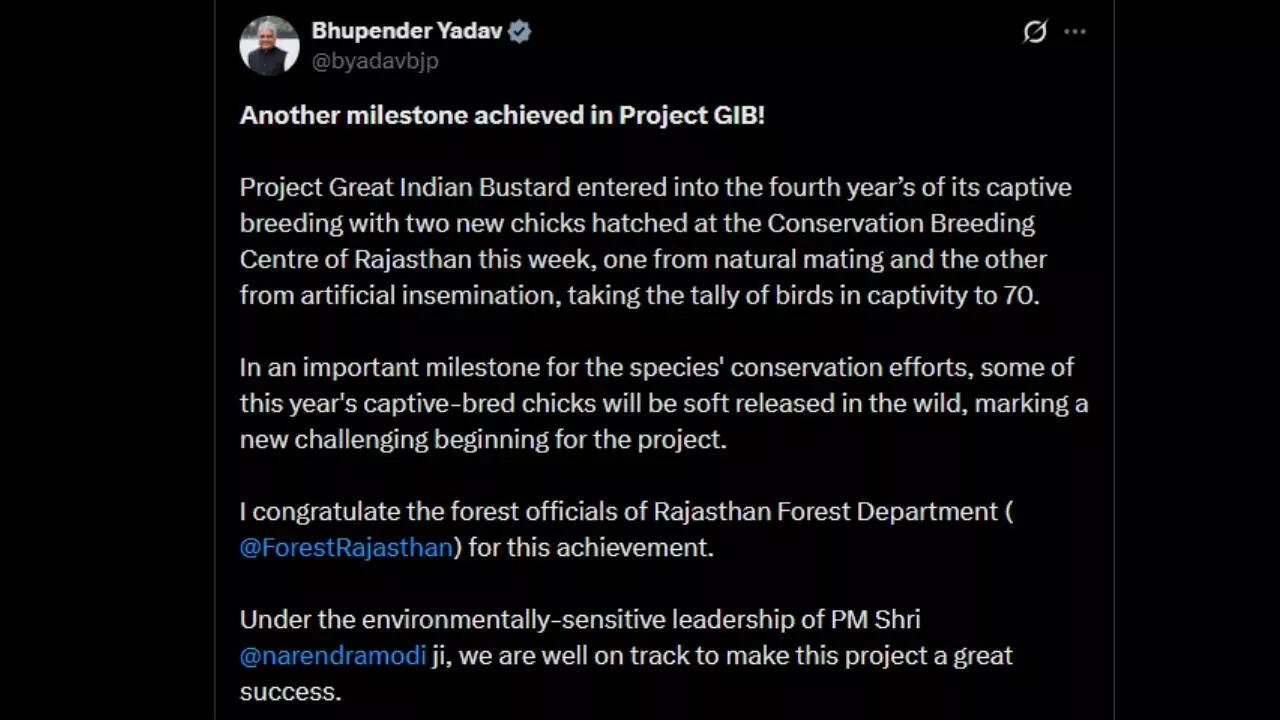
Bhupender Yadav on X
The minister described the moment as a significant step forward for Project Great Indian Bustard. The captive breeding program for the species is in its fourth year and is regarded as one of the most important conservation efforts for the species.
The chicks were hatched earlier this week at the Great Indian Bustard Conservation Breeding Centre. According to the Ministry of Environment, Forest and Climate Change, the birds were hatched using different breeding methods. One chick was hatched from natural mating between the birds, while the other was hatched from artificial insemination.The addition of the new chicks has increased the number of captive birds for the species to 70.
This marks a significant increase from the early years of the program.
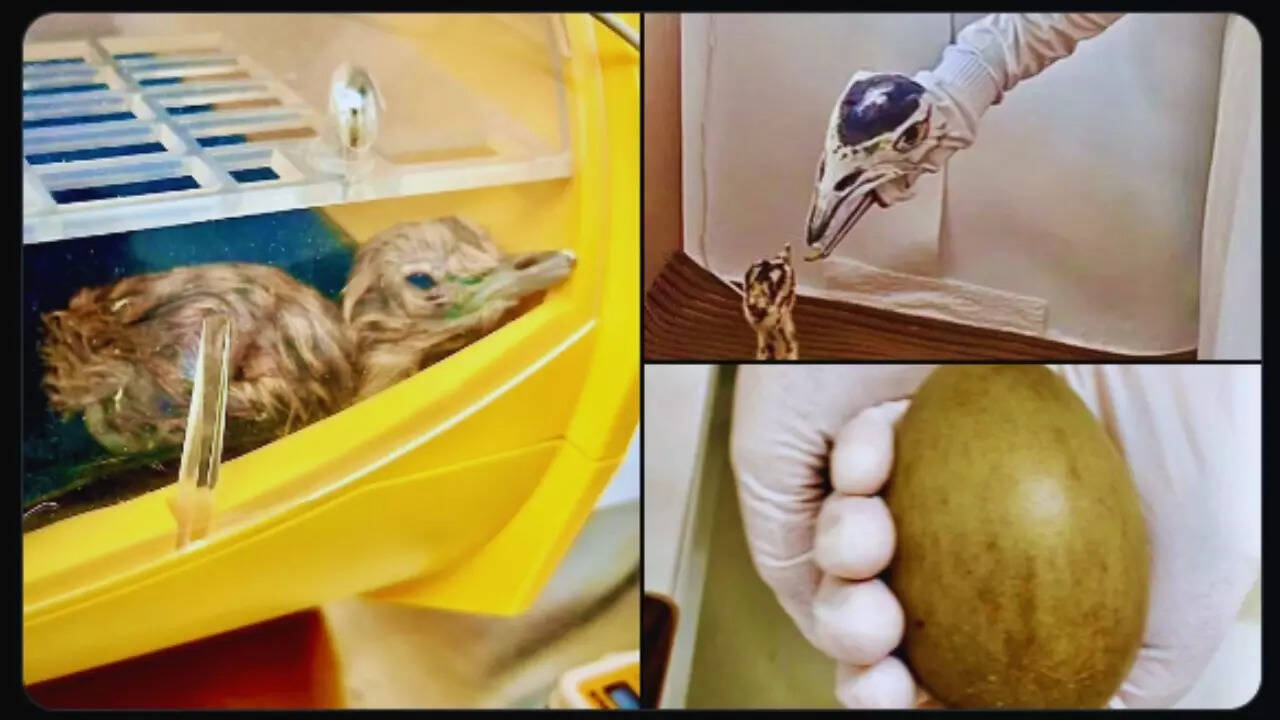
Bhupender Yadav post on X
The program is expected to enter a new phase later this year when a number of the captive birds are expected to be “soft released” into the wild. This is a significant development for the species since it will help increase the population in the wild. Soft releasing the birds into the wild means that the birds will be returned into their natural habitat while ensuring that they are able to survive outside the captivity program.The minister also praised the efforts of the Rajasthan Forest Department, whose officials have been actively involved in the implementation of the breeding and conservation process.The scientifically guided methods have also ensured an increase of 20 to 30 percent in survival rates, as observed in other similar breeding programs worldwide.The conservation of the Great Indian Bustard is part of the broader environmental agenda set by Prime Minister Narendra Modi, with officials confident that the scientific management of the program will ensure the survival of the species.The Great Indian Bustard is one of the most endangered species globally, but it was once found all over the country’s grasslands.







 English (US) ·