

 8 hours ago
6
8 hours ago
6
ARTICLE AD BOX
From Indian suppliers to global darknet forums, Captagon's shadow trade is thriving despite a Rs 180-crore crackdown.
New Delhi,UPDATED: May 20, 2026 16:46 IST
India’s recent seizure of Captagon worth nearly Rs 180 crore by the Narcotics Control Bureau has exposed the growing presence of the so-called jihadi drug on dark web marketplaces, where Indian and international suppliers continue to sell the banned stimulant. 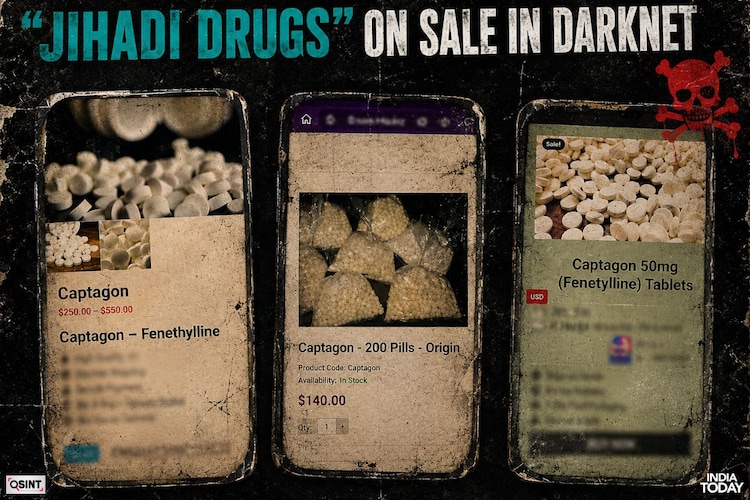
Even after the massive crackdown, a large underground network dealing in Captagon remains active across darknet forums and marketplaces. An India Today OSINT investigation into deep web platforms found several listings advertising the drug in bulk quantities, with payments sought through cryptocurrencies and deliveries promised through anonymous shipping methods.
India Today investigation identified a portal operating under the name “Indian Ketamine”, which claims to ship narcotics both domestically and internationally. The platform was found advertising Captagon, originally the brand name for fenethylline, in powder form. However, the drug is sold under multiple market names, including fenethylline, Biocapton, and Fitton.
Apart from Captagon, the supplier was also offering ketamine and several other psychotropic substances to buyers globally.
Captagon gained global notoriety during conflicts in West Asia after reports linked its widespread use to militant and extremist groups, including ISIS. The stimulant is known for suppressing hunger, reducing fear, and helping users remain awake and active for long periods, leading to its reputation as a “jihadi drug”.
The investigation found that the Captagon trade on the dark web is far more extensive than isolated listings. Multiple darknet marketplaces and forums were openly advertising the drug in both tablet and powder forms, often claiming discreet international delivery.
Suppliers are also deploying sophisticated tactics to evade law enforcement scrutiny. Most vendors insist on payments through cryptocurrencies to avoid financial tracing, while operating exclusively through dark web portals to remain outside the radar of authorities.
Use of Anti X-Ray packaging
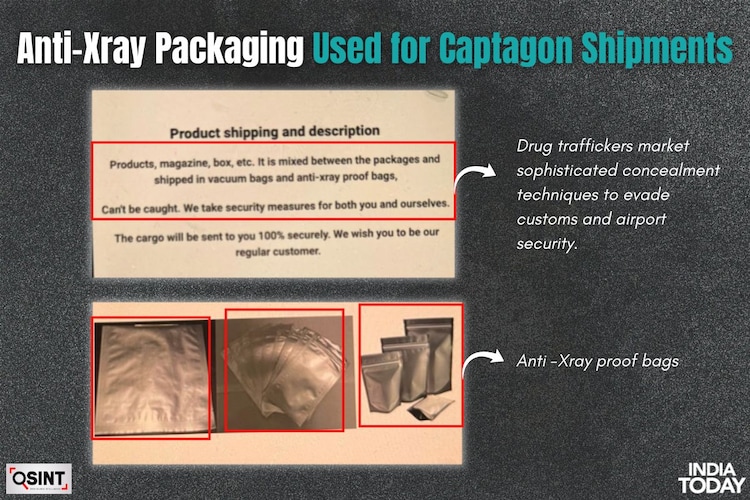
One seller operating on the darknet platform “Venus Marketplace” was found selling 200 Captagon pills for nearly $140. The vendor claimed to use specially designed scanner-resistant packaging for deliveries. According to the advertisement, the drugs were packed using heavy coatings of blended alloys and synthetic layers inside bags sealed with heat, allegedly to obstruct detection by airport and cargo scanners.
Such packaging creates dark opaque areas under standard X-ray scanners, making the contents difficult to identify during security checks. Advertisements on the platform also claimed that narcotics were concealed alongside ordinary commercial products to reduce suspicion during transit.
Several other suppliers reviewed during the investigation made similar claims about using advanced concealment techniques and stealth packaging methods to bypass international customs and courier inspections.
According to the 2025 report of the United Nations Office on Drugs and Crime (UNODC), the Middle East continues to be the region most affected by trafficking and use of “captagon”. The report says, “Gulf countries continue to be the primary destination market for Captagon.” It further adds that since December 2024, UNODC has verified data showing that at least 177 million tablets, equivalent to 30 tonnes, were intercepted across the Arab region.
- Ends
Published By:
bidisha saha
Published On:
May 20, 2026 16:46 IST








 English (US) ·