

 1 hour ago
3
1 hour ago
3
ARTICLE AD BOX
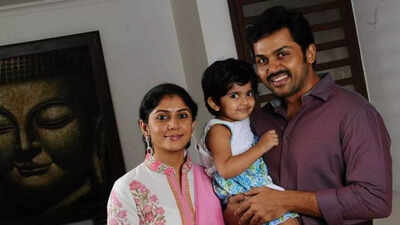
Actor Karthi and his wife Ranjani have managed to establish a life for themselves deeply entrenched in simplicity, cultural values, and emotional involvement, despite Karthi being very active in his acting career.
The couple has two children together: a daughter named Umayal born to Karthi and Ranjani in 2013, and a son named Kandhan born to Karthi and Ranjani in October 2020.A blessing and a life-changing momentThe couple’s second child, a baby boy, was welcomed into the world in the month of October 2020. The news was announced via social media by Karthi, who thanked all the medical staff who helped in the delivery of the baby, saying the experience was “life changing” and seeking the blessings of all his fans and followers on the birth of the new baby.
This marked the birth of the couple’s second child seven years after the birth of their daughter Umayal, who was born in the year 2013.Choosing the name Kandhan – a thoughtful reference to cultureKarthi, after several months of his birth, disclosed the name of his child, which was Kandhan, with significant connections to Tamil tradition and religion. As Karthi disclosed with deep feeling through social media, he, Ranjani, and their daughter selected this name with love and determintion to bring sweetness with their addition to their lives.
Kandhan, which stands for Lord Muruga, one of the names of Lord Hanuman, holds significance with Karthi, as his original name is Karthikeyan, which refers to Lord Muruga.Parenting through presence and valuesAlthough Karthi has not revealed much about his personal approach to parenting, his opinions on family matters as expressed publicly have indicated that his approach is value-based. For example, in expressing his opinions about his marriage, family, etc.,
Karthi stressed the need for being companionable, understanding, and respectful towards his partner, Ranjani, which indicates that the decision of the couple in choosing parenting approaches could be based on partnership.
Further, the opinions expressed by the actor in interviews about his life, family, etc., indicate that Karthi’s approach to life is peaceful.Naming and Cultural Identity as Parenting ToolsThe fact that Karthi and Ranjani chose the name Kandhan is a good example that their cultural beliefs and ideals of their identity are reflected in the manner in which they raise their kids.
Karthi and Ranjani are connecting their kids to a broad culture beyond the ideals of fame and success by choosing their kids’ names in a manner that is often connected to their traditional ideals of culture and spirituality. In this case, the parents are creating the idea of legacy with their kids.Sibling dynamics and balanceAlthough not much information exists on public interviews that are specifically about raising both Umayal and Kandhan together, other general information on their family situation implies that the sibling pair is raised in a home environment where balance is preferred to competition, curiosity is preferred to forcing pursuit, and support is preferred to comparison.
By having children far apart, the couple may be planning very well for the encouragement of emotional growth, sibling bonding, and development within a nurturing home environment.Keeping celebrity life behind closed doorsLikewise, Karthi and Ranjani’s parental style is also evident in the way they manage exposure. While other celebrities are constantly introducing their kids to the public eye, Karthi and Ranjani are constantly avoiding it.
They are letting the childhood of their children develop in private. This is exactly what all other parents want: to give their children a life that is full of experience rather than performance.Lessons from family and upbringingBesides his own parenting choices, Karthi has elaborated elsewhere, eg, the emphasis he learned about family values and respect, illustrated by references to his upbringing by his children.
These may not be directly instructive when it comes to parenting, but they do point to the family values of humbleness, appreciation, and mutual respect. For many, this points to perhaps an even wider message about parenting – children do best when dignity and love are constant accompaniment.Reflective, respectful, and quietly Present Ultimately, it is the approach to parenting that Karthi and Ranjani have taken, where it is a mix of cultural awareness, emotional intelligence, and personal choice. There’s sharing in terms of milestones like the birth announcement and naming ceremonies, but also space to leave around the journey of being parents. In that way, perhaps the way to approach it is to essentially emphasize that parenting is as much about what is not seen as what is seen.








 English (US) ·