

ARTICLE AD BOX
Founder Trustee shares insights on paediatric cardiac care, healthcare equity, and scaling impact across India.
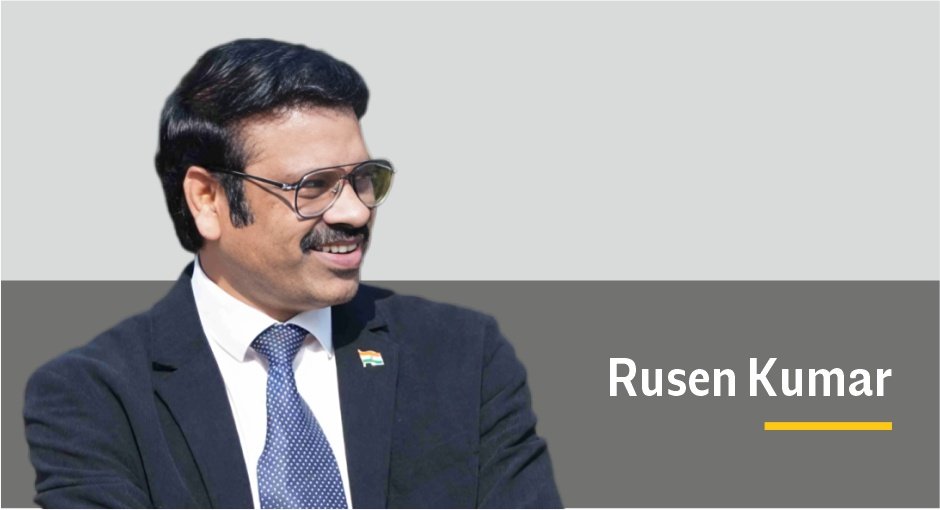
By Rusen Kumar
NEW DELHI (India CSR): In this exclusive interview, Rusen Kumar, Managing Editor, India CSR, speaks with Jyoti Sagar, Founder Trustee, Genesis Foundation, as the organisation marks 25 years of transformative work in paediatric cardiac care. Reflecting on this significant milestone, Jyoti Sagar shares the deeply personal inspiration behind the Foundation’s inception and how a profound loss evolved into a mission to ensure that no child is denied life-saving treatment due to financial constraints. He highlights how Genesis Foundation has grown into a nationally recognised institution, built on empathy, purpose, and a steadfast commitment to equitable healthcare access for underprivileged children.
Jyoti Sagar also offers insights into the Foundation’s impactful journey—supporting thousands of children with a high success rate—while emphasising that true impact lies beyond numbers, in restored lives and empowered families. He discusses the importance of strong hospital partnerships, early diagnosis, and awareness in addressing congenital heart defects in India. The conversation further explores the Foundation’s efforts in promoting gender equity in healthcare, enabling access to advanced medical interventions, and creating long-term societal impact. Looking ahead, he outlines a vision focused on scaling reach, strengthening collaborations, leveraging technology, and driving advocacy to build a more inclusive and sustainable healthcare ecosystem for every child.
1. The Genesis Foundation marks 25 years of dedicated service. What does this significant milestone mean to the organization, and what are the most profound lessons learned over this quarter-century journey?
Completing 25 years is not just a milestone for Genesis Foundation, it reflects sustained commitment to saving little lives and building equal access to healthcare. Over this journey, we have learned that impact is not defined merely by numbers but by the quality of life restored by providing timely intervention to lesser privileged families who cannot afford it.
One of the most profound lessons has been the power of collaboration. Working closely with hospitals, donors, and communities has enabled us to build a strong, seamless ecosystem of care. We have also learned that early diagnosis and timely intervention are critical in pediatric cardiac care, and that increasing awareness plays a vital role in bridging this gap.
2. The Genesis Foundation has a deeply impactful origin story that shaped its core mission. What was the pivotal inspiration behind establishing the foundation and how has that initial vision guided its evolution into a national force for paediatric cardiac care over 25 years?
Genesis Foundation’s origin is deeply personal for me. In 1983, my wife Prema and I lost our newborn son, Sameer, to a congenital heart condition at a time when medical options in India were extremely limited. That loss left a lasting impact and planted the seed for what would eventually become our life’s purpose.
As part of our healing journey, we began volunteering with Mother Teresa’s Missionaries of Charity in Delhi, where we met children with severe medical conditions and witnessed how timely intervention could transform lives. Those experiences became the pivotal inspiration behind Genesis Foundation.
When we formally established the Foundation in 2001, our belief was simple: no child should lose their life due to lack of financial resources. Over the years, that vision has guided our evolution into a focused, national organization dedicated to congenital heart defects, while staying rooted in empathy, purpose, and the commitment to give every child a fair chance at life.This continuity of vision has enabled Genesis Foundation to remain relevant, impactful, and trusted over 25 years.
3. With over 5,000 children’s lives touched and a ~98% success rate in interventions, how do you measure the true impact of your work beyond statistics, and what strategies enabled this impressive scale?
While the numbers and success rate matter, for us the real impact is what happens after the surgery. We stay connected with the children for up to three years to see how their lives are changing—whether they’re able to go to school, play, and grow like other children. Seeing them return to normal life and starting to dream again is what truly defines success for us. We also see it in their families. Parents who were one anxious and uncertain begin to feel more stable, both emotionally and financially. When we see a complete turn-around of what the family and child go through pre-intervention and post-intervention, we feel all the work we put in to streamline internal processes, identify and support a child at that moment comes full circle, as a family is emotionally at ease, the child is medically fit – and the donors funds are well spent, with integrity and purpose.
As we’ve grown, a few things have really helped us do this work better. We’ve built strong relationships with over 25 hospitals, and we are very careful about who we partner with. There’s a detailed process before we onboard any hospital to make sure every child gets the right quality of care. We also focus a lot on early diagnosis and timely treatment, because that can make a big difference in outcomes for these children. Trust has been very important in this journey. For every case, we share detailed report and updates with donor so that they know how their contribution is being used and what impact it is creating. 100% of donations from individual donors are used towards the treatment of children with no allocation towards administrative costsAt the heart of it, we try to balance empathy with being organised and responsible, so we can reach more children while still making sure each one gets the care they deserve.
4. Genesis Foundation collaborates with over 25 leading hospitals. What are the key elements of building and sustaining such critical medical partnerships, and how do these collaborations ensure quality and accessibility of care?
Our collaborations with over 25 leading hospitals are built on trust, shared values, and a deep commitment to giving every child the best possible care. For us, it’s not just about expanding a network, it’s about partnering with hospitals that truly align with our mission.We follow a very detailed and strict checklist before onboarding any hospital. This includes evaluating their expertise in pediatric cardiology, success rates, availability of specialised cardiac surgeons and pediatric ICUs, infection control standards, and their ability to handle complex and high-risk cases. We also look at their transparency, ethical practices, and willingness to support underprivileged families. Only hospitals that meet all these criteria become our partners.
Every partner hospital works with our Genesis Foundation Application Kit, which ensures complete verification of the child’s medical condition, family background, and financial eligibility. This helps us ensure that support reaches those who need it the most.
We support families from low-income backgrounds, typically those earning less than Rs 20,000 per month, making life-saving treatment accessible to children who would otherwise not have a chance.
These strong partnerships also allow us to take on highly complex and landmark surgeries. Till now we have supported over 30 landmark surgeries. Some of our key partner hospitals, like GKNM and Amrita, have been critical in this journey, where together we have supported over 500+ surgeries, including many life-saving and rare procedures. These are institutions that not only provide the best medical care but also stand with us in offering financial support for these children.
Beyond hospital care, our outreach efforts, from screening camps in remote regions stretching from Leh to Kanyakumari. Till now we have conducted over 25 screening camps, where we have screened over 2500 children. These camps ensure that we are able to identify children in need and connect them to the right treatment at the right time.
Together, this ecosystem of trusted hospitals, strong processes, and deep outreach ensures that children receive timely, high-quality care, regardless of their financial situation.
5. CHD remains a significant health challenge in India. What are the biggest systemic gaps or societal factors Genesis Foundation aims to address, and how do you advocate for broader policy changes or awareness?
Between 200,000-250,000 children are born every year in India with a congenital heart defect. Out of which 70,000 have a critical CHD that needs intervention within the first year or the child will not survive. One of the biggest key challenges is just the sheer lack of awareness on congenital heart defects and the grip it has on children born in this country. Due to lack of awareness, it is not always in the view of potential donors as a problem as they focus on other more common healthcare issues. We address these gaps through conducting regular screening camps in underserved communities to enable early diagnosis and improve outcomes. Think about it, when one child gets diagnosed or evaluated, families talk – and the ripple effect of word-of-mouth is unmatchable. It is credible. Alongside this, we are building a strong repository of articles and resources to educate families, caregivers, and the wider public about early symptoms, treatment options, and the importance of timely care.We have been planning to take Genesis Foundation at the national level where we can conduct seminar to spread awareness about the work and about the cause.
6. Genesis Foundation aligns with SDG 3 and, notably, SDG 5 on gender equality. How does the foundation actively ensure equitable access to life-saving care for girls, countering potential societal biases, and what impact have you seen?
In a country like India, access to health care is not always equal. At Genesis Foundation, we have seen that sometimes girls don’t get medical care as quickly as boys. As also shared by Dr. Anita Saxena, in many cases girls are less likely to receive heart surgery, and this is a reality we cannot ignore. For us, every child is equal. When a case comes to us, we don’t see whether the child is a boy or a girlwe only see a child who needs help. We also spend time talking to families, helping them understand that their daughter deserves the same chance at life and health. Sometimes, these small conversations make a big difference.This commitment is reflected in our numbers. In FY 2024–25, 51% of the children we supported were girls, compared to 49% boys. In FY 2025–26, this has further improved to 54% girls and 46% boys.But beyond numbers, it is the stories that truly show the impact. Girls like Tina (name changed), who underwent a successful minimally invasive surgery at just 2 years old, and Naina (name changed), who is now back in school and dreams of becoming a teacher, remind us why this work matters.For us, gender equity is not just a goal, it is a conscious, everyday choice. Each girl we support is a step towards changing mindsets and ensuring that every child, regardless of gender, has an equal chance at life and a healthy future.SDG Clause 3: Good Health & Well-being aims to ensure healthy lives and promote well-being for all at all ages – GF has supported 5400+ children delivering life-saving interventions & boosting survival rates
SDG Clause 3.2: End preventable deaths of newborns and children under 5 years of age.In FY 2024-25, GF supported 22% neonates/infants and 35% children between ages 1-4 years. In FY 2025-2026, GF supported28% neonates/infants and 37% children between the age of 1-4 years. Genesis Foundation funds lifesaving heart surgeries for infants and neonates from low-income families directly reducing preventable child mortality due to CHD a leading cause of death in newborns and infants.
SDG Clause 3.4: Reduce premature mortality from non-communicable diseases (like CHD) by 1/3 through prevention & treatment. GF provides early diagnosis, surgical interventions by improving survival rates & long-term health outcomes. SDG Clause 3.8: Achieve universal health coverage, including access to quality essential health-care services and affordable medicines. GF ensures access to quality healthcare across its 25+ partner hospitals for children whose families cannot afford the treatment. We partner with these hospitals and provide free or extremely subsidized interventions.
7. From scarless endoscopic surgeries to complex biventricular repairs, Genesis Foundation supports cutting-edge procedures. How do you identify and facilitate such advanced medical interventions for underprivileged children?
In many cases, the journey starts with the hospital. Our partner hospitals refer children to us who need support, especially when the family cannot afford the treatment. In such instances, we have a standard operation procedure, where we have a list of cases which we do support and which we do not, so the first basic check is done by the hospital where they are sure that the case is deemed fit for us. Sometimes, the beneficiaries are identified either through screening camps (GF/hospital supported) or outreach clinics that hospitals conduct. All documentation from the hospitals and families are vetted by our internal team.
When there is a case where the family directly approaches us through SEO, we first do a basic check. We go through all the documents, understand the family’s financial situation, and make sure everything is genuine. This step is important for us because we want to ensure that the support reaches the right families. After this initial screening, we take the case forward internally. Our medical team and board review all the reports in detail. They guide us on the exact treatment needed, whether it’s a standard procedure or something more complex like an endoscopic surgery or a biventricular repair. We also ensure that it meets our criteria, in the types of heart defects we support – as there are some that are palliative in nature, which we do not support.
Once approval is given to the hospital, the child is admitted, the intervention is conducted. Since we already partner with trusted hospitals, we know the child is in the right hands. Alongside this, we take care of the financial side and coordinate everything so that there are no delays. We also stay in touch with the family, helping them through the process, because for them this can be very overwhelming.
Even after the surgery, we continue to follow up to make sure the child is doing well. Our role is to ensure that financial constraints never limit access to the best possible care.
By working with leading hospitals and staying aligned with the latest medical advancements, we are able to facilitate high-quality, timely interventions.
An example,At Amrita Institute of Medical Sciences, Kochi, they have used VR technology to develop extended three-dimensional imaging and provide an experience to the surgeons who are planning open heart surgery. The systems that have been developed for this purpose, mostly homegrown and enable us to greatly improve surgical outcomes through exceptionally detailed planning of the operations. Genesis Foundation has supported such surgeries with AIMS (Kochi)
8. The foundation emphasizes holistic impact, with stories of beneficiaries achieving academic success and even founding their own organizations. How do you track and nurture this long-term societal impact of your interventions?
For us, the journey doesn’t end with the surgery that’s actually where a new phase begins.
We stay closely connected with the family after the treatment and make sure the child comes for regular follow-ups. We understand that for many families, this is not easythere can be emotional and financial challenges. So wherever we can, we try to support them in the best possible way, so that the child does not miss these important check-ups.
We continue this engagement for up to three years. During this time, we try to understand how the child is really doing, not just medically, but in life. Are they able to go to school? Are they happy, growing well, and living like other children? These are the things that truly matter to us.
Over time, we start seeing the real impact. Children who once struggled to breathe are now going to school, doing well, and living a near normal, happy lives. Some even grow up wanting to give back, or become a doctor – a life returned full circle.
We also make sure that all of this is documented and shared with our donors. We feel a strong sense of responsibility towards the support we receive, so we keep them updated on the child’s journey, not just the surgery.
9. Over 25 years, what have been the most significant challenges – be it funding, operational, or societal – that Genesis Foundation has overcome, and what strategies contributed to your resilience?
Over the past 25 years, we have faced several challenges that have shaped our journey. Ensuring consistent funding for life-saving surgeries was a major hurdle, which we overcame by building long-term donor relationships, strengthening CSR partnerships, and maintaining transparency to earn sustained trust. Operationally, managing critical cases across geographies required strong coordination, leading us to develop robust systems, standardized processes, and a reliable network of partner hospitals. On the societal front, low awareness, delayed diagnosis, and gender bias often hindered timely care; we addressed these through continuous awareness initiatives, screening camps, and community engagement. These challenges have ultimately strengthened our resilience, helping us evolve into a more structured, collaborative, and impact-driven organization.
10. Looking ahead, what are the key strategic priorities and long-term goals for Genesis Foundation for the next decade? How do you plan to ensure the sustainability and continued growth of your mission?
Over the next decade, GF’s vision is to expand access to life-saving medical care for critically ill children, strengthen partnerships and build a sustainable ecosystem of support across India. Our strategic priorities lie in impact, collaboration, technology and most importantly – advocacy.
GF stays committed to increasing the number of children who receive timely intervention by partnering with a wider network of hospitals, and skilled medical specialists. This will ensure underserved sections of the society are provided access to diagnosis and treatment.
GF aims to deepen collaborations with healthcare institutions, corporates & CSR partners, philanthropic organisations and individual donors allowing the Foundation to scale impact sustainably and responsibly. Such sustained growth depends on a strong financial foundation so expanding donors, and increasing recurring giving platforms such as employee giving with Power of 100+ and our Giving Made Easy program provide just that.
Advocacy is becoming a corner stone for GF’s long-term strategy as we intend to:
- Ensure no child is denied treatment due to lack of funds
- Raise national awareness about congenital heart defects
- Collaborate with policymakers and public health bodies to support early diagnosis mechanisms and treatment infrastructure
- Promote specialised training programs for Pediatric Cardiologists to strength early detection & time management of CHD
This type of work strengthens our mission by expanding visibility, influencing systemic change and inspiring multi-stakeholder engagement.
We also aim to modernize care and expand reach by investing in digitized case management and monitoring systems and advanced reporting tools for transparency.
About the Author
Rusen Kumar, Editor of India CSR, is a renowned thought leader in the field of Corporate Sustainability and Corporate Social Responsibility (CSR). He regularly writes insightful articles and conducts interviews with industry leaders, policymakers, and development practitioners, promoting dialogue on responsible business and sustainable development.
ADVERTISEMENT
ADVERTISEMENT

ADVERTISEMENT
ADVERTISEMENT
ADVERTISEMENT





 English (US) ·