

 1 hour ago
4
1 hour ago
4
ARTICLE AD BOX
Last Updated:March 22, 2026, 19:49 IST
Amid the clash in Strait of Hormuz, what do Houthis in Red Sea mean for global oil transit? News18 explains


A Houthi supporter displays a poster of leader Abdel-Malek al-Houthi in Sanaa, Yemen. (AP File)
The Houthi movement (Ansar Allah) has positioned itself as a critical threat to global energy security by “lying in wait" along the Red Sea, according to the Wall Street Journal.
Amid the clash in Strait of Hormuz, what does the move mean for global oil transit? News18 explains.
What are the Houthis planning?
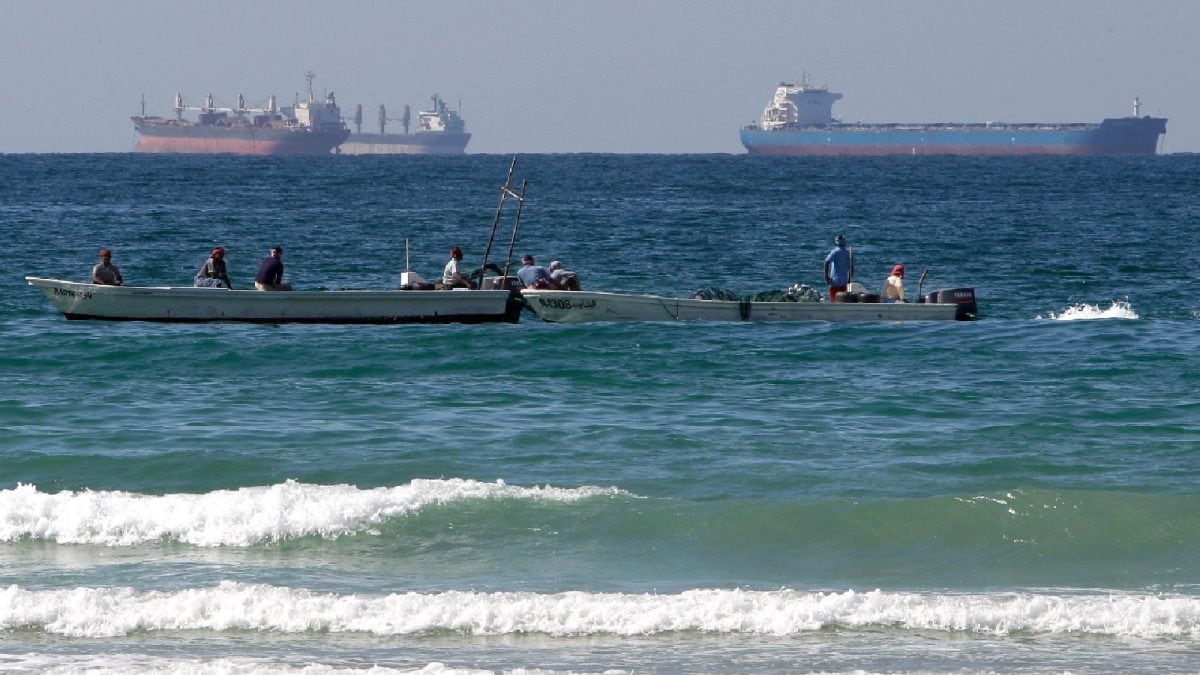
The Red Sea currently serves as the primary alternative for oil that cannot pass through the Strait of Hormuz.
The Houthis have recently issued threatening rhetoric toward Saudi Arabia’s East-West Pipeline (Petroline) and the export port of Yanbu, which are crucial for bypassing Gulf chokepoints.
Officials warn that Houthi involvement could lead to a complete halt of Red Sea shipping, a repeat of the disruptions seen in 2024–2025, said the WSJ report.
Red Sea’s Yanbu An Option, But Can’t Fully Replace Oil Chokepoint Strait of Hormuz: 5 Reasons Why
The group has declared its readiness to join Iran’s military operations, specifically threatening to target any country (including Saudi Arabia, UAE, or Jordan) that assists in intercepting missiles launched toward Israel. Beyond oil, threats have expanded to desalination infrastructure, which provides drinking water for millions in the region.
Saudi Arabia is reportedly working to maintain a delicate diplomacy with the Houthis to prevent them from fully entering the current regional conflict.
What happened in the past?
In 2024–2025, Houthi campaigns forced nearly 12% of global trade to reroute around the Cape of Good Hope, adding roughly $1 million per round trip in shipping costs.
The May 2025 ceasefire reached through US-Houthi mediation is now at risk as the group seeks to maintain its regional influence amidst the widening Iran-Israel war.
Who are Houthis?
The Houthis, formally known as Ansar Allah (‘Partisans of God’), are an armed Zaydi Shiite movement that currently controls the capital of Yemen, Sanaa, and much of the country’s north. Originally formed in the 1990s to represent the marginalized Zaydi minority, they have evolved into a major political and military force deeply integrated into the regional Iran-led “Axis of Resistance".
The group is led by Abdul-Malik al-Houthi, who succeeded his brother and founder, Hussein al-Houthi, after the latter was killed by Yemeni government forces in 2004.
Houthis’ ‘Finger Is On The Trigger’, But Why Hasn’t Iran’s Yemen Ally Entered The War Yet? Explained
Their official slogan, found on their flag, is: “God is the Greatest, Death to America, Death to Israel, A Curse Upon the Jews, Victory to Islam". They aim to establish an Islamic-style government in Yemen.
While the Houthis maintain they are an independent Yemeni movement, they receive significant military training and advanced weaponry from Iran, including ballistic missiles and drones.
In 2014, the Houthis seized Sanaa, forcing the internationally recognized government into exile. This triggered a nearly decade-long war against a Saudi-led coalition that sought to restore the previous government.
Since the October 2023 start of the war in Gaza, the Houthis have launched drones and missiles at commercial and military vessels in the Red Sea to pressure Israel into a ceasefire. The group is designated as a terrorist organisation by several countries, including the United States, United Kingdom, Saudi Arabia, UAE, and Australia.
Iran and Houthis
The Houthis are a key part of the Iran-led “Axis of Resistance", though experts describe them more as a strategic partner than a direct proxy.
While they share strong ideological and military ties, their relationship is unique compared to other Iranian allies:
Iran is the Houthis’ primary benefactor, providing nearly 90% of their advanced military capabilities, including the long-range missiles and drones used in Red Sea attacks.
Unlike Lebanon’s Hezbollah, the Houthis were not founded by Iran and do not follow the same strict religious authority (Wilayat al-Faqih). They maintain a domestic Yemeni agenda that sometimes takes priority over Tehran’s regional goals.
KEY FAQs
Are the Houthis really “lying in wait" in the Red Sea?
Iran-backed Ansar Allah (Houthis) are based in Yemen near the Bab el-Mandeb Strait. Reports say they’ve threatened attacks or blockades on ships. This is part of Iran’s strategy to pressure global trade routes
Why is the Red Sea suddenly critical for oil trade?
Because of problems at the Strait of Hormuz. Hormuz disruption is already cutting major oil flows and raising prices. Countries are rerouting oil via the Red Sea to avoid the Gulf. So the Red Sea becomes a backup route for global energy.
What happens if both routes are threatened?
Hormuz and Red Sea together handle a huge share of oil and trade between Asia and Europe. If both are unsafe, oil prices will surge, shipping delays will increase and global inflation will rise.
With agency inputs
First Published:
March 22, 2026, 19:49 IST
News explainers Iran’s Ally Houthis Lying In Wait In Red Sea? Another Jolt For Oil Trade Amid Hormuz Blockade?
Disclaimer: Comments reflect users’ views, not News18’s. Please keep discussions respectful and constructive. Abusive, defamatory, or illegal comments will be removed. News18 may disable any comment at its discretion. By posting, you agree to our Terms of Use and Privacy Policy.
Read More






 English (US) ·