

 4 days ago
13
4 days ago
13
ARTICLE AD BOX
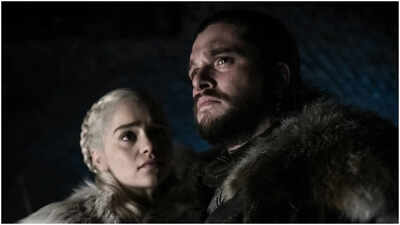
To celebrate the 15th anniversary of Game of Thrones, a special ‘Reign of Thrones’ trailer and promotional campaign was released recently. The trailer highlights all the iconic moments and characters, especially the dragonborns: Daenerys Targaryen and Jon Snow.
Though this celebration, running throughout April 2026, there’s another question doing the rounds in the fandom. Has audience fatigue set in for the World of Westeros?
A decade ago, the world of Game of Thrones felt less like a television property and more like a shared global condition. It colonised conversation, dictated viewing schedules, and turned narrative shock into a kind of cultural currency. Today, the question is not whether the franchise still matters—it clearly does—but whether its expansion has begun to dull the very edge that once made it indispensable.The early signs of fatigue in any fandom are usually not loud, think Star Wars and Star Trek or The Witcher. They rarely announce themselves through dramatic ratings collapses or outright rejection. Instead, they surface in subtler shifts: a thinning of urgency, a softening of discourse, a sense that watching is now optional rather than imperative. When ‘House of the Dragon’ premiered in 2022, it carried the burden of both revival and redemption after the divisive final season of its predecessor.
It succeeded, at least initially, by narrowing its focus: fewer characters, tighter politics, a return to the slow-burn intrigue that defined earlier seasons of ‘Game of Thrones’.But success has a paradox built into it. The more the universe expands—with new spin-offs reportedly in development—the more it risks becoming legible in ways that sap its unpredictability. What was once a world defined by narrative risk now operates within the expectations of franchise-building.
Viewers are no longer stepping into the unknown; they are navigating extensions of a familiar map. Part of the fatigue stems from this shift in narrative contract. George RR Martin built his reputation on destabilising fantasy conventions: killing protagonists, subverting arcs, refusing moral clarity. The television adaptation amplified that ethos, especially in its early seasons. But prequels, by design, come with predetermined endpoints.
The tragedy of the Targaryens in ‘House of the Dragon’ is not just unfolding; it is foreknown.
The sense of genuine peril—the idea that anything could happen—inevitably contracts.
Moving away from the source material is no joy
This year, audience reaction to A Knight of the Seven Kingdoms (2026) was solid. But it was a slow burn for audiences, already disappointed by Season 2 of House of the Dragon. Though people warmed up to the series eventually because the tales of Dunk and Egg are possibly the best written novellas by Martin from the Westeros world, and the filmmaker didn’t deviate much from the source material.
This worked for A Knight of the Seven Kingdom, but die-hard fans say the reason for their fatigue is just how far both Game of Thrones and House of the Dragon moved from the source material.
They weren’t even the same story anymore, Martin lamented in his blog.
Watch
A Knight of the Seven Kingdoms | Official Final Trailer | HBO Max
Is fantasy fatigue setting in?
There is also the question of cultural timing. ‘Game of Thrones’ emerged in a media landscape less saturated by “event television.” Its scale felt singular. Now, audiences are navigating a glut of high-budget, lore-heavy franchises competing for attention.
The grammar of prestige fantasy has been widely adopted, from sprawling ensemble casts to morally ambiguous power struggles. What was once distinctive has become, if not generic, then at least familiar.
This may be early stages of fantasy fatigue setting in. Yet to declare fatigue outright would be premature. The continued interest in House of the Dragon suggests that the appetite for this universe has not disappeared; it has simply matured.
Viewers are more discerning, less willing to be swept up purely by spectacle. They are engaging with the material more critically, less as fans and more as evaluators of craft, pacing, and thematic coherence.In that sense, what we are witnessing may not be fatigue in the traditional sense but a recalibration. The Game of Thrones universe is no longer a novelty; it is an institution. And institutions are judged differently.
They are expected to justify their continuance, to evolve without betraying their core, to offer not just scale but meaning.
What can be done to avoid exhausting the audience?
The risk, going forward, lies in mistaking expansion for vitality. More stories do not necessarily deepen a world; they can just as easily flatten it. If every corner of the map is illuminated, mystery gives way to completeness—and completeness, in storytelling, is often another word for exhaustion.For the franchise to resist fatigue, it may need to do something counterintuitive. It has to contract; tell fewer stories, but tell them with the same narrative audacity that once made audiences uneasy in the best possible way. Because what made Game of Thrones compelling was never just its scale. It was the feeling that the ground could shift beneath your feet at any moment—and that no one, not even the story itself, was entirely in control.



 English (US) ·