

 53 minutes ago
5
53 minutes ago
5
ARTICLE AD BOX
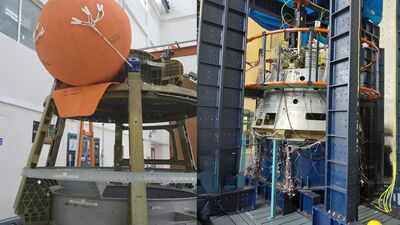
BENGALURU: As preparations for Gaganyaan gather pace, Isro has completed another set of qualification tests aimed at answering a simple question: will the crew capsule perform as designed when astronauts need it most? The latest trials validated systems for splashdown recovery, module separation and parachute deployment.The latest tests focused on three moments that astronauts cannot control themselves: keeping the capsule upright after landing in the sea, ensuring a clean break from the service module before re-entry, and confirming that the capsule can withstand the forces generated when the parachute cover is blasted away.Together, the tests move Gaganyaan another step closer to its first crewed mission by validating systems that are central to crew safety.
Isro is yet to formally announce a date even for its first uncrewed mission (G1), suggesting that the first crewed mission (H1) is still some time away, as the agency plans multiple uncrewed missions before attempting to launch humans.One of the most significant tests involved the Crew Module Up-righting System (CMUS), designed for the final moments of the mission. After re-entering Earth’s atmosphere, the crew capsule will descend under parachutes and splash down in the sea.
However, ocean conditions can leave the capsule floating at an awkward angle or even upside down.To prevent that, Isro has developed a cold gas-based flotation system. During the qualification test, compressed gas stored in high-pressure bottles was released to inflate flotation bags through control valves. The system demonstrated that it could inflate within the required time across different gas pressures, confirming that it can reliably return the capsule to an upright position after splashdown.
This is a critical safety feature, allowing astronauts to remain stable inside the capsule while awaiting recovery.The second qualification test examined the Crew Module-Service Module Connect and Disconnect System (CS-CDS). During most of the mission, the Crew Module and Service Module remain connected through electrical cables and fluid lines. These links carry power, communications and supplies needed by the capsule's environmental control and life support system.Before the Crew Module begins its fiery descent through the atmosphere, however, it must separate cleanly from the Service Module. Engineers tested this separation mechanism using a simulated Crew Module. According to Isro, the test demonstrated a clean disconnect without damaging the capsule or its interfaces, while also confirming that the design has sufficient safety margins.The third qualification test focused on the apex cover, a protective shield over the parachute compartment.
During re-entry, this cover must be jettisoned at a precisely timed altitude so that the parachutes can deploy and slow the capsule for a safe landing.To verify that the Crew Module can withstand this event, Isro recreated the loads generated when pyrotechnically actuated thrusters separate the cover. Engineers applied forces about 1.75 times greater than those expected during an actual mission. Measurements of strain and deformation confirmed that the structure remained within design limits, validating its strength for flight.While none of these tests involve rockets or launches, they represent the painstaking engineering needed before humans can fly. Every valve, connector, structural panel and flotation bag must perform exactly as intended because, unlike satellite launches, there is no room for error when astronauts are on board.








 English (US) ·