

 1 hour ago
4
1 hour ago
4
ARTICLE AD BOX
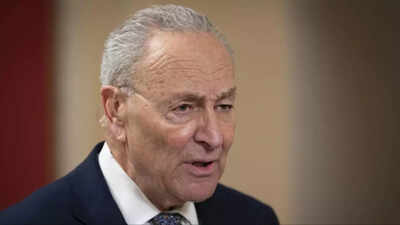
Senate Minority Leader Chuck Schumer recently described the Safeguard American Voter Eligibility (SAVE) Act as “nothing more than Jim Crow 2.0,” arguing that the proposal would “disenfranchise millions of Americans.
” “Every single Senate Democrat will vote against any bill that contains it,” Schumer wrote in a Monday post on the social platform X. “Speaker Johnson should tell SAVE Act Republicans to stand down or else this shutdown will be on them,” he added.The legislation, introduced by Republican Representative Chip Roy of Texas with a companion bill by Senator Mike Lee, would require individuals to present documentary proof of US citizenship, such as a passport, birth certificate or naturalisation certificate, when registering to vote in federal elections, typically in person.The remark has revived a larger debate about what Jim Crow laws were and how they operated, especially in the area of voting rights.
What were Jim Crow laws and how did they suppress voting?
Jim Crow laws were a system of state and local statutes, primarily in the American South, that enforced racial segregation and disenfranchised Black Americans from the late 19th century until the 1960s. The system took shape after Reconstruction, as white-dominated legislatures sought to reverse political gains made by formerly enslaved people.
Backed by the Supreme Court’s 1896 ruling in Plessy v. Ferguson, which upheld the doctrine of “separate but equal,” segregation became legally entrenched in schools, public transport, housing and public facilities.Voting rights were a central target of Jim Crow. Southern states introduced poll taxes, which required citizens to pay a fee to vote, effectively excluding poor Black citizens and many poor white citizens.Literacy and “understanding” tests were administered subjectively, often with impossible standards for Black applicants while white applicants were waved through. Residency requirements, complex registration systems and record-keeping hurdles added further barriers. Grandfather clauses allowed some white voters to bypass these restrictions if their ancestors had voted before the Civil War, a condition that automatically excluded most Black citizens. These measures were reinforced by intimidation, economic retaliation and, in many cases, violence. The result was a dramatic collapse in Black voter registration and political representation across much of the South.The system remained in place until the Civil Rights Act of 1964 and the Voting Rights Act of 1965 dismantled much of the legal framework supporting racial segregation and discriminatory voting practices.
Supporters vs critics: The debate over voting barriers
In the current debate, supporters of the SAVE Act argue that requiring documentary proof of citizenship is a safeguard to ensure that only eligible citizens vote in federal elections. Opponents contend that documentation requirements can function as modern barriers, particularly for individuals who do not possess passports or easy access to birth records, and argue that such measures may disproportionately affect vulnerable communities.The comparison to Jim Crow remains politically charged because the historical system was explicitly designed to suppress Black political power through laws that were openly discriminatory in both intent and enforcement. By invoking the phrase “Jim Crow 2.0,” Chuck Schumer is arguing that the SAVE Act, though written in race-neutral language, could create structural barriers that disproportionately affect certain groups and limit access to the ballot, echoing, in his view, past tactics that made voting harder for marginalised communities.






 English (US) ·