

 1 hour ago
4
1 hour ago
4
ARTICLE AD BOX
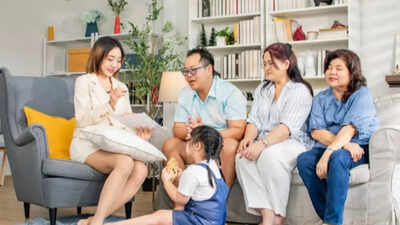
With the trend of modern living tending towards nuclear families, many families are now realizing the benefits of living together as a joint family, especially when it comes to bringing up children.
In a joint family, grandparents, aunts, uncles, and cousins all live together, sharing their lives, responsibilities, and emotional ties. And for the kids, this means having an endless source of interaction, role models, and support systems other than their parents. Psychologists have clarified that having multiple generations around can have a highly positive impact on emotional development, socialization, and cultural development in children during their childhood years.
Every family system has its own merits, but the merits of joint family parenting for children are endless. Emotional security with multiple attachmentsIn a joint family, children get to experience the love and affection of multiple caregivers, not just their parents. Grandparents can be very patient and affectionate, while aunts and uncles can be very playful and affectionate. And this is how children get to feel a sense of belonging and security.
Emotionally, this is a highly valuable experience for children, as it helps them develop better emotional control and stress management strategies.
Even if parents are not around or are too busy, there is always someone else that children can turn to, so they never feel alone or abandoned. This is a highly valuable aspect of building confidence and self-security in children. Children brought up in such emotionally supportive environments tend to have better self-esteem and trust-building abilities with people.Improved social and communication skillsRaising children in a joint family system automatically exposes them to different personalities, ages, and opinions. Children brought up together learn social and cooperation skills in a natural manner. Joint families, as opposed to a sheltered upbringing, offer children endless opportunities to learn listening skills, articulation of their own needs, and understanding others’ perspectives.
Bringing up children together with cousins also helps them learn the value of teamwork and others’ perspectives at a young age.
This enables children to develop excellent social skills at school and in their personal relationships. Children feel at ease with people from different backgrounds, making them less awkward in social gatherings and more adaptable in group settings throughout their lives.Cultural values and traditions are passed down naturallyIn joint families, there is a tendency to preserve their cultural practices from generation to generation.
The grandparents are able to pass on their knowledge and experiences to the children, and cultural events are celebrated together. Cultural practices are also performed on a regular basis. The children are taught about their cultural practices, not in a classroom setting but by living them. This helps the children feel more connected to their cultural identity and practices, especially in today’s rapidly changing world.
The children learning about their cultural practices help them feel proud and connected to their culture. It also helps the children understand the importance of respecting elders and their connection to different generations. This cultural grounding helps the children feel more grounded and secure in their psychological development. Children brought up with a strong sense of cultural heritage tend to be more resilient and have a clear sense of values in life as they grow older.Shared responsibilities reduce parental stressSingle parenting can be very stressful, especially for parents who are also working. Joint families allow parents to share responsibilities such as raising children, supervising, homework help, and taking care of children with other adults in the family. Reducing parental stress has a direct effect on children, who are more patient and consistent when dealing with children.
Grandparents can take care of children after school, tell them stories, or offer advice, ensuring that children are not left alone even when parents are busy.
This also allows children to be exposed to different ways of solving problems and living life. And the parents are less stressed, family relationships are warmer and more stable, offering a positive emotional environment that is essential for healthy child development.Learning responsibility and empathy earlyIn a joint family, children observe how people take care of each other across generations, such as parents taking care of grandparents, brothers and sisters taking care of each other, and shared family responsibilities. Children learn the value of responsibility by observing and being part of this interdependence. They are learn to think of others and share what they have. This teaches them the value of empathy and prosociality.
Taking care of grandparents, adapting to group decisions, or taking care of younger cousins helps children grow up to be mature beyond their years.









 English (US) ·