

 8 hours ago
6
8 hours ago
6
ARTICLE AD BOX
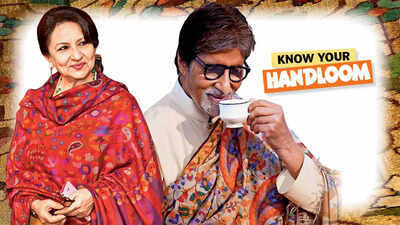
Kani weaving is the oldest handicraft of Kashmir
What is kani weaving?The kani weaving technique uses small wooden spools (kanis) to weave intricate patterns directly into the fabric. Fine, coloured pashmina threads are wound onto these kanis and interlocked with a base pashmina yarn, creating motifs guided by a coded script known as taleem.Factsheet● Kani weaving is the oldest handicraft of Kashmir● Historians believe that the weaving technique is inspired by Persia’s tapestry art called termeh. It got adapted in the valley to pashmina yarn. It is also believed that Sultan Zaynul-’Abidin, a 15th-century ruler of Kashmir, institutionalised the kani weaving industry● After being absent in Kashmir from the ’20s until the late ’80s, carpet weavers picked up kani weaving again● Eidgah, Zadibal and Kanihama are major centres of kani weaving● The kani shawl holds a GI status, awarded in 2010● A handwoven kani shawl looks the same on both front and back— Inputs by Ghulam Mohammad Baba, who designs shawls at Needlekaar, a Srinagar-based enterprise
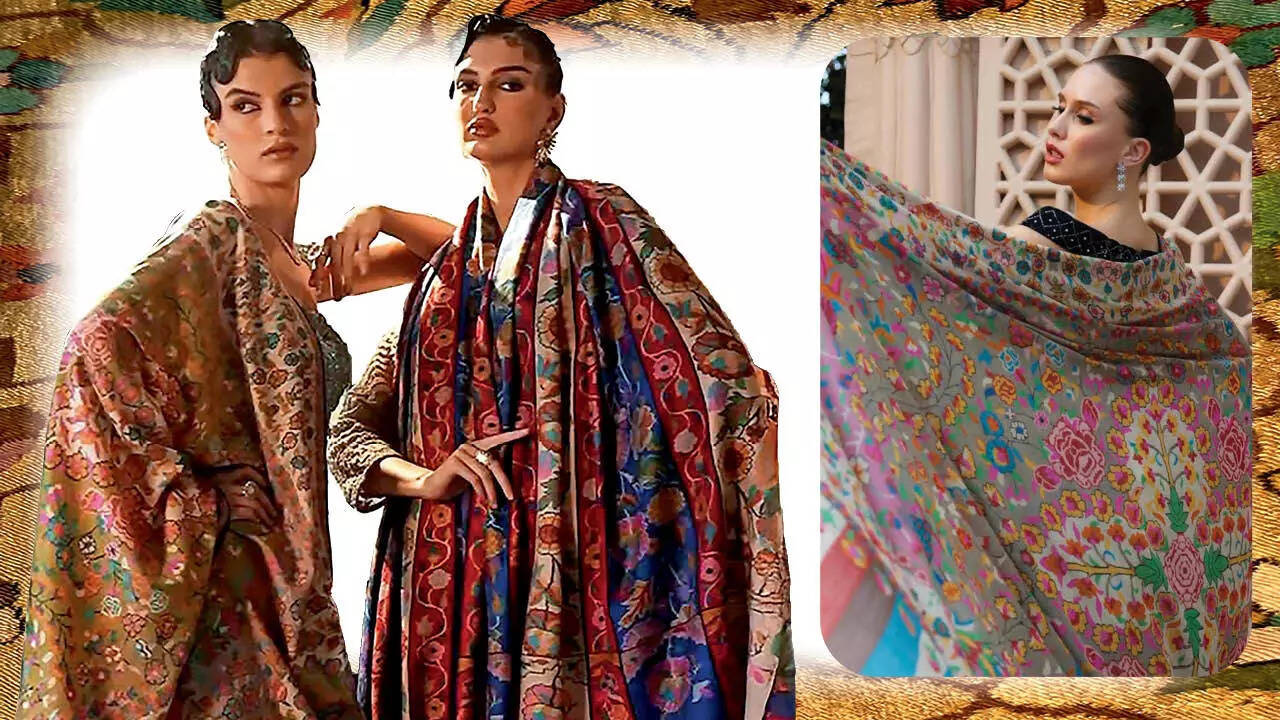
‘Kani shawls combine artistry with functionality’ (Pics: @pashminaofficial)
‘Kani shawls combine artistry with functionality’The appeal of the kani weave lies not just in its intricate patterns, but in its heritage, warmth and sense of premiumness.
“Woven largely in fine pashmina, a kani shawl is feather-light yet insulating, combining artistry with functionality in a way few textiles can. Each piece carries centuries of skill, culture and timeless elegance,” says Gaurang Batra, creative director of heritage fashion brand, Frontier Raas.Calling it a handicraft, master weaver Naseer Ahmed Mir, who has practised the weave for 32 years, says, “There are over 6,000 kani weavers in Srinagar alone.
In the early ’90s, many pashmina carpet weavers took to kani weaving, as both crafts are based on coding. Ek shawl ko banne mein teen se barah mahine lag sakte hain .” A stole starts at ₹60,000, a women’s shawl at around ₹1lakh, while men’s shawls begin at ₹4lakh.
Kani shawls pair beautifully with fabrics such as silk brocades, tussar, tissue silks, velvets and pashmina, enhancing their texture and richness without overpowering them
Gaurang Batra, creative director of a heritage fashion brand
‘The weaving process is slow, making each shawl an ultra-luxury piece’To make kani shawls more economical and faster to produce, many karigars have replaced pure pashmina with samrudi fabric as the base (warp).
However, a few in the industry – such as textile revivalist Deepak Badhwar – continue to practise kani weaving entirely in pashmina. He has also innovated by blending kani with Banarasi zari. “Kani weaving is a slow process, which is why it sits in the ultra-luxury category. A one to two-metre shawl can take a year to complete. Most kani shawls are woven at 16 or 18 stitches per inch. For finer, denser patterns, we work at 22 or 24 stitches per inch, spun in Ladakhi pashmina.
In 2016, to further innovate, we introduced zari into kani. The real gold or silver zari used in this fusion is made exclusively in Varanasi and is far thinner than conventional zari, so it does not cut the pashmina threads.
”
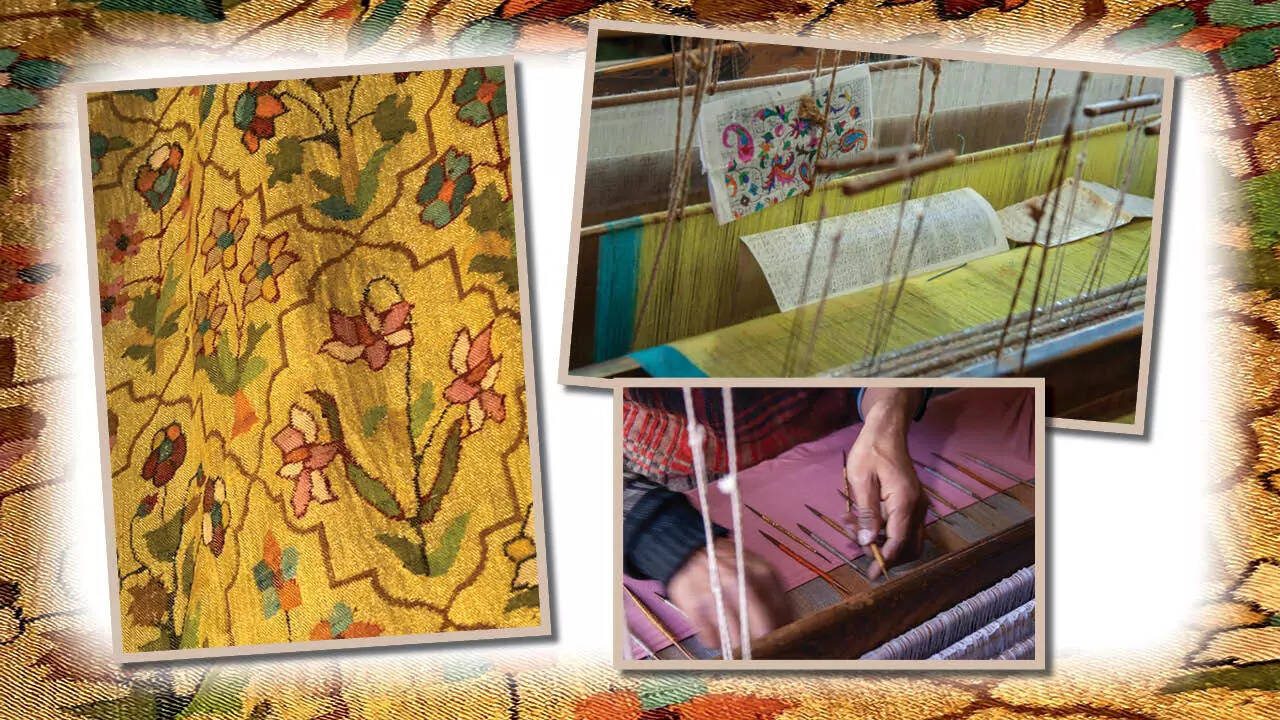
‘The weaving process is slow, making each shawl an ultra-luxury piece’ (Pics: @deepak_badhwar)
Over the years, the motifs evolved and became more contemporary, and coding moved from graph paper to digital prints. The pashmina threads are dyed in natural dyes like pomegranate peels, saffron, walnut and akra and fixed with alum. This is also a slow process, adding to its value as an exclusive luxury article
Deepak Badhwar, a textile revivalist, who has been working on pashmina carpets and shawls for three decades
Varun Kumar, founder of Pashmina.com, who recently commissioned a kani featuring the Tree of Life, says, “New-age designers are incorporating motifs drawn from diverse cultures – elephants symbolising Rajasthan, or the lotus as a central motif to reflect the peace and serenity of Buddhism.”Tradition, however, still dominates the palette. “Toosh, white, black and maroon remain the most preferred base colours, accounting for over 50% of kani shawls produced today,” he adds.Motifs like chinar, gul-e-wilayaat (flowers from foreign lands), cypress trees and paisleys are commonly seen on kani shawls






 English (US) ·