

 48 minutes ago
4
48 minutes ago
4
With the Special Intensive Revision (SIR) of electoral rolls set to begin in Karnataka from June 20, Chief Electoral Officer (CEO) V. Anbu Kumar on Friday sought to allay concerns over alleged deletion of voters from the electoral rolls.
Addressing presspersons, Mr. Kumar clarified that notices issued during the SIR process should not be construed as automatic deletion of names from the voter list.
“The objective of the exercise is to make the electoral rolls more transparent and error-free, while ensuring that no eligible voter is excluded and no ineligible voter is included. Electors will be given a reasonable opportunity for a hearing before any final decision on deletion is taken,” he said.
Elaborating on the process and safeguards being adopted for the revision exercise, he clarified that Booth Level Officers (BLOs) will mandatorily visit every household of the State’s 5,55,74,064 electors and distribute enumeration forms directly to voters.
“The name of every voter who correctly fills and submits the enumeration form will necessarily figure in the draft electoral roll. Notices will be issued only in cases where the information furnished in the form does not match the available data or where technical discrepancies arise. Issuing a notice does not automatically mean deletion of the voter’s name,” he said.
QR coded forms
Mr. Kumar said QR coded enumeration forms would be distributed in duplicate to every voter. One signed copy would remain with the voter as acknowledgement, while the second copy, after being filled with the required information, would be handed over to the BLO.
“The forms will already contain details such as the voter’s name, photograph, polling station number and Assembly constituency. The unique QR code can be scanned through the BLO app to retrieve voter details instantly. If a voter’s photograph is outdated, a new photograph can be submitted along with the form. Alternatively, BLOs can capture updated photographs through the app itself,” he explained.
Voters whose names appeared in the 2002 electoral roll would be required to provide those details. In the absence of such records, details of relatives such as father or grandfather could be furnished for verification. Of the State’s total electorate, around 4,80,39,560 voters have already been mapped, accounting for 86.46% progress in the ongoing verification process.
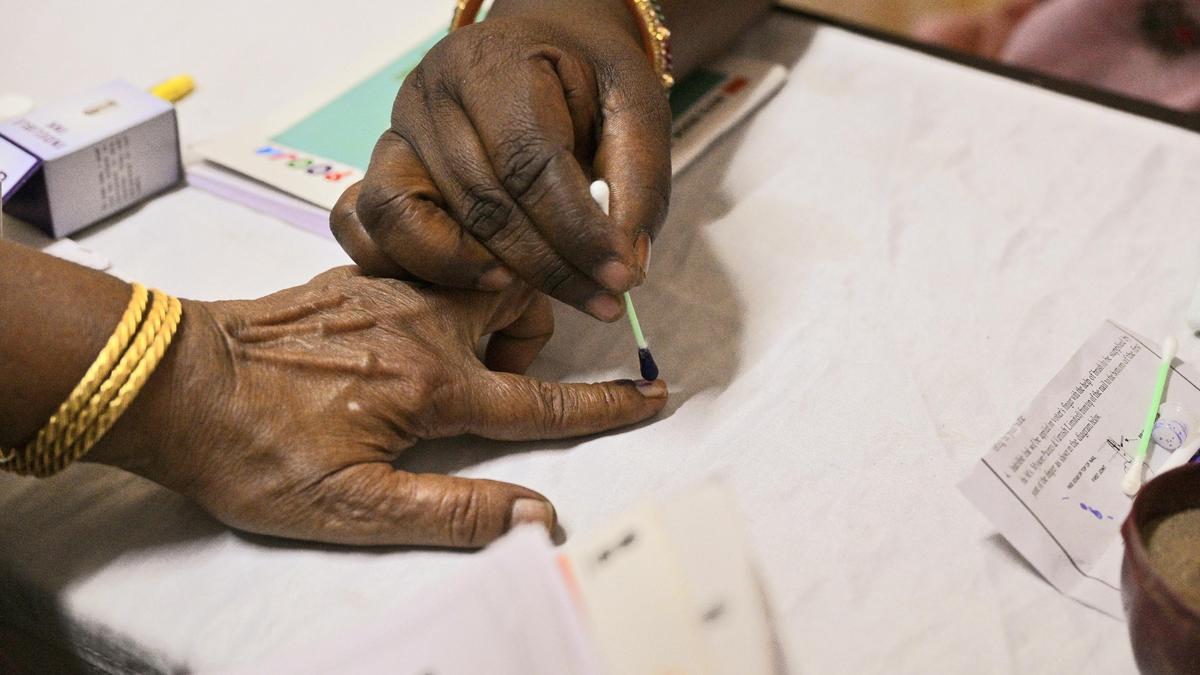
Mr. Kumar said voters can sign the form or affix their left thumb impression. In cases where the voter is unavailable, an adult family member can sign and hand over the form to the BLO.
“If a voter’s name is not found in the 2002 roll or if there is any mismatch in the data, election officials will have to issue notices seeking supporting documents,” he explained.
The CEO said documents such as pension identity cards issued by the Centre or State governments, bank or post office records, LIC documents, birth certificates, passports, educational certificates, domicile certificates, forest rights certificates, caste certificates, land or house allotment records and Aadhaar could be produced for verification.
Voter facilitation centres
To facilitate the process, voter assistance centres would be established at the ward level in gram panchayats and urban local bodies, he said.
Mr. Kumar also said the Election Commission would take all precautionary measures to ensure that no eligible voter is left out during the revision exercise.
More than 64,000 personnel deployed
Chief Electoral Officer V. Anbu Kumar said the SIR process would involve 31 Deputy Commissioners, 35 Assistant District Election Officers, 224 Electoral Registration Officers, 336 Assistant Electoral Registration Officers, 5,900 BLO supervisors and 59,050 BLOs. Chief Executive Officers of Zilla Panchayats would also participate in the exercise.
In addition, volunteers would be appointed to assist with field-level activities. Proposals had also been submitted to the government for appointment of 16 Electoral Registration Officers and 25 Assistant Electoral Registration Officers, he said.



 English (US) ·