

 1 hour ago
4
1 hour ago
4
ARTICLE AD BOX
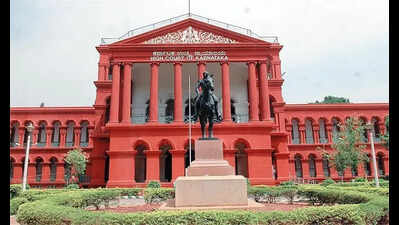
Bengaluru: The high court has granted relief to VINP Distilleries and Sugars Ltd, directing state-owned oil marketing companies (OMCs) to consider its plea seeking enhanced procurement of ethanol under the Ethanol Supply Year 2025-26 programme.Justice M Nagaprasanna directed Indian Oil Corporation Ltd (IOCL), Bharat Petroleum Corporation Ltd (BPCL) and Hindustan Petroleum Corporation Ltd (HPCL) to consider the company’s representation dated Oct 27, 2025, within four weeks.The company, which runs a dedicated ethanol plant at Shiggaon in Haveri district, manufactures and supplies denatured anhydrous ethanol exclusively to the oil marketing companies under a long-term arrangement.On Sept 23, 2025, the OMCs floated a tender for procurement of 1,050 crore litres of ethanol for the 2025-26 supply year. VINP Distilleries had bid to supply 9.3 crore litres but was allotted only 3.9 crore litres, leaving a shortfall of 6.3 crore litres. After its representations seeking enhancement allegedly went unanswered, the company approached the high court.The petitioner contended that denial of the full quantity was arbitrary and caused heavy losses in view of the substantial investments made in the dedicated ethanol plant.
The OMCs argued that the dispute arose out of a contract and that a writ petition was therefore not maintainable.Rejecting the contention, Justice Nagaprasanna observed that the company had invested several hundred crores of rupees based on assurances contained in the long-term offtake agreement and the consistent course of conduct followed by the respondents over the years.“If, after years of adherence to a settled course of conduct, the respondents seek to alter the regime as a bolt from the blue through the impugned Expression of Interest, such deviation cannot evade constitutional scrutiny,” the judge said.The court held that the petitioner had a legitimate expectation arising from the agreement and the respondents’ past conduct. While the state is free to change policies, such changes must satisfy the requirements of Article 14 of the Constitution, the judge observed, adding that “arbitrariness can never masquerade as discretion”.Noting that ethanol demand remained high and that dedicated ethanol plants were contractually barred from manufacturing other products or supplying third parties, the court said such units could not be left “at the short end of the stick”. It held that Clause 6.8 of the agreement could not be invoked selectively and directed the OMCs to take a decision on the company’s representation within four weeks.






 English (US) ·