

 1 hour ago
5
1 hour ago
5
ARTICLE AD BOX
3 min readSrinagarFeb 10, 2026 07:09 AM IST
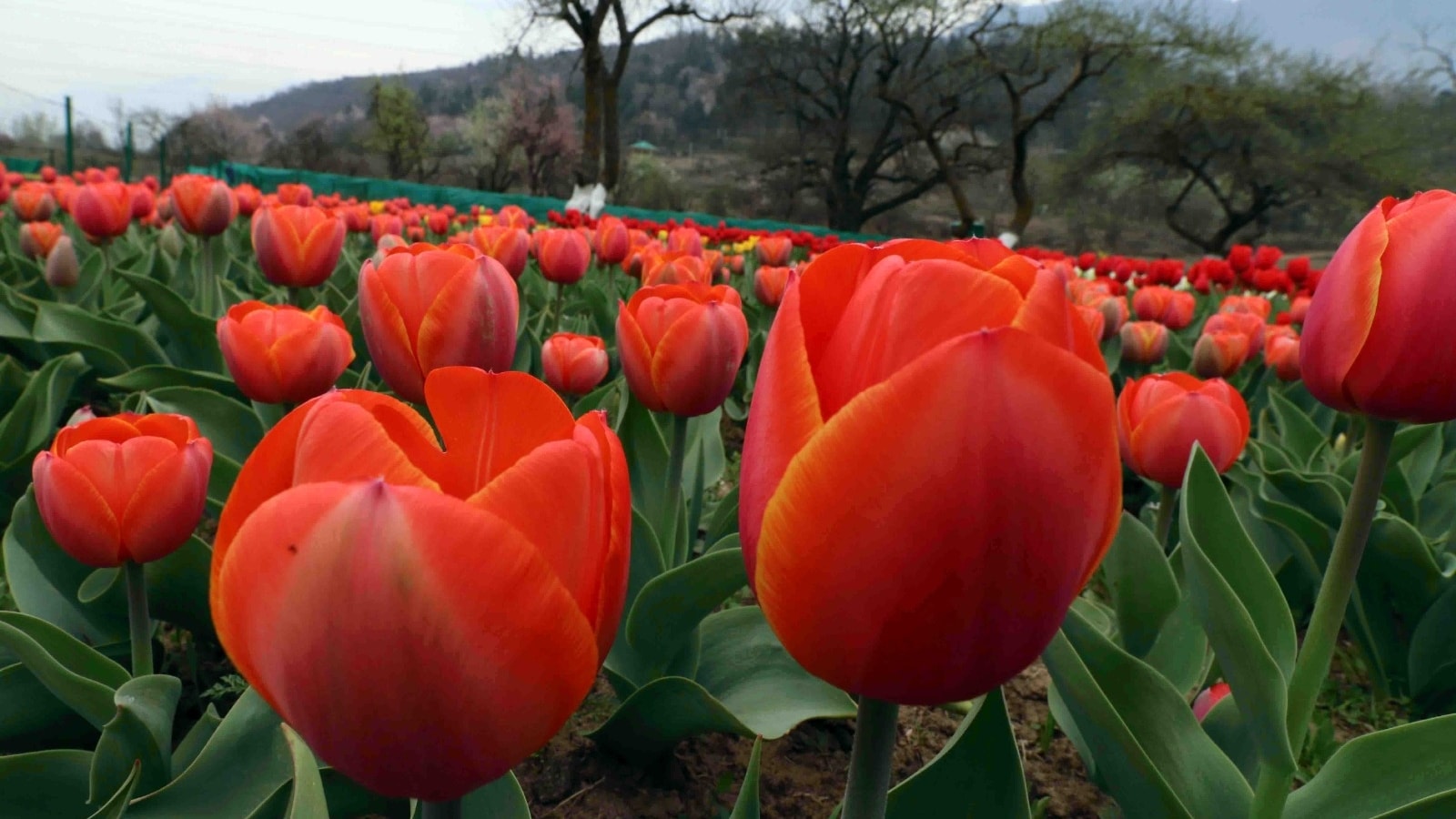 In floriculture, bulb programming is a technique used to achieve strategic, time-controlled production of flower crops by adjusting environmental factors such as temperature and light, scheduling planting dates, and managing growth stages.
A breakthrough in tulip production that will allow growers to align the flower’s bloom with peak demand cycles, extend the season, and ensure year-round availability is set to give a renewed push to Kashmir’s floral tourism.
According to professors at the Sher-e-Kashmir University of Agricultural Sciences and Technology (SKUAST) in Srinagar, the breakthrough was achieved at the institute’s experimental garden, where tulips bloomed in winter — nearly four months ahead of their seasonal flowering.
“We have successfully achieved tulip bloom in December at our research garden at SKUAST. Of the 4,000 bulbs we planted, around 3,000 bloomed,” said Imtiyaz Nazki, a professor and head of the Floriculture Department at the university. “This has been made possible through bulb programming and forcing techniques.”
In floriculture, bulb programming is a technique used to achieve strategic, time-controlled production of flower crops by adjusting environmental factors such as temperature and light, scheduling planting dates, and managing growth stages.
Forcing, on the other hand, involves manipulating environmental and chemical factors to induce plants to grow and bloom outside their natural seasonal cycle.
The twin techniques help produce flower crops and cut flowers to meet specific market demands — especially during Christmas, New Year’s, and Valentine’s Day.
Nazki said that in the initial experiments, the bulbs were programmed for the Christmas and New Year period. “We scheduled programming for 12, 14, and 16 weeks. The results were particularly encouraging at week 14,” he said.
Story continues below this ad
While the technology is already available in the Netherlands—often called the land of tulips—this is the first time it has been achieved in the Kashmir Valley.
“The breakthrough has significant potential to expand our floral tourism and ensure flower availability during periods of high market demand,” Nazki said. “We have made a beginning, and now big entrepreneurs need to come forward to translate it into reality.”
In the Valley, tulips typically begin blooming in the last week of March and last for about a month, making them a major draw for both locals and tourists. Srinagar’s tulip garden recorded a footfall of around eight lakh visitors last year.
Nazki said the next major challenge is propagating tulip bulbs locally. At present, the Valley largely depends on imports from the Netherlands to meet its requirements.
Story continues below this ad
To address this, SKUAST has launched a parallel project and set up a Centre of Excellence at Sagam village in south Kashmir. The centre is being run with the support of the Dutch embassy in New Delhi.
“Our focus now is on tulip bulb propagation,” Nazki said. “Last year, we had one lakh bulbs at the centre for propagation. This is only our second year, and the number has increased to between three and four lakh bulbs this year.”
As Kashmir looks to expand its floral tourism footprint, SKUAST has already made strides in the field. Over the past two years, the university has successfully experimented with chrysanthemum blooms in autumn to attract tourists during the “grey season”. The initiative was later replicated by the J&K government, which set up an exclusive chrysanthemum garden at Srinagar’s botanical garden — an attraction that quickly drew locals and tourists alike.

Bashaarat Masood is a Special Correspondent with The Indian Express. He has been covering Jammu and Kashmir, especially the conflict-ridden Kashmir valley, for two decades. Bashaarat joined The Indian Express after completing his Masters in Mass Communication and Journalism from the University in Kashmir. He has been writing on politics, conflict and development. Bashaarat was awarded with the Ramnath Goenka Excellence in Journalism Awards in 2012 for his stories on the Pathribal fake encounter. Expertise and Experience Two Decades of Frontline Reporting: Bashaarat has spent 20 years documenting the evolution of Kashmir, from high-intensity conflict and political shifts to socio-economic development. Award-Winning Investigative Journalism: He is a recipient of the prestigious Ramnath Goenka Excellence in Journalism Award (2012). This honor was bestowed for his reporting on the Pathribal fake encounter, a series of stories that highlighted his ability to handle sensitive human rights and security issues with investigative rigor. Specialized Beats: His authoritative coverage spans: Political Transitions: Tracking the shift from statehood to Union Territory, electoral dynamics, and the pulse of local governance. Security & Conflict: Providing nuanced reporting on counter-insurgency, civil liberties, and the impact of the conflict on the civilian population. Development: Documenting the infrastructure, healthcare, and educational landscape within the Valley. Academic Background: He holds a Masters in Mass Communication and Journalism from the University of Kashmir, providing him with a localized academic and professional foundation that is rare in regional reporting. ... Read More
Stay updated with the latest - Click here to follow us on Instagram
© The Indian Express Pvt Ltd






 English (US) ·