

 1 hour ago
6
1 hour ago
6
ARTICLE AD BOX
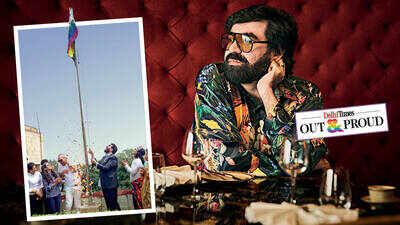
LGBTQIA+ rights advocate and hotelier Keshav Suri, a petitioner in the landmark 2018 Supreme Court case that led to the reading down of Section 377, has remained at the forefront of the fight for equality
Hotelier Keshav Suri was one of the petitioners in the 2018 Supreme Court case that led to the reading down of Section 377, decriminalising consensual same-sex relations between adults.
When the judgment was announced, he was in court with his husband, Cyril, and the two celebrated the historic verdict with a kiss of love.Keshav, who has been instrumental in advancing the cause of the LGBTQIA+ community, says that the meaning of Pride has definitely changed for him over the years. From it being about survival, being performed quietly, it is now a responsibility for him. He also shares how Delhi has played an important role in the cause of LGBTQIA+ rights over the years and how the city has “kept the fight visible when it would have been easier, in many ways, for it to go quiet.How do you think Delhi has helped keep the cause of LGBTQIA+ rights alive over the years?Delhi has always been a city of contradictions. It can be deeply conservative over breakfast and unapologetically radical by dinner. But that’s precisely why it matters. Every meaningful conversation around queer rights in India has, in some way, passed through Delhi. The courts, the protests, the policy discussions, the media headlines, the Pride marches, the difficult family conversations this city has witnessed all of it.
For me, Delhi has never just been where the movement happened. It has been where we built a home for it.At our hotel, we didn’t wait for society to become inclusive before opening our doors. We created spaces where people could simply exist without apology. Kitty Su became more than a nightclub; it became a sanctuary where drag artists found stages before they found television, where chosen families celebrated birthdays, where people danced without fear of judgement, and where countless queer stories found their first audience.Through the Keshav Suri Foundation, we’ve taken those conversations beyond nightlife into boardrooms, classrooms, courtrooms and communities. From policy advocacy and legal research to mental health support, scholarships, livelihood programmes and leadership development, the work has always been about building systems, not moments.Delhi has given India some of its boldest Pride marches, unforgettable drag performances, queer literature festivals, film screenings, community markets, conversations around HIV, trans livelihoods, inclusive workplaces and difficult legal debates.
It has produced artists, activists, entrepreneurs, allies and dreamers who continue to shape what inclusion looks like.Is Delhi perfect? Not yet. But it has refused to let the conversation disappear. And that matters.
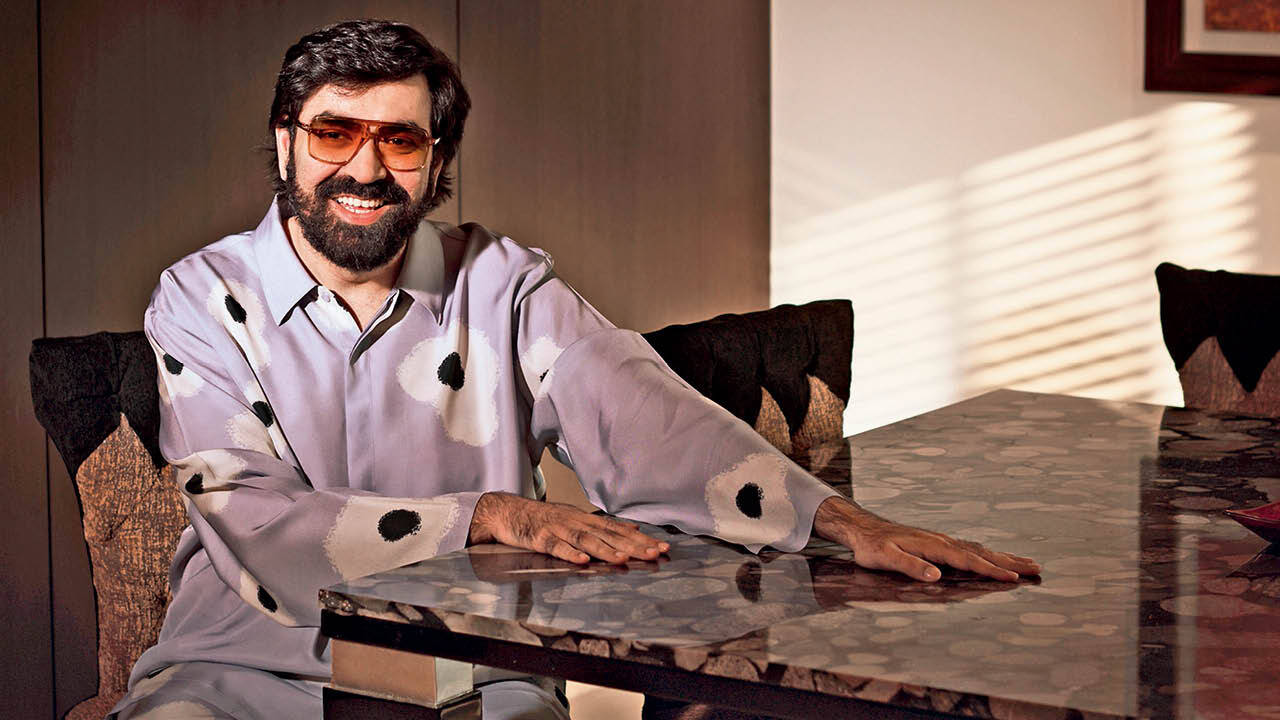
Keshav, who has been instrumental in advancing the cause of the LGBTQIA+ community, says that the meaning of Pride has definitely changed for him over the years
What has changed for you personally, and for the community, since the decriminalisation of consensual same-sex relationships?The law stopped calling us criminals. Society, unfortunately, doesn’t receive legal updates overnight. For me, there was certainly relief. There is something profoundly liberating about no longer being told that your capacity to love makes you unlawful.
But freedom is an evolving practice. Decriminalisation removed one burden; it didn’t remove every barrier.Today, I can build businesses, foundations and platforms centred around inclusion without constantly looking over my shoulder. I can be more visible, more vocal and more intentional. Yet visibility itself remains a privilege that many queer Indians still cannot afford.For the community, the biggest shift has been confidence. Young people are coming out earlier.
Parents are asking better questions. Companies are rewriting policies. Universities are creating support systems. We are seeing queer entrepreneurs, artists, chefs, athletes and professionals claim space in industries that once excluded them.But equality is not measured by visibility alone. Until our relationships, our families and our futures receive the same legal recognition as everyone else’s, the journey remains unfinished.Has the meaning of Pride changed for you over the years?Completely. When I was younger, Pride meant survival. It meant learning to exist in spaces that constantly asked you to become smaller, quieter and less visible. Like many queer people, I spent years editing myself before I ever celebrated myself.Today, Pride feels less like a parade and more like a promise. It is the promise that every person who walks into our hotels, our events, a Keshav Suri Foundation programme or even a Kitty Su Beauty campaign should know they belong exactly as they are.Pride is no longer about proving that queer people deserve a seat at the table. We built our own table. Now we’re making sure more people can sit at it. And perhaps that’s what has changed the most. Pride isn’t about me anymore. It’s about creating a future where the next generation doesn’t have to spend half their lives apologising for who they are.
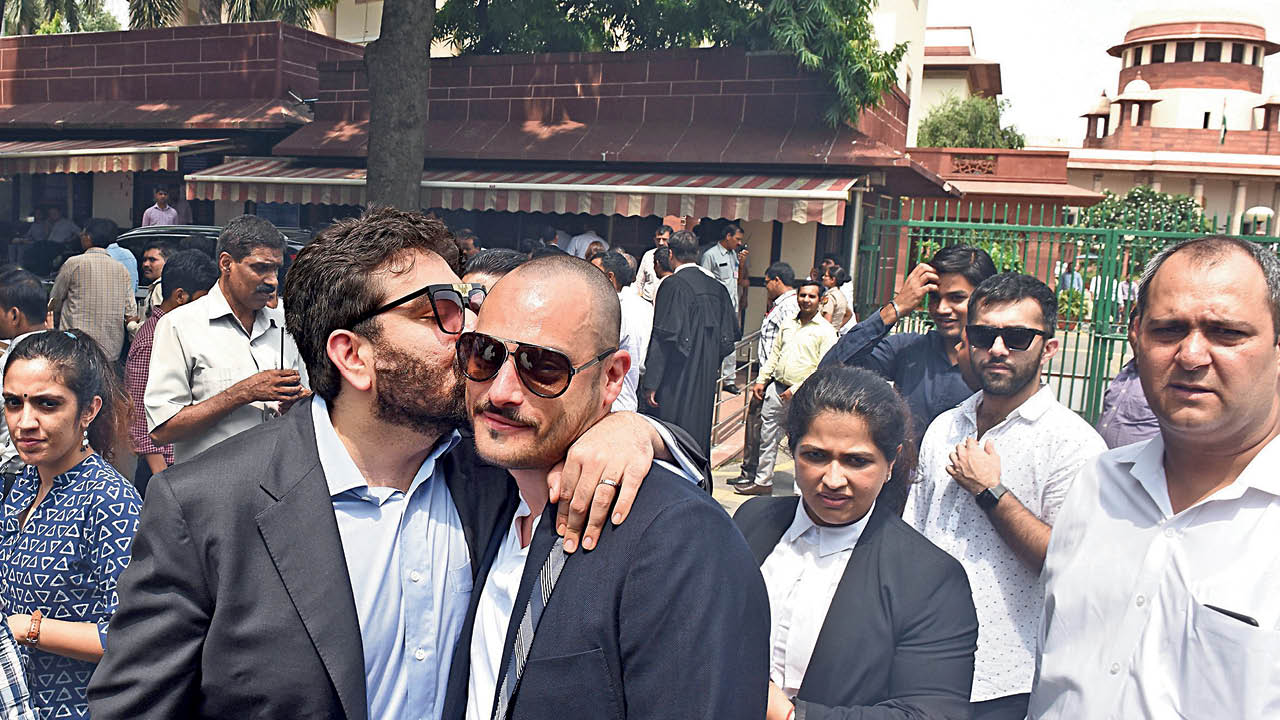
SEPTEMBER 6, 2018: Keshav Suri and his husband, Cyril Feuillebois, celebrate the reading down of Section 377 with a kiss outside the Supreme Court. The landmark judgment decriminalised consensual same-sex relations between adults in India
You organise queer events throughout the year , and not as tokenism. What can others do to make this a year-round commitment?The easiest thing to do in June is change your logo.The harder, and far more meaningful, thing is changing your organisation. Ask yourself uncomfortable questions. Who are you hiring? Who gets promoted? Who sits on your leadership team? Does your insurance cover gender-affirmation care? Are your washrooms inclusive? Are your policies written for everyone or only for people who fit one definition of family?At our hotel, inclusion lives inside recruitment, healthcare, leadership development, supplier diversity, education, art, hospitality and culture.
Through the Keshav Suri Foundation, we continue working on legal reform, community welfare, research, mental health, scholarships and economic empowerment throughout the year. The goal should never be to host a Pride event. The goal should be to build an organisation where Pride isn’t necessary because dignity has already become the default.Where do we still fall short?We still confuse acceptance with equality. Yes, queer people are more visible than ever before.
Brands feature us. Films include us. Companies celebrate us. But visibility without rights is still incomplete.Families continue to struggle for recognition. Many transgender persons remain excluded from dignified employment. Healthcare remains inaccessible for far too many. Mental health challenges continue to be disproportionately high. Young queer people are still forced to choose between authenticity and safety.
And perhaps our biggest challenge is consistency. India can host magnificent Pride festivals while a queer person still fears walking into a police station, a hospital or even their own home.
Those realities coexist.That’s why the work cannot be seasonal. Movements aren’t sustained by hashtags. They’re sustained by institutions, by policies, by businesses willing to hire differently, by schools willing to teach differently, by governments willing to legislate differently and by ordinary people choosing empathy over prejudice every single day.We’ve come a long way. But if inclusion is a destination, we’re still very much on the journey. And I’m perfectly happy rolling up my sleeves for the road ahead.SECTION 377: THE VERDICT THAT CHANGED EVERYTHINGOn September 6, 2018, the Supreme Court read down Section 377, decriminalising consensual samesex relations between adults. In a unanimous verdict, all five judges on the Constitution Bench affirmed the rights to dignity, equality, privacy and individual autonomy, marking a massive victory for LGBTQIA+ rights and bringing an end to the criminalisation of consensual samesex relations between adults under a colonial-era law.A pivotal aspect of the 2018 victory was the contribution of petitioners who brought the human and economic costs of the law to the forefront. Among them was hotelier Keshav Suri. Suri, who identifies as part of the LGBTQIA+, filed a petition in the Supreme Court challenging the constitutional validity of Section 377 insofar as it criminalised consensual same-sex relations between adults. His petition, alongside those filed by other activists and professionals, helped demonstrate that the impact of Section 377 went far beyond “acts”, affecting the daily lives, safety and professional opportunities of millions of Indians.Talking about the significance of the cause, Keshav shared in 2018, “The worst I felt was when I went to study at the University of Warwick. It was a great university, and there was a lot of inclusivity and LGBTQIA+ programmes, but they also had a lot of students from India. When you are in college, you are an adult, so the kind of comments I got were different. It was a different kind of bullying, and there were a lot of students from India who also knew the baggage of the family that I came from.
I was Lalit Suri’s son; there was an empire that my parents were building back in India. So there were a lot of conversations within myself, whether I should live a lie in a marriage of convenience, maybe marry a lesbian woman, and make life simple for myself so that I could do away with all those comments.”




 English (US) ·