

 15 minutes ago
4
15 minutes ago
4
ARTICLE AD BOX
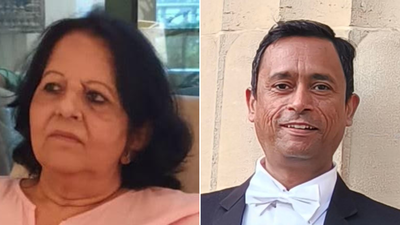
Independent India was beset with challenges in every walk of life. Archaeology was no exception. Historian Himanshu Prabha Ray and co-author Ajay Yadav map its journey in a new book, “Indian Archaeology after Independence: Amalananda Ghosh and his legacy.
” They also enumerate how AI can aid archaeology.1. Archaeology in pre-Independent India was primarily a colonial affair. What were the major challenges in its decolonisation?A: From its inception in 1861, ASI was headed by British officers trained in the classics (Greek and Latin) until 1948 with two exceptions -- Daya Ram Sahni (1931–1935) and K N Dikshit (1937–1944). With their competence in Greek and Latin and in Graeco-Roman archaeology the research agenda of ASI was set by DGs who viewed India’s past either as a search for Alexander’s legacy (Alexander Cunningham 1861-1885) or to validate the greatness of the Roman Empire through trade with India (Mortimer Wheeler 1944–1948).
From the beginning, the primary task of ASI was conservation of monuments. These included those that highlighted the glory of Britain’s Empire, as well as those that were built during colonial rule.In contrast, the Indian subordinates of the British DGs had mastery over Sanskrit, Tamil and other Indian languages and scripts and were keen to discover India’s past for its citizens rather than for a European audience.
Thus, the challenges in ASI’s decolonisation were twofold: one, to shift the focus from understanding Indian archaeology through a Graeco-Roman lens to one rooted in Indian cultural landscapes that evolved and developed from the prehistoric period onwards in diverse ecological niches across the country; and the second, to include the large number of monuments that were protected by the Princely States prior to 1947 within the purview of ASI’s conservation budget.2. Before ASI was born in 1861, there was Bhagwanlal Indraji (1839-88). Can you tell us something about his life and work?A: There is no doubt that Bhagwanlal Indraji, born and brought up in Junagadh, Gujarat, should be considered one of the early dedicated archaeologists in India. He not only deciphered some Ashokan inscriptions but also discovered the edicts at Bairat near Jaipur and Sopara near Mumbai. In 1882 Indraji excavated a Buddhist stupa locally known as Buruda (or basket-maker) king’s fort west of modern Sopara, which yielded a rich haul of Buddhist relics.3. Amalananda Ghosh served as the director-general of ASI from 1958-1973. You write about his “tact, deftness and vision”. What makes his tenure seminal enough to make him part of the book’s title?A: The leadership style of Ghosh was to promote teamwork, rather than seek personal glory. This is what sets him apart from many of his predecessors as well as those who followed him. The survey of Bikaner by his team and him was an attempt to comprehend the cultural context of settlements in the Ghaggar river system, rather than a search for Harappan sites that India had lost to Pakistan in 1947, as generally suggested.
An engagement with the archaeology of neighbouring countries was a hallmark of Ghosh’s vision and one that is evident in ASI’s participation in UNESCO’s salvage expedition to Nubia, in Egypt; the Centenary Celebrations in 1961 and the conference on Asian Archaeology.4. In recent decades, bureaucrats have headed the ASI. Often, they have short tenures. Has it worked to the advantage or detriment of the institution?A: After Ghosh’s 15-year tenure ended in 1968, leadership became increasingly fragmented, although professional archaeologists continued to be in charge until the early 1980s.
From the 1990s onward, as the organisation became heavily involved in court-mandated excavations, heritage litigation, tourism management, and World Heritage compliance, the government began appointing senior IAS officers as Directors-General.
This shift produced mixed outcomes, since internally, ASI has long been shaped by competing professional lineages, excavation-based loyalties, and regional networks.
The core issue, therefore, is not the background of the Director-General, but the absence of stable, long-term leadership in a discipline that depends on cumulative knowledge and sustained institutional memory. Each leadership change in ASI tends to reset priorities rather than consolidate them.5. What would you say are the challenges for an archaeologist in India today?A: Ghosh had identified two challenges for archaeologists in India: training and employment opportunities. These continue to plague Indian archaeology into the present.6. AI is the buzzword in all aspects of our lives today. What can be its role in archaeology?In archaeology, it is useful to distinguish between language-based AI and research or data-driven AI, because their functions and limits are quite different. Language-based AI systems work primarily with text and could aid in organising excavation reports, scanning archives and making site records searchable. Such tools could significantly improve access to the ASI’s vast but under-utilised archival holdings and inscriptional treasure.
Research-based AI, by contrast, works on numerical, spatial, or visual data rather than prose. In India, these applications could help identify potential site clusters, trace palaeo-river systems, or flag anomalies that need ground verification. But AI cannot act as a substitute for archaeological methods and judgement.








 English (US) ·