

 1 hour ago
2
1 hour ago
2
ARTICLE AD BOX
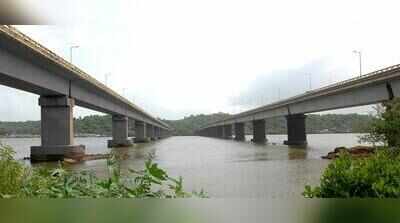
The GSPCB said the overall trend shows a reduction in very high faecal coliform pollution levels over the monitoring period
Panaji: Water samples collected by the Goa State Pollution Control Board (GSPCB) from five locations along the Mandovi in Panaji have shown faecal coliform levels above the permitted limit every month since 2022.
Reviewing the findings at a recent meeting, the board said the levels appeared high because they were being compared with data from the Covid-19 years, when human activity had reduced.The board also noted that faecal coliform levels were generally higher during the monsoon because the first rains wash contaminants into the river.Test results presented in the assembly earlier this year showed that in some months, faecal coliform levels were more than 200% above the permitted limit.According to the meeting minutes, faecal coliform levels improved during 2024-25 and 2025-26. The lowest readings were recorded after the monsoon at Iffi jetty (70 MPN/100ml) and Mandovi bridge (33 MPN/100ml). Higher levels at these locations were usually recorded during the monsoon months (June to Sep) because rainwater runoff carries contaminants into the river.The GSPCB said the overall trend shows a reduction in very high faecal coliform pollution levels over the monitoring period.
An analysis of data from Iffi jetty and Mandovi bridge between 2016 and 2026 found the highest faecal coliform levels in 2018-19, reaching 13,000 MPN/100ml at both locations, well above the permitted limit of 100 MPN/100ml.The board said faecal coliform levels dropped significantly during 2020-21 because of lower human activity during the Covid-19 lockdowns. Levels rose again in 2023-24, with Iffi jetty recording 1,400 MPN/100ml in Jan 2024 and Mandovi recording 2,300 MPN/100ml in Dec 2023.
However, the board noted that the situation has improved compared with 2018-19.The analysis was based on data collected under the National Water Quality Monitoring Programme from 2016 to 2026.The assessment found that faecal coliform levels exceeded prescribed limits at several monitoring locations along the Mandovi. Possible reasons identified were discharge of untreated or partly treated sewage, rainwater runoff, waste from river traffic, leaking septic tanks, and poor waste management along the river.The board discussed the issue and considered recommendations from the report. These included joint inspections by different departments, stronger monitoring, checks on sewage treatment facilities, and identification of sources of contamination.During the discussions, GSPCB members said downstream urban locations such as Hotel Marriott, Iffi jetty, Mandovi bridge and Ribandar-Chorao ferry recorded lower faecal coliform levels than upstream locations such as Tonca and Amona in most monitored months since 2020.The members also said higher readings during the monsoon are consistent with increased runoff, which carries microbial contaminants into the river.





 English (US) ·