

 1 day ago
8
1 day ago
8
ARTICLE AD BOX
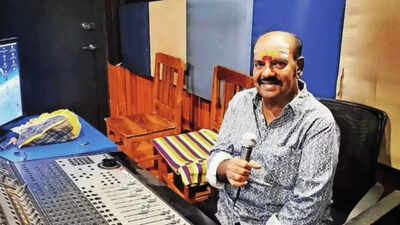
By: Anand KochukudySP Venkatesh’s name is associated with nostalgia and longing for a generation of Malayalis that grew up on his signature tunes. The maestro’s musical genius is best captured in the hit ‘Ormakal, Ormakal, Odakuzhaloothi’ from Spadikam (1995), which had its 4K release in 2023.
For Malayalis who came of age in the 1980s and ’90s, a Venkatesh composition has the power to instantly transport the listener back to childhood or youth.To the uninitiated, this might seem strange. Venkatesh was every bit a true-blue Tamilian in the way he presented himself; his forehead invariably smeared with ash. Nor was his music intrinsically Malayali-coded. Yet much like Salil Chowdhury and Shyam before him, Venkatesh conquered Malayali sensibilities with sublime music.His rise in Malayalam cinema was swift. Though Venkatesh reached his peak about five years after his debut, success came almost instantly with Thampi Kannanthanam’s Rajavinte Makan (1986). The film, which catapulted Mohanlal to superstardom and later attained cult status, featured three unforgettable songs composed by Venkatesh— ‘Devangane Devasundari,’ ‘Padam Njan Aa Ganam,’ and ‘Vinnile Gandharva Veenakal—recorded in a matter of hours, according to composer Berny who helped with the arrangement.
It was scenarist Dennis Joseph who was instrumental in getting Venkatesh his break in Malayalam after noting his potential as assistant to Shyam. Venkatesh seamlessly stepped in for Shyam to complete the rerecording of Nirakkoottu (1985) and later substituted the veteran for Shyama (1986). Even after becoming an established composer, Venkatesh continued to assist Shyam without any sense of rivalry.Despite successful outings with Kannanthanam’s Vazhiyorakkazhchakal (Pavizhamalli Poovurangi) and Bhoomiyile Rajakkanmar in 1987, Venkatesh found himself largely confined to a familiar circle of filmmakers.
Apart from background scores and the standout Nair Saab (1989) for Joshy, consistent success eluded him until Kannanthanam once again came to his rescue with Indrajalam (1990).That middling phase ended with Priyadarshan’s Kilukkam (1991). Alongside Thudarkkadha, whose songs ‘Sararanthal Ponnum Poovum’ and ‘Manikyakuyile Nee’ became chartbusters, Kilukkam turned around Venkatesh’s fortunes overnight.
He emerged as the busiest music composer in Malayalam cinema for the next five years. The film’s background score was equally celebrated, and M G Sreekumar won the Kerala State Film Award for his rendition.Another notable release that year was Koodikkazhcha, which featured the melodic ‘Sharonil Viriyum’ with a touch of Christian devotional flavour, besides the reimagination of the traditional Kerala church wedding song ‘Puthiya Kudumbathin’ done with impeccable finesse.
His affinity for this genre had already been evident in ‘Yerushalem Gopike’ from Vazhiyorakkazhchakal.The following year, 1992, marked a prolific phase. Venkatesh delivered a succession of hits, ‘Doore Doore’ (Nadodi), ‘Shanthamee Rathriyil’ (Johnnie Walker), Kilukilukkam Cheppe’ (Priyapetta Kukku), ‘Konjum Kuyile’ (Cheppadividya), Pathirakkili’, (Kizhakkan Pathrose), among others. ‘Kanakanilave Thuyilunaroo’ in Kouravar was inspired by the background score he composed for Mahayanam (1989).
Venkatesh was at his peak in 1993, composing songs for Valsalyam, Dhruvam (Thumbi Penne), (Karukavayal Kuruvi), Arthana (Kathoramaro), Kathiridum Kanivilakkananju), Journalist, Gandharvam, Sarovaram, and Pravachakan, among others.He won the Kerala State Film Award for Janam (Gopura Medayil) and Paithrukam (Valkannezhuthiya), (Neelanjana Poovin), (Swayamvaramayi). The revolutionary ‘Rakthapushpam’ in Janam, remains an underrated gem.The momentum continued into 1994 with films like Kadal (Kanuvan Moham), Bheeshmacharya (Chandanakkatte), Minnaram (Nilave Mayumo), Kabuliwala, Vendor Daniel (Neela Kanna) and Sopanam, which won K S Chithra a state award. Spadikam (1995) became yet another landmark, while Manthrikam, Highway, Mannar Mathayi Speaking, and Aniyan Bava Chettan Bava (Mazhavil Kodiyil) consolidated his position at the top.Though in 1996 and 1997 Venkatesh scored big with Hitler (Marivil Poonkuyile) and Superman, his standing began to decline by 1998.
While he continued to be in demand for background scores, his last widely acknowledged classic, ‘Mizhiyithalil’ from Onnaman (2002), marked the end of his Malayalam journey.Why Venkatesh disappeared from Malayalam cinema for over two decades remains a mystery. Though the industry underwent technological and stylistic changes, he was still under 50 at the time. Critics accused him of repetition and a reluctance to reinvent, but his success in Bengali and other languages during this period suggests otherwise, even if he never replicated his Malayalam run.For a composer known for a recognizable style, Venkatesh silenced sceptics with films like Paithrukam and Sopanam. He was renowned for composing in a jiffy, often astonishing lyricists like ONVKurupandPBhaskaran.Priyadarshan repeatedly entrusted him with background scores in films such as Thenmavin Kombath, Midhunam (1993) and Chandralekha (1997), where rerecording elevated the final cut. His score for Virasat (1997), the Hindi remake of Thevar Magan, not only matched Illayaraja’s original score but was perhaps even better.
Similarly, his rerecording made all the difference to IV Sasi’s Devasuram (1993).The orchestrations of Venkatesh, with fine pieces hidden between pallavi and anupallavi in songs such as ‘Poomariyil’ (Johnnie Walker), ‘Kannadi Puzhayude’ (Bharya) or even ‘Thamarakannanurangenam’ never ceases to amaze. Venkatesh may have left Malayalam cinema too soon, but his music endures, continuing to cast its magical spell across generations.(The writer is an independent journalist)







 English (US) ·