

 33 minutes ago
3
33 minutes ago
3
ARTICLE AD BOX
In the summer of 2017, NALSAR University of Law — on the outskirts of Hyderabad — woke up to a brutal incident of dog killing: a mother was poisoned and her litter of four puppies wiped out by unknown people on the campus. The incident shocked the university, giving birth to NALSAR’s own campus dog management.
Today, the initiative is thriving, as a walk through the 50-acre NALSAR campus shows: docile campus dogs lounging around, loved and protected. “Lazing is the word, because they know that they do not have to fight for food,” Shubham Dhamelia, a volunteer and co-founder of the WhatsApp group ‘We for the Dogs’, tells The Indian Express.
Such is the measure, in fact, that it led the Supreme Court of India to carve out a narrow exception in its May 19 judgment on stray dog management, which emphasised public safety and allowed for euthanasia of “rabid” stray dogs. In its ruling, the court, upon NALSAR University’s intervention in the case, allowed educational institutions to run controlled, campus-based stray dog housing initiatives, saying that in the event of any stray dog bite occurring within the NALSAR campus, its Animal Law Centre “shall be liable to face tortious liability for the injury caused to the individual/s concerned”. “This Court is of the considered opinion that any framework concerning the management and protection of stray dogs must necessarily be accompanied by clearly defined principles of accountability.”
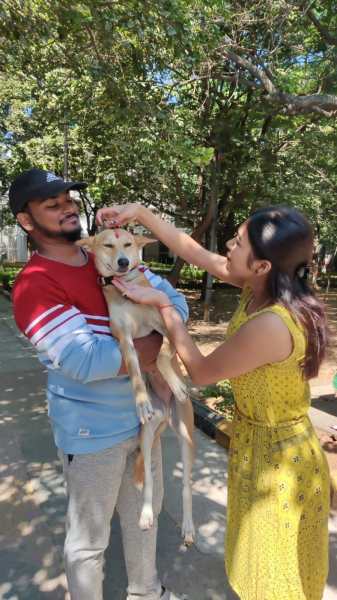 A glance at the NALSAR dog policy shows how the university tried to balance human safety with animal protection.
The exception stemmed from the ‘NALSAR model’ — an initiative that has seen students and faculty come together to protect and manage community dogs on campus. Among these measures are the ‘We for the Dogs’ WhatsApp group of 80-90 people, an Instagram page called the ‘Dogs of Nalsar’, and, most importantly, the Animal Law Centre, which began in 2018 and claims to be “India’s first research centre on Animal Law and Policy which aims to fill critical gaps by producing robust research and building capacity across a collaborative network across academia, grassroots stakeholders, and government agencies”.
The campus has 6-8 designated dog-feeding spots, where some 20-30 student volunteers feed dogs using university funds, while also keeping tabs on their vaccination and sterilisation. “It’s a tight knit community, and each one plays their own role in keeping the campus safe for dogs and humans both,” says Dhamelia, who founded ‘We for Dogs’ with four other students in 2022.
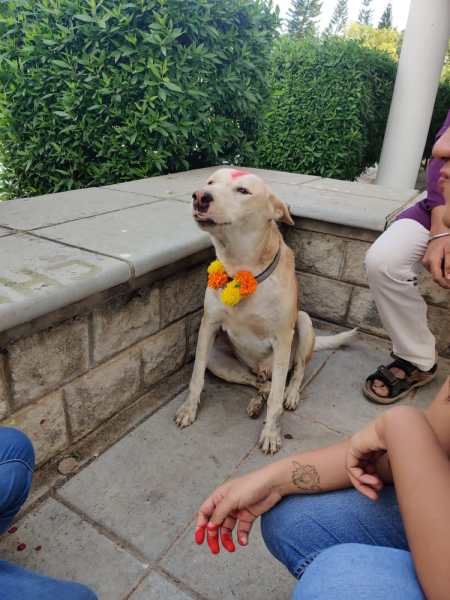 The campus has 6-8 designated dog-feeding spots.
This ecosystem of care and caution emerged through a step-by-step process, says Vivek Mukherjee, head of Animal Law and Policy. “A year after the Animal Law Centre was established, senior faculty members and students started drafting the dog policy, which took shape by 2020-21. Alongside came the census of dogs on campus. We identified that 10-11 dogs were born on campus and should be raised here,” Mukherjee says.
This number doubled to 20 during 2021-23, amid the COVID-19 lockdown. “Since then, because of sterilisation and checks across the university boundaries that kept other dogs from entering the campus, the number has remained the same,” Mukherjee says.
The balancing act
Story continues below this ad
A glance at the NALSAR dog policy shows how the university tried to balance human safety with animal protection. The policy mandates that NALSAR’s elected student bar council oversee its implementation. A major role of the student and faculty community is “conflict mitigation” — both human-dog and dog-dog.
“The society of volunteers Nalsar Animal Welfare Group shall be responsible for coordinating all matters concerning the animals on campus, specifically the dogs,” it says.
What happens in case of dog bites? Students claim this is prevented to a large extent by ensuring enough food and water for the animals. “Territorial fights among the dogs were minimised as we did the census, sterilised and vaccinated the dog population on campus,” says Siddhant, a NALSAR student who also participates in caring for the dogs.
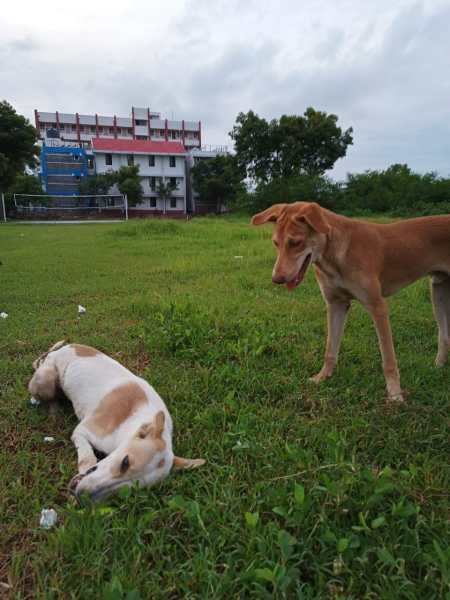 The campus has 6-8 designated dog-feeding spots.
Animal welfare advocates on campus believe the initiative has paid off. One outcome, they say, has been reduced criticism of community dogs. “There are two kinds of people who don’t get along with dogs — those who are averse to dogs and others who harm them intentionally. Through sensitisation measures, done annually on campus with the support of the university administration, we have been able to curtail human-dog conflicts of any kind,” Dhamelia says.
Story continues below this ad
Meanwhile, students and faculty celebrate a Nepali dog festival, called Kukur Tihar, alongside Diwali to “celebrate the social animals called dogs”, says Siddhant.
Mukherjee of the Animal Law Centre believes the court’s ruling reflected these measures. “The court has recognised the effort of the NALSAR community in providing a safe haven for both humans and dogs. The court recognises it as an ‘experiment’ which could be replicated elsewhere,” Mukherjee says, adding: “The judgment offers a ray of hope to NALSAR. We hope that if we can do it, other institutions too can do it”.









 English (US) ·