

 1 hour ago
3
1 hour ago
3
ARTICLE AD BOX
The nine-judge Bench will examine seven specific legal questions, including the scope of religious freedom, the interplay between individual rights under Article 25 and the rights of religious denominations under Article 26, and whether these rights are subject to other constitutional provisions.
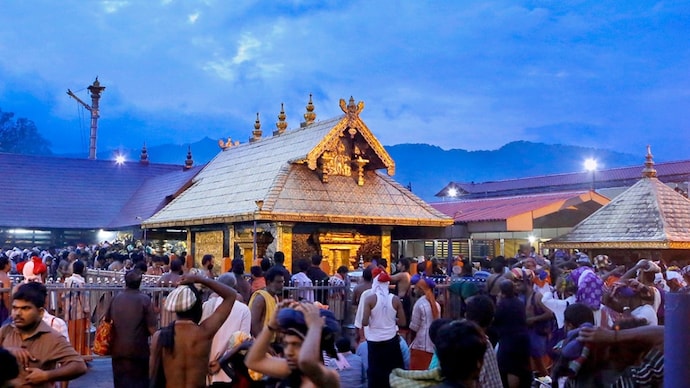
Sabarimala temple (Photo: keralatourism.org)

New Delhi,UPDATED: Feb 16, 2026 14:46 IST
A nine-judge Constitution Bench of the Supreme Court will begin hearing pleas in the Sabarimala review case on April 7, concerning the legality of women’s entry into the Kerala hill shrine. The Bench has set March 14 as the deadline for parties to submit written arguments, with hearings scheduled to conclude by April 22.
A bench comprising Chief Justice of India Surya Kant and Justices Joymalya Bagchi and Vipul M Pancholi on Monday ordered that the reference be listed before a nine-judge bench, the composition of which will be notified by the CJI through an administrative order.
The matter dates back to a September 2018 Supreme Court verdict, which allowed women of all ages entry into Sabarimala, overturning a long-standing practice that barred women of menstruating age from the temple.
The 2018 decision was made by a five-judge Constitution Bench with a 4:1 majority. Following this verdict, widespread protests erupted across Kerala, resulting in several review petitions being filed by individuals and organisations before the Supreme Court.
In November 2019, the Supreme Court delivered its judgment on these review petitions without settling the issue. The Court indicated that broader legal questions regarding essential religious practices and constitutional rights required examination by a larger Bench.
The nine-judge Bench will examine seven specific legal questions, including the scope of religious freedom, the interplay between individual rights under Article 25 and the rights of religious denominations under Article 26, and whether these rights are subject to other constitutional provisions.
Other points to be addressed include the scope and extent of morality under Articles 25 and 26, whether religious denominations enjoy fundamental rights, the definition of a "section of Hindus" under Article 25(2)(b), and the ability of outsiders to file public interest litigations against religious practices.
During today's hearing, Solicitor General Tushar Mehta, representing the Central government, stated, "We are supporting the review my lord," signalling the Centre's backing of petitions challenging the 2018 verdict.
The Bench acknowledged potential complexities, saying, "There are some unforeseen bridges which we may have to cross when we are hearing the case."
Notably, the answers provided by the Bench will also have bearing on other pending matters, such as the entry of Muslim women in mosques and Durgahs, the rights of Parsi women married to non-Parsis in Agyaris, and the issue of female genital mutilation among the Dawoodi Bohra community.
The proceedings had been delayed as a result of the Covid-19 pandemic, which disrupted court functions for an extended period. The matter is now being revived with a full schedule and a detailed timeline for all parties.
The outcome is expected to impact not only Sabarimala but also several other cases concerning religious freedoms and rights in India. The decisions of the nine-judge bench will be critical in clarifying the extent of religious freedom and the constitutional protections for practices across various faiths and communities in India.
- Ends
Published By:
Sayan Ganguly
Published On:
Feb 16, 2026





 English (US) ·