

 1 hour ago
4
1 hour ago
4
ARTICLE AD BOX
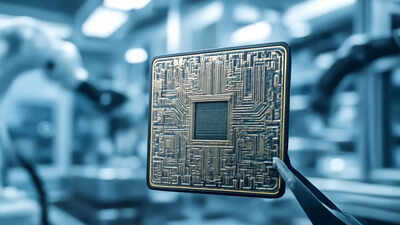
Atsuyoshi Koike has a dream that is ‘literally’ out of this world. He wants to manufacture computer chips on the Moon. Koike leads Rapidus, a Japanese government-backed tech company founded in 2022, and with billions of dollars in funding, company wants to muscle its way back to the top of the global semiconductor industry.According to a report in The Wall Street Journal, if everything goes according to plan, Rapidus will start mass-producing cutting-edge microchips next year but Koike says that manufacturing chips on the moon may be a reality in 2040s.According to Koike, the moon’s low gravity and natural vacuum environment would make manufacturing these highly sensitive chips much easier and more productive. “I’m thinking about it very seriously. Of course, I like to show the great future, the big dream.
But we have to show the actual data, the actual result. That is the key for my company,” Koike said of his lunar factory.
Rapidus’ 2nm chip milestone
The company already hit a massive milestone by creating its first 2-nanometer prototype chip, utilising technology co-developed with American tech giant IBM. These highly complex 2-nanometer chips are the current “gold standard” for the tech industry, and power everything from AI data centres to smartphones and self-driving cars.
However, building a prototype is only half the battle. Currently, only industry giants like Taiwan's TSMC and South Korea’s Samsung Electronics can pull this off, and Rapidus still has a long way to go. But Koike believes Rapidus has a secret weapon to win over customers: speed.
Rapidus plans to charge ‘Shinkansen fee’ for chip delivery
Usually, a chip factory (known as a "fab") processes silicon wafers in large batches, moving them slowly through different stages to build the chips layer by layer.
Koike says Rapidus will take a different approach and will process one wafer at a time immediately. The company is aiming to shrink the manufacturing time from the industry standard of 50 days down to 15 days. For this express service, Koike plans to charge a premium, comparing it to Japan's famous high-speed rail. “I get a Shinkansen fee,” he joked.Koike also said that Japanese chip makers fell behind because they became too isolated, calling it a “big mistake” that they didn't partner with US firms earlier. To fix this, Rapidus engineers are now actively training alongside IBM experts in New York.








 English (US) ·