

 3 days ago
7
3 days ago
7
ARTICLE AD BOX
Omraje Nimbalkar's next political move has become central to the battle between the two Shiv Sena factions. The court verdict in his father's murder case has sharpened the scrutiny around his stand.
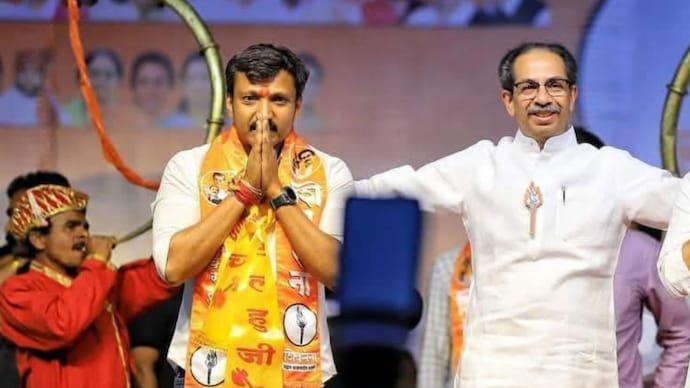
The timing of the acquittal has added a sensitive layer to the political churn around Omraje Nimbalkar. (Photo: Social Media)

Pune,UPDATED: Jun 21, 2026 14:42 IST
The intensifying political contest between the two Shiv Sena factions has reached a decisive stage, with Dharashiv MP Omraje Nimbalkar emerging as a pivotal figure in the ongoing “Operation Tiger.” His next move is being closely watched by both the Uddhav Thackeray-led Shiv Sena (UBT) and Eknath Shinde’s Shiv Sena, amid reports that multiple MPs from the UBT camp are being targeted for possible defection.
The development has gained further political weight following the verdict in the 2006 murder case of Nimbalkar’s father, former Congress leader Pavanraje Nimbalkar, in which a Mumbai special court acquitted all accused.
The timing of the acquittal has added a sensitive layer to the political churn around Omraje Nimbalkar. Two days before the verdict, Shiv Sena (UBT) leader Sanjay Raut had alleged that MLAs and MPs were being pressured under “Operation Tiger” and had also referred to the pending judgment in the Pavanraje Nimbalkar case while questioning the pressure being exerted on the MP.
Following the court’s decision, Omraje returned to his Pune residence from Mumbai and told mediapersons that he had not made any statements against Uddhav Thackeray or Aaditya Thackeray, adding that his future political stand would be taken after consulting supporters and constituents. “I have never spoken against Uddhavji and Aadityaji, and I will not speak against them in the future. My stand will be decided after discussions with my people,” he said.
SHINDE CAMP RESPONSE AND LEGAL MOVE
The verdict also triggered a response from the Shinde camp. The Deputy Chief Minister’s office stated that the Central Bureau of Investigation (CBI) would challenge the acquittal in a higher court.
According to information shared within the government, Chief Minister Devendra Fadnavis and Deputy CM Eknath Shinde discussed the matter with Union Home Minister Amit Shah, following which directions were issued for filing an appeal.
The involvement of the Shinde faction in a case linked to Omraje’s father has added political sensitivity at a time when his allegiance is under intense scrutiny.
WHY OMRAJE IS CRUCIAL
After the 2022 split in the Shiv Sena, Eknath Shinde became Chief Minister of Maharashtra. The Election Commission later recognised his faction as the official Shiv Sena and allotted it the “bow and arrow” symbol. The Speaker of the Maharashtra Assembly, Rahul Narwekar, also recognised the Shinde group as the official legislative faction.
In the 2024 Lok Sabha elections, the UBT faction won nine seats, while the Shinde faction secured seven. Reports around “Operation Tiger” have suggested that multiple UBT MPs could be persuaded to switch sides.
If a significant number of MPs shift, the Shinde camp could strengthen its position under anti-defection provisions. In this context, Omraje Nimbalkar’s decision is seen as politically consequential, both numerically and symbolically.
MEETINGS, SPECULATION AND ABSENCE
Sources said efforts have been underway to retain Omraje within the UBT camp, with senior leaders, including MLA Varun Sardesai and others, reportedly meeting him in Pune for discussions.
However, no formal announcement has been made by the MP regarding either joining the Shinde faction or leaving the UBT group.
Speculation increased after Omraje reportedly remained out of contact for three days and later skipped a Delhi meeting despite a party whip issued by Shiv Sena (UBT) parliamentary leader Arvind Sawant. Following this, show-cause notices were issued to him and five other MPs.
WHAT THE COURT SAID IN THE CASE
In its ruling in the Pavanraje Nimbalkar murder case, the special court made several key observations:
- The testimony of approver witness Parasmal Jain was found to be unreliable, with inconsistencies noted in his statements.
- The court held that the CBI failed to establish a complete chain of evidence required for conviction.
- The accused were given the benefit of doubt as the prosecution failed to prove the case beyond reasonable doubt.
- The trial lasted nearly two decades, during which 128 witnesses were examined, but the charges could not be conclusively established.
- Ends
Published By:
Priyanka Kumari
Published On:
Jun 21, 2026 14:42 IST




 English (US) ·