

 1 day ago
3
1 day ago
3
ARTICLE AD BOX
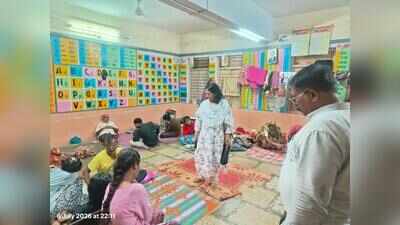
PMC officials meet residents at relief shelters
Pune: More than 6,000 residents were evacuated from flood-prone areas across Pune and Pimpri Chinchwad over the last 48 hours as torrential rain inundated residential colonies and caused rivers to breach their banks.
The deluge triggered large-scale rescue operations by civic authorities, fire departments, and emergency teams.In Pimpri Chinchwad, the municipal corporation (PCMC) utilised boats to rescue approximately 1,500 people stranded in rising waters. More than 5,000 residents were shifted to temporary relief shelters, including many moved as a precautionary measure from vulnerable riverside settlements. The Pavana and Indrayani rivers, along with the Mutha, crossed danger levels at multiple locations, submerging neighbourhoods in nearly 25 localities.Affected areas include Rahatani, Keshavnagar, Tathawade, Kiwale, Ravet, Moshi, Chikhali, Pimple Gurav, New Sangvi, and Kundannagar. Among the most critical rescue operations was the evacuation of 300 students stranded at a Gurukul in Keshavnagar. Fire department teams also saved priests from riverside temples, elderly residents in Tathawade, and a woman with her infant trapped in Old Sangvi. Beyond human lives, personnel also moved approximately 750 cattle toThe Pune Municipal Corporation (PMC) evacuated 1,105 residents from 297 families as the Mutha river and its tributaries overflowed.
The Nagar Road-Wagholi ward office saw the largest displacement, shifting 525 residents from Shantinagar and Yerawada to safety. Other affected neighbourhoods included Patil Estate, Adarshnagar, Bopodi, Sainathnagar, Panchsheelnagar, and Ghorpadi. Evacuees are currently being housed in PMC schools, community halls, and other temporary shelters.To manage the crisis, PMC has established 49 relief centres and deployed an extensive emergency response team.
This includes 4,000 sanitation workers and over 130 health inspectors and supervisors.Assistant health officer Dr Vaishali Jadhav confirmed that 15 ambulances have been stationed at ward offices to provide medical aid to children and senior citizens. “Our teams are conducting fogging in classrooms before citizens are moved in to ensure safety,” Dr. Jadhav said. “Once floodwaters recede, we will perform preventive fogging and chlorinate water sources to prevent outbreaks of vector-borne and water-borne diseases.
”The heavy rainfall also hit the hill station of Lonavala, where the municipal council shifted 503 people to relief shelters over the past two days.Both PCMC and PMC have activated 24-hour central control rooms to coordinate ongoing rescue and relief efforts as the region remains on high alert.(With inputs from Steffy Thevar)









 English (US) ·