

 2 hours ago
6
2 hours ago
6
ARTICLE AD BOX
In a major giveaway exposing Islamabad's role, Abu Musa Kashmiri, a top commander of the Pakistan-based terror group, released a video claiming that the Pahalgam attack elevated Pakistan's international standing.
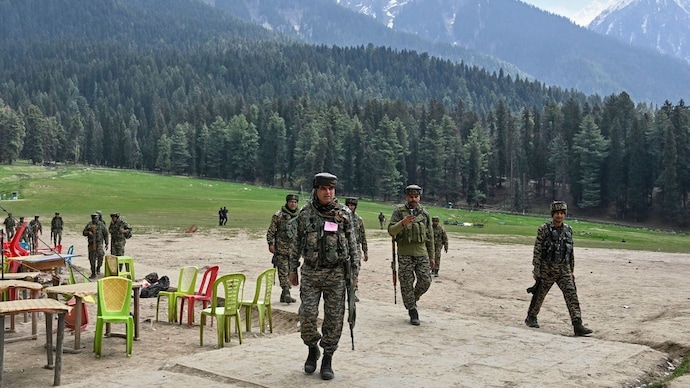
Security forces arrive at the spot following the Pahalgam attack
New Delhi,UPDATED: Apr 11, 2026 21:02 IST
A startling viral confession by a Lashkar-e-Taiba terrorist has alleged Pakistan’s direct hand in the 2025 Pahalgam attack that killed 26 people. In a telling giveaway exposing Islamabad’s role, Abu Musa Kashmiri, a top Lashkar-e-Taiba commander, released a video claiming the Pahalgam attack boosted Pakistan’s international standing.
Following the April 22 Pahalgam attack, Islamabad had denied any involvement and termed New Delhi’s allegations “replete with fabrications.” The Pakistan armed forces had also claimed that India had not provided any “shred of evidence” for what they called baseless claims.
In a viral video, Musa claimed, “After Bunyan-un-Marsoos, Pakistan’s international image was boosted... I don’t know if the Pahalgam attacks were right or wrong... but the actions that followed in the form of Pakistan’s Bunyan-un-Marsoos, in response to India’s Operation Sindoor, which had failed miserably, have taken our country 50 years forward.”
However, these latest remarks by the Lashkar commander appear to contradict those denials and raise fresh questions over Pakistan’s role in the attack. The comments also come at a time when Pakistan is hosting ceasefire talks between the US and Iran to end the six-week war in the Gulf.
The terrorist, then, went on to claim that the attack has provided Pakistan with an opportunity to position itself as a mediator between the US and Iran.
In the early hours of May 7 last year, the Indian armed forces conducted strikes on nine terror pads across Pakistan and Pakistan- Occupied Kashmir. These were both retaliatory and preemptive strikes for the terror attack on April 22 in Pahalgam, which claimed the lives of 25 Hindu tourists and a local pony operator.
Officials described the operation, named Operation Sindoor, as precise, controlled, and aimed at avoiding escalation.
The Indian Army shared a video on X declaring, "Justice is served," confirming that the targets included sites linked to the banned groups Jaish-e-Mohammed and Lashkar-e-Taiba.
One of the prominent targets was a significant mosque complex in Muridke, near Lahore in Pakistan's Punjab province. Masjid wa Markaz Taiba is considered the ideological and operational centre of Lashkar-e-Taiba.
This 82-acre complex, often called Pakistan's "terror nursery," has been monitored by Indian intelligence for its involvement in planning attacks against India.
Founded in 2000 with alleged financial support from Al Qaeda leader Osama bin Laden amounting to Rs 10 million, the Markaz served as the core for Hafiz Saeed’s terror outfit.
The Markaz has been linked to training militants involved in the 2008 Mumbai attacks, including Ajmal Kasab, who was trained in intelligence operations under Pakistan’s ISI, according to sources.
India has stated that the strike on Muridke was a justified response to the Pahalgam attack, for which The Resistance Front, associated with Lashkar-e-Taiba, claimed responsibility.
By hitting the Markaz, India intended to target both the infrastructure and the symbolic centre of Lashkar-e-Taiba’s global terrorist activities, signalling its determination to dismantle terrorist support networks.
- Ends
Published By:
Sayan Ganguly
Published On:
Apr 11, 2026 21:02 IST
Tune In





 English (US) ·