

 1 hour ago
5
1 hour ago
5
ARTICLE AD BOX
Last Updated:February 21, 2026, 16:40 IST
Pakistan’s poverty rate hit 29%, highest in 11 years, with 70 million in extreme poverty. Balochistan remains poorest.


Pakistan’s poverty rate hit 29%, highest in 11 years, with 70 million in extreme poverty. Balochistan remains poorest. (Image: AP)
Pakistan’s poverty rate has surged to an 11-year high of 29 per cent, while income inequality has reached its highest level in 27 years, according to an official survey released by Planning Minister Ahsan Iqbal Chaudhary.
The report estimates that nearly 70 million Pakistanis are now living in extreme poverty, defined as earning less than Rs 8,484 per month to meet basic needs.
Preliminary findings for fiscal year 2024-25 show the poverty ratio jumped from 21.9 per cent in 2019 to 28.9 per cent the highest level since 2014.
Poverty Trend Over The Years
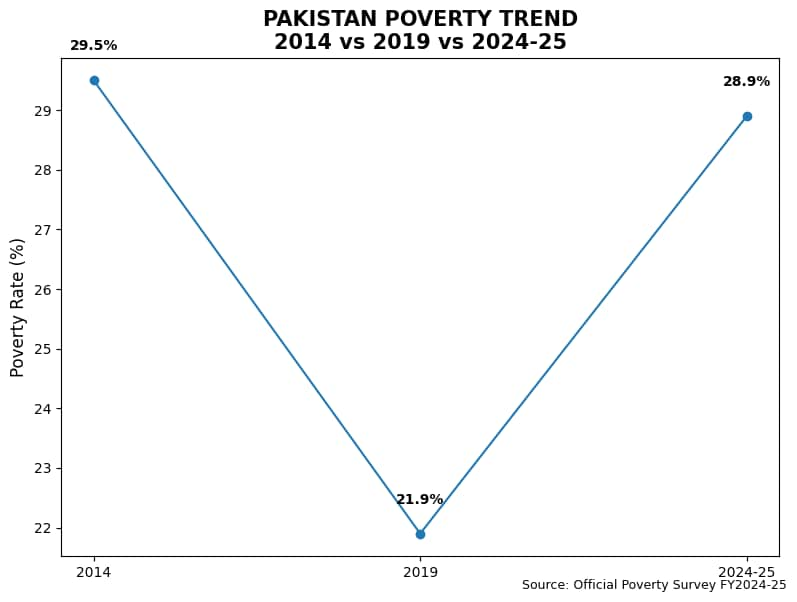
The data shows poverty declined between 2014 and 2019 but has sharply reversed in recent years.
Pakistan is also facing a 21-year-high unemployment rate of 7.1 per cent, compounding economic distress.
Rural vs Urban Divide Widens
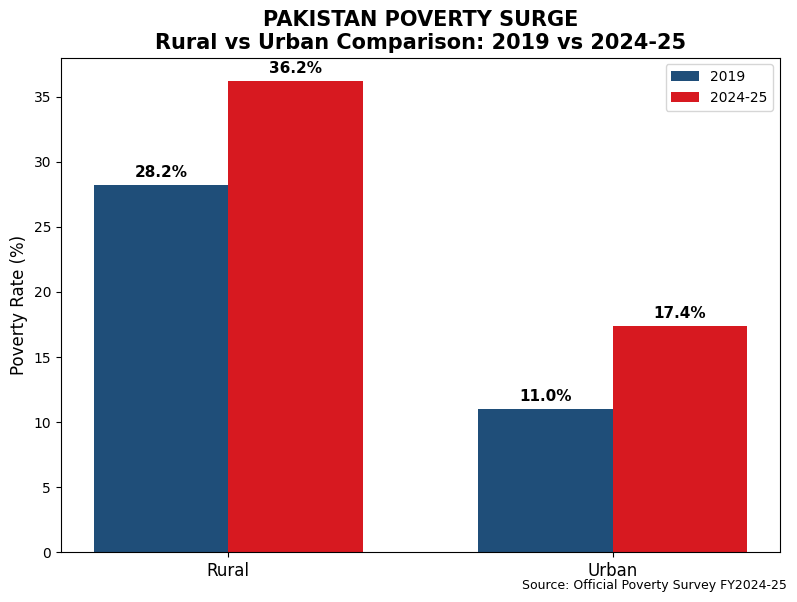
Rural poverty increased from 28.2 per cent to 36.2 per cent, while urban poverty rose from 11 per cent to 17.4 per cent. The sharper rural spike highlights the disproportionate impact of inflation and economic slowdown outside cities.
Provincial Poverty Rates: 2019 vs 2024-25
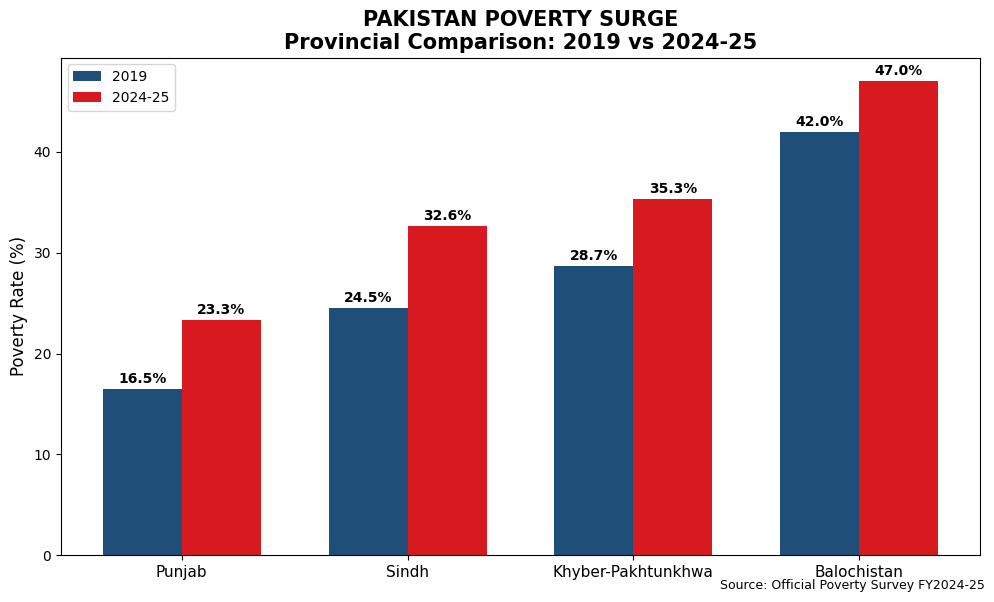
The provincial breakdown shows worsening poverty across all regions:
- Punjab: 16.5% → 23.3%
- Sindh: 24.5% → 32.6%
- Khyber-Pakhtunkhwa: 28.7% → 35.3%
- Balochistan: 42% → 47%
Balochistan remains the poorest province, while Khyber-Pakhtunkhwa and Sindh have also seen steep rises. The report noted that security challenges in KP and Balochistan have disrupted livelihoods and increased household vulnerability.
Falling Real Incomes
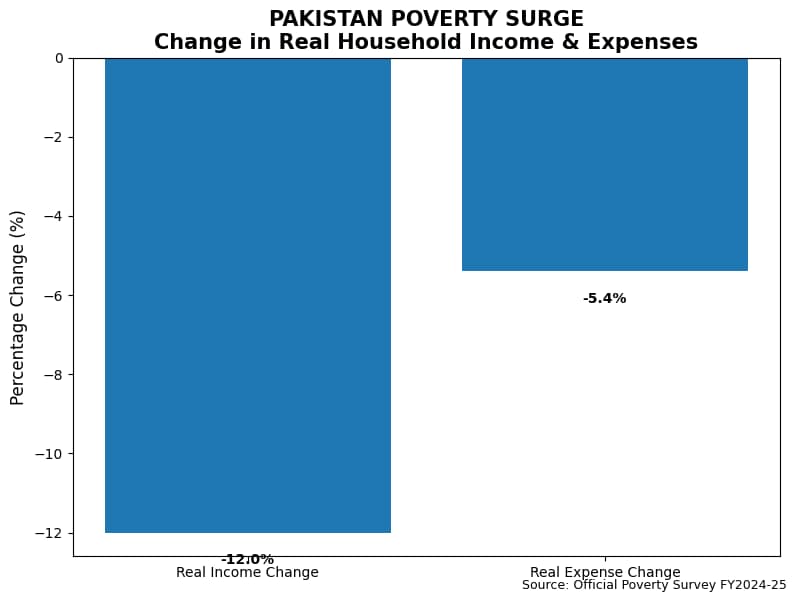
Real monthly household income fell 12 per cent to Rs 31,127 over seven years, while real expenses declined 5.4 per cent, indicating inflation has outpaced income growth.
“The nominal rise in income was outpaced by inflation, causing real incomes to fall," the survey stated.
Planning Minister Ahsan Iqbal acknowledged that stabilisation measures under the IMF programme, including subsidy withdrawals and currency devaluation, contributed to hardship. Natural disasters and weak economic growth were also cited as factors.
Iqbal argued that cash transfers under the Benazir Income Support Programme are not a long-term solution and stressed the need for sustainable growth and employment generation to reverse the trend.
He ruled out an early exit from the IMF programme but expressed hope that sustained income recovery would gradually reduce poverty levels.
Handpicked stories, in your inbox
A newsletter with the best of our journalism
Location :
Islamabad, Pakistan
First Published:
February 21, 2026, 16:40 IST
News world Pakistan Poverty Hits 11-Year High as 70 Million Slip Into Extreme Hardship, Survey Shows
Disclaimer: Comments reflect users’ views, not News18’s. Please keep discussions respectful and constructive. Abusive, defamatory, or illegal comments will be removed. News18 may disable any comment at its discretion. By posting, you agree to our Terms of Use and Privacy Policy.
Read More






 English (US) ·