

 1 week ago
14
1 week ago
14
ARTICLE AD BOX
With their first win over the United States of America, two years after the 2024 T20 World Cup debacle, Pakistan on Tuesday teased what could set them apart when India and their probable Super 8 opponents come rolling later this tournament.
The platform for a 28-run victory in Colombo was laid down by an improved batting performance, but captain Salman Agha also unveiled his team’s unique spin-bowling concoction during the old SSC cricket ground’s first night T20I.
In restricting the USA’s 191 chase, Pakistan deployed 16 overs of slow-bowling contrast. Their star pacer, Shaheen Afridi, rendered ineffective on a truer pitch, leaking 42 in four overs. Agha did not summon seam all-rounder Faheem Ashraf either, but rather resorted to his spin riches.
Even as the batting squadron continues to fall on middling lines, there is merit in plotting this Pakistan side as dark horses on the sticky Lankan strips for this assorted spin band.
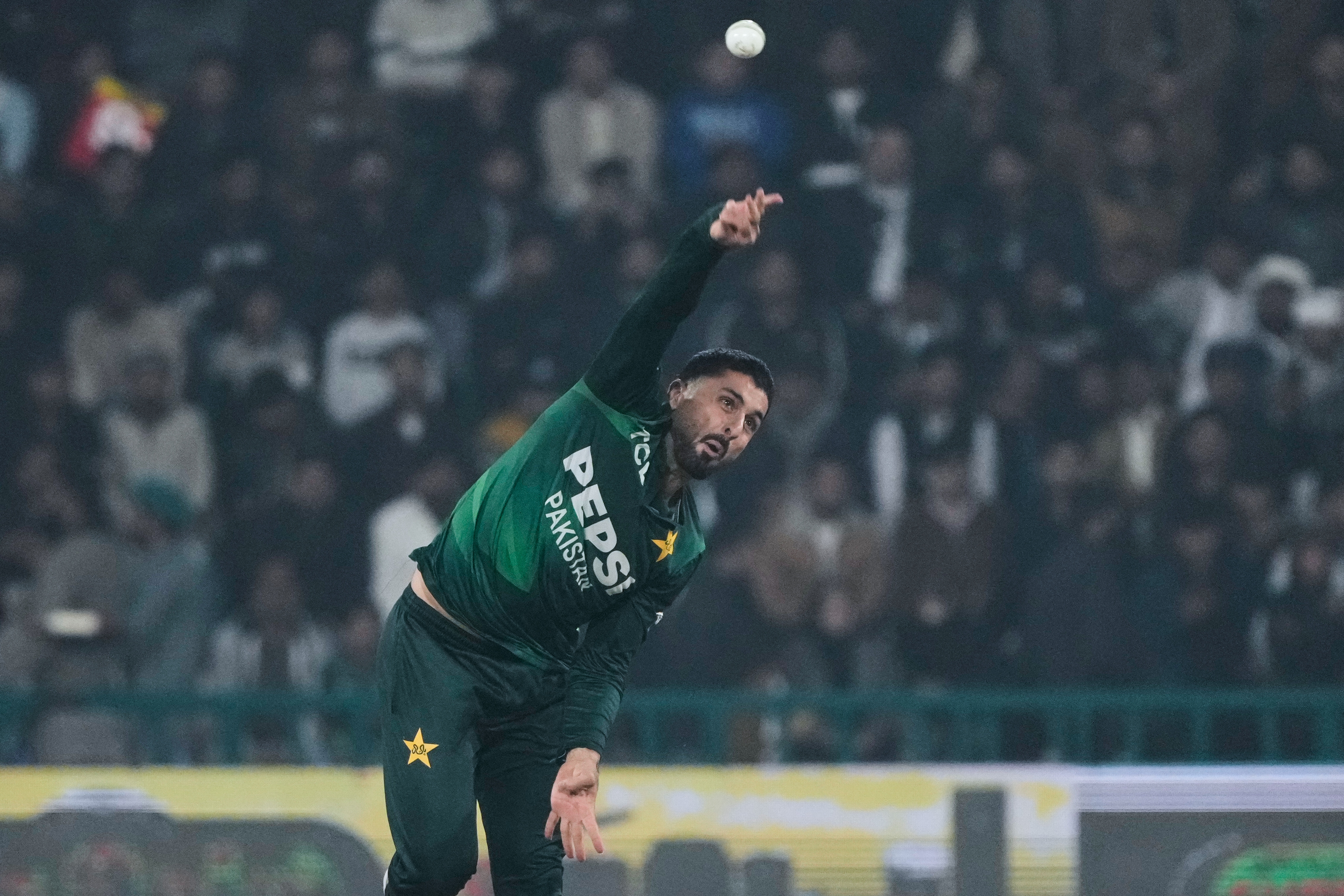 Pakistan’s Abrar Ahmed bowls during the second T20 cricket match between Pakistan and Australia, in Lahore, Pakistan, Saturday, Jan. 31, 2026. (AP Photo/K.M. Chaudary)
In mystery man Abrar Ahmed, offie Saim Ayub, who operates with the new ball, and all-rounders Shadab Khan and Mohammad Nawaz, Pakistan bring a spin attack that could stand on par with India and Afghanistan. Expanding the arsenal from their nervy win over the Netherlands last week, Pakistan also reeled in the “two-elbowed” slinger-spinner, Usman Tariq, against the USA batters.
When India belted their second-highest T20I score (271/5) against New Zealand in Thiruvananthapuram last month, Pakistan’s spin quintet stubbed Australia to a 90-run defeat the same day. Defending 198 at the Gaddafi Stadium in Lahore, the spinners combined for 14.4 overs and snapped up all 10 wickets. In men’s T20Is involving Full-Member teams, it was only the second instance in history where spinners had bagged all 10 wickets. India had similarly bowled out the West Indies in 2022, with three spinners producing every dismissal.
Their latest assignment saw them nab seven wickets spread across 16 overs in all phases in Colombo, conceding 105 runs. Only once have more overs of spin been used by a team in a T20 World Cup match, coincidentally also by Pakistan (18) in Colombo against Australia in 2012.
Story continues below this ad
Having played all of their T20Is in similar subcontinent conditions since the start of the Asia Cup in September 2025, Pakistan are likely to extend the strategy for the remainder of the World Cup and paper over the batting cracks.
 Pakistan’s Usman Tariq bowls during the second T20 cricket match between Pakistan and Australia, in Lahore, Pakistan, Saturday, Jan. 31, 2026. (AP Photo/K.M. Chaudary)
Frugal bunch
Pakistan spinners have been the most frugal bunch in this period. Averaging 15.55 for 113 wickets with a 6.63 economy, they have edged out Afghanistan and India on both fronts. While the Indian spin attack boasts the best strike rate (13.2) heading into the World Cup, Pakistan are within arm’s length, striking roughly every 14 deliveries.
With their batting opener Ayub even doubling up as an unlikely Powerplay enforcer with the ball, Pakistan have bowled more spin in the first six overs than any other team in the last six months. Ayub has collected 10 of Pakistan’s 51 Powerplay wickets, emerging as the most successful spinner up front in the world in this period. With Nawaz, Abrar, and the others manning the middle-overs, their versatile attack has been as effective in the phase as India, with negligible strike rate differences. Another factor that could heighten the threat on the island is the spin pack’s conjoined ability to relay slower speeds with sharper efficacy than their Indian counterparts.
As most of the top-ranked teams shuttle between varying conditions in India and Sri Lanka in the tournament, Pakistan can continue to build on the spin-bowling core and unsettle oppositions. Even the red-hot Indians will be forced to make adjustments if they are to take on Pakistan in the knockouts, a situation that will push their games out from Mumbai/Ahmedabad to the tacky Colombo pitches.
Story continues below this ad
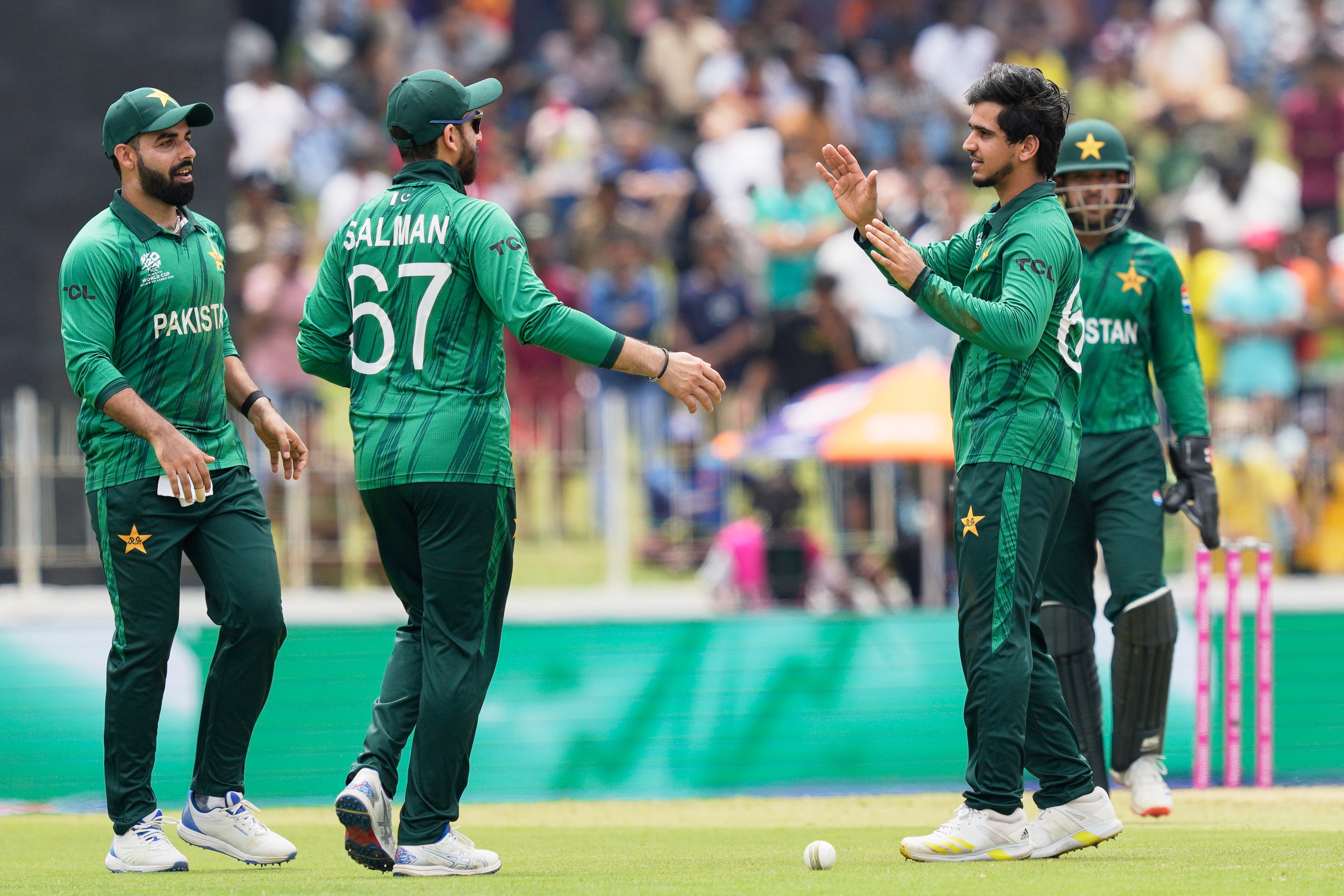 Pakistan’s Saim Ayub, second right, celebrates with teammates the wicket of Netherlands’ Zach Lion-Cachet during the T20 World Cup cricket match between Netherlands and Pakistan in Colombo, Sri Lanka, Saturday, Feb. 7, 2026. (AP Photo/Eranga Jayawardena)
The two-paced conditions at the Wankhede Stadium had forced the Indian batters to veer away from their one-dimensional hitting exhibitions, requiring captain Suryakumar Yadav to wage a stellar rescue act on his home ground. With as many as six left-handers in the Indian top eight, it will be interesting to see how Pakistan arrange the four overs of Tariq, whose action continues to divide opinions and spark discussions on social media.
His unusual stop-and-sling in the delivery stride could unsettle the Indian batters, disrupting their methodical takedown of high-quality attacks on belters at home over the last two months.
For mercurial Pakistan, pressure will be constant, as will the suspense over which version turns up on each match day. When India arrive for the rejuvenated Sunday tie in Colombo, Pakistan could assemble a spin-heavy sauce that may no longer be a secret but enough to neutralise a few of the defending champions’ strengths.









 English (US) ·