

 46 minutes ago
5
46 minutes ago
5
ARTICLE AD BOX
Last Updated:May 25, 2026, 11:32 IST
Brent crude prices have remained volatile after the US-Iran conflict escalated, raising import costs for countries dependent on foreign crude.


Fourth Fuel Price Hike in Two Weeks Hits Consumers Again
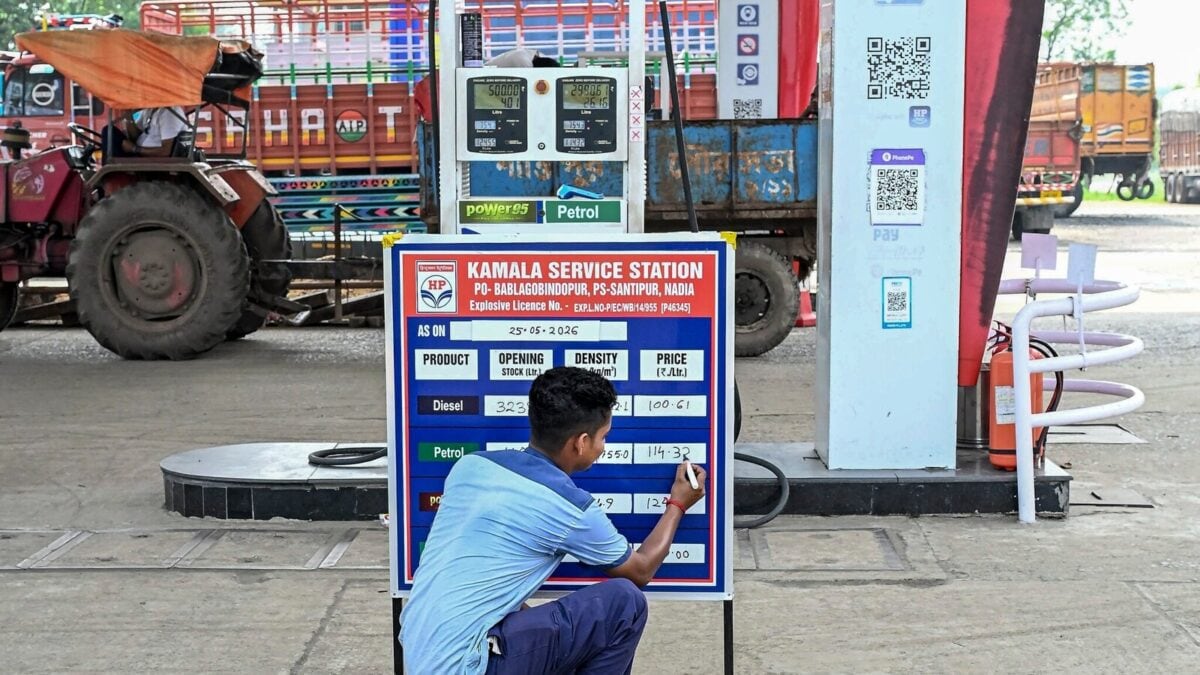
India has now seen four fuel price hikes in just two weeks, with petrol and diesel prices cumulatively rising by around Rs 7.5 per litre as the fallout of the ongoing US-Iran conflict continues to ripple through global oil markets. The increases have come in calibrated steps rather than a single sharp revision, but signals from oil marketing companies (OMCs), refiners, and market analysts suggest the pressure may not be over yet.
The latest hike (Rs 2.61 per litre for petrol and Rs 2.71 per litre for diesel) comes at a time when global crude oil prices remain elevated amid fears of supply disruptions in West Asia, one of the world’s most critical energy-producing regions. India, which imports more than 85 per cent of its crude oil requirement, remains highly vulnerable to such shocks.
According to industry estimates, state-run OMCs such as Indian Oil Corporation, Bharat Petroleum Corporation Limited and Hindustan Petroleum Corporation Limited have been absorbing a large part of the increase instead of fully passing it on to consumers immediately.
Why Prices Have Been Rising And More Hikes May Come
The trigger for the price hikes has been the sharp jump in global crude oil prices following escalating tensions between the United States and Iran. There have been disruptions in shipping through the Strait of Hormuz, through which nearly one-fifth of global oil supplies pass.
Brent crude prices have remained volatile after the conflict escalated, raising import costs for countries dependent on foreign crude. Even when crude prices temporarily cooled, refiners argued that procurement costs, freight premiums, insurance rates and currency fluctuations continued to keep pressure on fuel pricing.
India’s retail fuel prices are not revised entirely in real time during periods of volatility. Instead, OMCs often absorb some losses temporarily to avoid sudden consumer shocks. However, sustained high crude prices eventually force revisions.
The Big Concern: Growing Under-Recoveries
A major reason fuel prices may continue rising is the growing burden of “under-recoveries" faced by oil marketing companies. In simple terms, under-recovery happens when companies sell petrol and diesel at prices lower than the actual cost of procuring, refining, transporting and marketing the fuel.
After crude oil prices shot up because of the US-Iran conflict, Indian refiners suddenly began paying significantly more for imported crude. But domestic retail prices were not raised immediately in proportion to that increase. As a result, OMCs began absorbing the difference themselves.
For instance, if the actual cost of supplying fuel rises sharply, but pump prices are increased only gradually, the remaining gap becomes a loss for the OMC.
Brokerage estimates suggest these losses widened rapidly after crude prices surged and shipping and insurance costs also climbed due to tensions in West Asia. Petroleum Minister Hardeep Puri had stated earlier this month that OMCs in India were facing Rs 1000 crore worth of losses every day.
According to estimates cited by Kotak Institutional Equities, before the recent hikes, OMCs were losing roughly Rs 12– Rs 15 per litre on diesel, and around Rs 9–Rs 11 per litre on petrol. Even after the cumulative Rs 7.5 per litre increase over the past two weeks, analysts estimate that diesel under-recoveries may still remain at around Rs 5–Rs 7 per litre, while petrol losses may still be around Rs 3–Rs 5 per litre depending on crude prices and exchange rates.
There are several reasons behind the growing under-recoveries:
India’s Heavy Import Dependence: India imports over 85 per cent of its crude oil requirement, making it highly vulnerable to international price shocks.
Retail Prices Are Not Fully Market-Linked During Crises: Although fuel prices are officially deregulated, OMCs often avoid sudden steep hikes during geopolitical crises or inflationary periods to reduce pressure on consumers and the broader economy.
Freight And Insurance Costs Have Jumped: The conflict has pushed up tanker freight charges, marine insurance premiums, and supply-chain risks around the Strait of Hormuz.
Rupee Weakness Adds More Pressure: Since crude oil is bought in US dollars, any weakening of the rupee further raises import costs for refiners. Even as the Rupee recovered on Monday, it was at Rs 95.20 against the US dollar.
OMCs Recovering Past Losses: Even if global crude prices soften temporarily, companies may keep retail prices elevated because they are trying to recover losses accumulated during weeks when fuel was sold below cost.
The Rs 25-Rs 28 Per Litre Warning
One of the strongest warnings had come from Kotak Institutional Equities earlier this month, which estimated that petrol and diesel prices may need to rise by Rs 25–Rs 28 per litre if current crude trends persist and losses are fully passed on. The firm reportedly said OMCs are facing “unsustainable under-recoveries" because retail price hikes have lagged far behind the rise in global crude prices.
However, the Union government strongly rejected the projection, calling such estimates “misleading" and clarifying that no such proposal was under consideration.
While that may calm fears of a massive hike, officials have also acknowledged that oil companies are under severe stress.
Union Petroleum Minister Hardeep Singh Puri had earlier acknowledged that OMCs were carrying losses because they were not fully passing on the burden of expensive crude to consumers. He indicated that the government was trying to strike a balance between protecting consumers from inflation and ensuring the financial health of public sector refiners.
BPCL Signals More Hikes May Come
Fresh concern emerged after Raj Kumar Dubey of Bharat Petroleum Corporation Limited said further fuel price hikes could become inevitable if the geopolitical crisis continues. According to his statement in Times Of India, current market conditions leave little room for stability unless tensions ease substantially and global supply chains normalise.
Uday Kotak’s Warning At CII Summit
At the recent CII Annual Summit, banker Uday Kotak warned that India may need to prepare for a prolonged period of expensive energy if geopolitical instability continues globally. He also urged the country to prepare for tougher economic conditions ahead. “We have not seen the impact in the last two months of the Middle East war in terms of energy price transmission. It’s coming. And it’s coming big," he said. “The shock is coming," Kotak cautioned, while urging businesses and policymakers to prepare in advance. “My view is we should prepare for paranoia before the event. And we must hope that tough times do not come or remain. But we must prepare for the worst."
His remarks reflected growing fears in financial circles that the current crisis may not be a short-term disruption alone.
Therefore, at present, it appears that there may still be more fuel price hikes if the geopolitical crisis continues and crude oil prices remain elevated. However, India’s strategy so far suggests that any further increases may continue to happen gradually rather than through one dramatic revision.
Much now depends on whether the US-Iran conflict de-escalates, how long crude prices remain high, and how much financial strain OMCs are forced to absorb before passing more costs on to consumers.
For now, the fourth fuel price hike may not be the last.
Handpicked stories, in your inbox
A newsletter with the best of our journalism
News india Petrol, Diesel Prices Up By Rs 7.50 In Ten Days: More Hikes Coming?
Disclaimer: Comments reflect users’ views, not News18’s. Please keep discussions respectful and constructive. Abusive, defamatory, or illegal comments will be removed. News18 may disable any comment at its discretion. By posting, you agree to our Terms of Use and Privacy Policy.
Read More





 English (US) ·