

 56 minutes ago
3
56 minutes ago
3
ARTICLE AD BOX
More than a year after the NCLAT deadline for reforms and fresh elections passed, the battle over Delhi Gymkhana Club has culminated in the Centre ordering the elite institution to vacate its Lutyens' Delhi premises by June 5. Here's how years of bureaucratic takeover, litigation and failed reform attempts brought one of India's most exclusive clubs to this point.
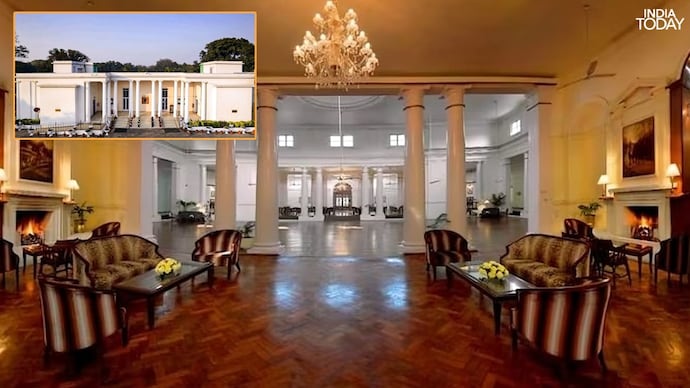
Membership at India's most coveted club, the Delhi Gymkhana, came with a 20-30 year wait, and deposits of up to Rs 8.5 lakh, locked in for decades without interest. (Image: Delhi Gymkhana)
The Delhi Gymkhana Club, among the country's most elite clubs, is history.
The Central government on Friday ordered the club, which stands on public land adjoining the Prime Minister's official residence — the 7, Lok Kalyan Marg — to vacate the premises.
With the move, the government has also brought an abrupt end to the long-running tussle for control of a club that has long been a veritable who's who of India's rich and powerful.
The order was issued by the Land and Development Office under the Union Housing and Urban Affairs Ministry, which said the land was required to meet "urgent institutional needs, governance infrastructure and public-interest projects" in the national capital, integrated with the resumption of adjoining government lands.
"The premises shall be taken over by the Land & Development Office on June 5," the notice said.
DELHI GYMKHANA CHANGED LITTLE DESPITE GOVT CONTROL
The Delhi Gymkhana is perhaps India's most elite private club, and a much favoured address for India's who's who. From senior politicians and judges to top bureaucrats, generals, doctors, and academicians, it's where you rub shoulders with the upper crust of India's power circles and professional elite. Among these influential members, power tussles have long been common, as to who should be at the helm of the coveted club. The latest, however, was different. It involved the government, along with the bureaucrats.
The government stepped in after complaints of mismanagement, nepotism and deviation from the club's original purpose, which seemingly was sports. The club sits on 27 acres of prime Lutyens' Delhi land, leased from the government at a nominal rent of Rs 1,000 a year. Yet inspections found that only a tiny fraction of spending went towards sports, while large sums supported hospitality and recreation. "Wine and cigarettes", allegedly. Decades of waitlist, membership fees in lakhs that is collected without interest, and alleged family fiefdoms prompted an intervention by the National Company Law Appellate Tribunal (NCLAT).
The club was established in 1913 as the Imperial Delhi Gymkhana Club Ltd at the Coronation Grounds in Delhi. In 1928, it moved to its present 27-acre site on Safdarjung Road under a perpetual lease. After Independence, the word "imperial" was dropped, but its essence has largely remained.
Membership has always been selective. Applicants are proposed, interviewed by the board and admitted only when vacancies arise, which can take up to 20 to 30 years. The club's rules cap permanent membership at 5,600. Earlier, in the 1960s and the 70s, a large chunk of the Gymkhana's members were serving or retired military officers — from generals to admirals — along with senior bureaucrats and politicians. But over the past four decades, the balance shifted as more of India's governing elite began seeping in.
Becoming a member was expensive too. Applicants pay more than Rs 1 lakh as a non-refundable fee with no interest, even though admission is not guaranteed even after three decades. The club's utility charges — a one-time fee for access to facilities — rose sharply from Rs 5,000 in 2000 to Rs 1.5 lakh for government officials and Rs 7.5 lakh for non-government applicants. As of 2017-18, wait-list applicants had already paid Rs 44.79 crore in fees.
"The waitlist has been long due to the limited number of members," former General Committee member Major Atul Dev (Retd) told India Today Digital.
Amid such exclusivity, many bureaucrats seemingly felt left out. They found it difficult to secure membership despite the club's location on public land and its original objects of promoting sports and recreation. Families of existing members appeared to perpetuate access. This situation created a tug of war for influence.
A well-placed source, speaking on condition of anonymity, told India Today Digital that the "babu takeover" was indeed driven by many bureaucrats' frustration. Accustomed to bypassing the queue, they were apparently appalled at having to wait decades for membership in the Delhi Gymkhana. "It is like an accolade to be a member at the Gymkhana," the source said, requesting anonymity.
However, the source also clarified that the current NCLAT-appointed panel never applied for membership themselves and did not share any such anxiety. "But there have been young IAS and IPS officers who have applied at the age of, say, 30-31, and received membership only when they become grandparents," the source added.
HOW GOVT, BUREAUCRATS FOUND AN OPENING TO RULE DELHI GYMKHANA
The government found its opening through complaints filed by seven club members, including former office-bearers, alleging fund mismanagement, financial irregularities, nepotism in membership admissions, and deviation from the club's original objects as a Section 8 (non-profit) company incorporated in 1913 primarily for sports and recreation on public land.
According to the ministry's petition, although the Delhi Gymkhana Club was allotted land at concessional rates for sporting purposes, it spent around only 2% on sports; instead, in violation of the allotment terms, around 30% of its expenditure was directed towards costly wines, beverages and cigarettes.
Ministry of Corporate Affairs (MCA) inspections conducted between 2019 and 2020 uncovered fabricated financial statements, unauthorised constructions, and a pattern where membership benefits were largely confined to a select group of "blue blood" families while thousands languished on waiting lists for decades.
In June 2020, the National Company Law Tribunal (NCLT) found a prima facie case of affairs being conducted in a manner prejudicial to public interest under Sections 241 and 242 of the Companies Act, 2013. It initially directed the appointment of two government nominees to the General Committee. The Union of India appealed, arguing the relief was inadequate.
On February 15, 2021, NCLAT delivered a strongly worded interim order suspending the elected General Committee and directing the Centre to appoint an administrator. The tribunal observed that the club, "under the garb of distinctive character which is a relic of the Imperial past", was restricting membership to those "having blue blood in their veins thereby perpetuating apartheid and shattering the most cherished constitutional goal of securing social justice and equality of status and opportunity". It also froze new memberships and fee enhancements.
Manmohan Juneja, then an MCA officer, took charge as administrator in February 2021. In April 2022, NCLT went further, allowing the full takeover and replacement of the General Committee with a 15-member body nominated by the Centre.
However, a source told India Today Digital that only an eight-member body is running the club.
THE TUG OF WAR OVER WHO SHOULD BE AT DELHI GYMKHANA'S HELM
The erstwhile management and some members challenged this order.
After prolonged hearings, NCLAT on October 21-22, 2024 upheld the government's intervention and the 15-member committee's legitimacy. However, the appellate tribunal emphasised that government superintendence could not continue indefinitely. It directed the committee to complete all remedial measures — including restructuring the club’s affairs in line with the Companies Act, its Memorandum and Articles of Association, and addressing membership and governance issues — by March 31, 2025. Elections for President and new General Committee members were to follow within two to three months thereafter.
That deadline passed without compliance. Even the government-nominated committee itself sought more time.
On April 23, 2025, the Delhi Gymkhana Club filed an application in the Supreme Court praying for extension of the time granted to the MCA-appointed General Committee to complete the remedial measures.
Instead of elections, the matter moved to the Supreme Court. The MCA filed an appeal challenging the NCLAT’s imposition of the timeline, after a 203-day delay.
Major Atul Dev (Retd), who has been associated with the Delhi Gymkhana Club for over 60 years, told India Today Digital that NCLAT had ordered elections to be conducted, yet "the nominated general committee disobeyed that order and not conducted the elections".
"NCLAT, therefore issued contempt orders and notices against the committee," said the veteran, who was also a general committee member previously.
Major Dev and other members have also filed Contempt Case (AT) No.21 of 2025 in Company Appeal (AT) No.93 of 2022 against the current management.
The contempt proceedings were repeatedly adjourned in 2025 — on July 25, August 29, September 19, and September 22 — with the matter last listed for October 14, 2025 after a technical member recused himself. On September 15, 2025 the Supreme Court had directed NCLAT to postpone the contempt hearing.
The erstwhile management and members, including Col Ashish Khanna (Retd), had also filed parallel proceedings. By September 2025, the Supreme Court was seized of a "peculiar dispute" over whether the government's delay in filing should be condoned.
Some related appeals were withdrawn in April 2025; others, including applications by members and the club itself, were adjourned to October 2025 and beyond. NCLAT itself entertained recall applications and extension pleas as late as September and December 2025.
BABUS DID NOT MAKE ANY EFFORT TO REACH OUT TO MEMBERS
Major Dev (Retd) noted that day-to-day operations remained "as usual" because the club is actually run by paid managers and staff, while the eight-member committee (not the full 15) has made "no effort whatsoever to reach out to any member". "The government-nominated committee manages day-to-day affairs, like handling routine paperwork such as issuing tenders and signing orders," he said.
When India Today Digital reached out to top officials of the club through e-mail, texts, and calls, most of them refused to answer the queries. A top official from the club's administration, speaking on condition of anonymity, told India Today Digital, "I cannot comment as the government is involved in the matter and there are no solid developments in the case."
A former senior official of the club told India Today Digital on the condition of anonymity, "Despite a takeover by babus, essentially nothing has changed. So the takeover doesn’t really make any sense."
India Today Digital reached out to one of the eight members of the current committee, but the member declined to comment, citing the matter as sub judice.
A LOOK AT THE BLUE-BLOOD SITUATION, AND A POSSIBLE END
The club's membership includes influential names such as Congress leader Rahul Gandhi, former RAW chief AS Dulat, and former ministers like Smriti Irani and Suresh Prabhu. A member of the club, however, suggested, "Isn't that the case with most private members’ clubs in India?"
One member, speaking on condition of anonymity, described membership as an investment. "People apply for their children as young as 18, so that, by the time they turn 40-42, they can secure membership and access elite networking circles," the member said.
The Centre's latest order now marks the most dramatic turn yet in the long-running battle over the Delhi Gymkhana Club. Once seen as untouchable even by Delhi's power circles, the club has now been asked to vacate its iconic Lutyens' Delhi premises by June 5, with the government citing defence-linked infrastructure and other public-interest projects.
The move effectively brings to an end years of administrative tussles, court battles and attempts at reform that changed little on the ground. What remains uncertain, however, is the future of one of India's oldest and most exclusive clubs — and of the thousands still waiting, sometimes for decades, to enter its gates.
- Ends
Published By:
Anand Singh
Published On:
May 23, 2026 17:52 IST




 English (US) ·