

 1 hour ago
6
1 hour ago
6
ARTICLE AD BOX
India continues to allow Thiram even after government scientists proposed a ban and industry pushed back. The dispute has sharpened questions over pesticide regulation, public health and support for safer farm inputs.
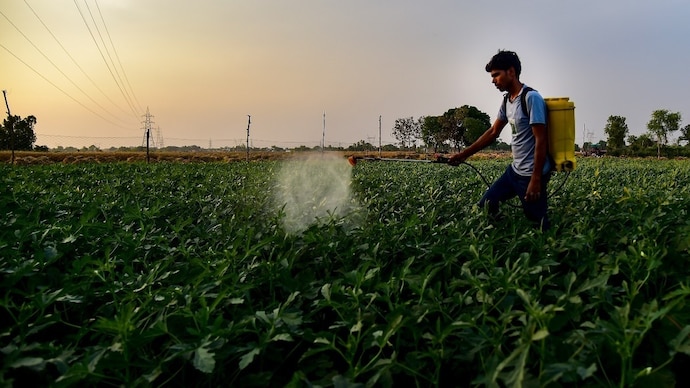
Thiram is considered a Category 1 endocrine disruptor, meaning it has the potential to interfere with the body's hormonal system. (Photo- Representational)
This is not just the story of a chemical fungicide. It is a story about the tug-of-war between policymakers, the influence of agrochemical companies, and public health, where farmers and consumers often end up paying the price.
At the centre of the controversy is Thiram, a fungicide that has been banned for years in the European Union and several other developed countries over concerns about its impact on human health and the environment. Yet, despite these restrictions abroad, the chemical continues to be legally sold and widely used in India.
This report examines Thiram's history, the scientific concerns surrounding it, the regulatory decisions that allowed it to remain in the Indian market, and the debate over safer alternatives.
WHAT GOVERNMENT SCIENTISTS FOUND
In 2020, India's Ministry of Agriculture released a draft gazette proposing restrictions on 27 pesticides, including Thiram. The proposal was based on assessments by government scientists and expert committees, who raised serious concerns about the fungicide's health and environmental risks.
According to the draft, one of the major concerns was that Thiram breaks down into by-products, including metabolites M1 and NDMA (N-Nitrosodimethylamine). NDMA is widely recognised as a potent carcinogenic contaminant and has been linked to cancer risks.
The draft also referred to studies conducted by the European Union, saying that Thiram is considered a Category 1 endocrine disruptor, meaning it has the potential to interfere with the body's hormonal system.
Beyond human health, experts warned that the chemical can persist in soil, water, and air for extended periods. It may harm beneficial soil microorganisms, affect bird reproduction, and pose significant risks to aquatic organisms and fish.
Based on these findings, the draft recommended a complete ban on the import, manufacture, sale, transport, and agricultural use of Thiram.
THE SCIENTIFIC DEBATE
Supporters of Thiram often point out that the World Health Organisation's International Agency for Research on Cancer (IARC) has not classified Thiram itself as a confirmed human carcinogen. However, scientists have highlighted concerns over NDMA, which can form under certain conditions and is recognised internationally as a probable human carcinogen.
European regulators also cited endocrine-disrupting properties and environmental persistence among the key reasons for withdrawing approval for the fungicide.
FROM THE RUBBER INDUSTRY TO INDIAN FARMS
Thiram has an unusual history.
It was not originally developed for agriculture. The chemical was first used in the rubber industry during the 1920s as an accelerator in rubber vulcanisation. Later, researchers discovered that it possessed strong antifungal properties, leading to its widespread adoption in agriculture, particularly as a seed-treatment fungicide.
Over the decades, it became one of the world's most commonly used seed-treatment chemicals.
Ironically, many countries that originally developed and commercialised the chemical eventually phased it out after reassessing its long-term health and environmental risks. However, it continues to be marketed in several developing countries, including India.
WHY WASN'T IT BANNED IN INDIA?
The biggest question is why Thiram remains available in India despite the scientific concerns raised in 2020.
After the draft notification proposing restrictions was released, India's agrochemical industry strongly opposed the move.
Industry bodies argued that banning older, generic pesticides would result in significant economic losses, affect thousands of jobs, and weaken India's position as a major global exporter of agrochemicals.
Another key argument was that Thiram is primarily used in India as a seed-treatment chemical rather than being sprayed directly on crops. Industry representatives argued that this mode of application reduces direct human exposure compared to foliar spraying.
Ultimately, the proposed restrictions on Thiram were not implemented, allowing the chemical to remain on the market.
ARE SAFER ALTERNATIVES AVAILABLE?
Experts say alternatives already exist.
Biological seed-treatment products containing organisms such as Trichoderma and Pseudomonas are considered environmentally safer and are increasingly promoted as sustainable alternatives.
However, these biological products also face practical challenges. Since they contain living microorganisms, they generally have a shorter shelf life, require more careful storage, and may be less effective under adverse environmental conditions. Chemical fungicides like Thiram, on the other hand, are known for their long storage life and broad-spectrum effectiveness.
Critics argue that despite the availability of biological alternatives, they have not received sufficient policy support, production incentives, or subsidies to become affordable and widely accessible for Indian farmers.
A CONTINUING POLICY DEBATE
The Thiram debate highlights the difficult balance between agricultural productivity, industrial interests, environmental protection, and public health.
While Europe has chosen to prohibit the chemical based on its regulatory assessment, India continues to permit its use under existing regulations. The differing decisions reflect contrasting approaches to risk management, agricultural priorities, and regulatory policy.
As scientific evidence continues to evolve, the debate over Thiram is likely to remain at the centre of broader discussions on pesticide regulation, food safety, and sustainable agriculture in India.
- Ends
Published By:
Akshat Trivedi
Published On:
Jul 3, 2026 18:52 IST









 English (US) ·