

 1 hour ago
6
1 hour ago
6
ARTICLE AD BOX
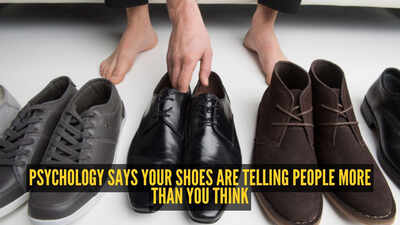
Most people don’t think twice before choosing shoes in the morning. You just grab what feels right and leave.But psychology would disagree with the idea that shoes are “just shoes”.They’re one of the most quietly revealing parts of your wardrobe. Not in a dramatic, personality-typing way. More like subtle clues about how you see yourself, how you want to be seen, and what kind of comfort you prioritise in life.And yes, research actually does back this up.Let’s break it down in a simple, real-world way.
Shoes as a “first impression shortcut”
There’s a famous study from the University of Kansas that looked at whether shoes can reveal personality traits.Researchers found that people were surprisingly accurate at guessing certain personality traits just by looking at someone’s shoes. Things like emotional stability, income level, and even age were often guessed with better-than-chance accuracy.What’s interesting is not that shoes “define” you, but that they carry signals. Scuff marks, brand choices, style, colour - all of it reflects habits and preferences that build up over time.
In simple terms, your shoes are one of the few things people notice without you saying a word.In India, this becomes even more layered. Because shoes aren’t just fashion here - they’re function, status, practicality, and sometimes even cultural habit rolled into one.
Sneakers people: comfort, but also control
If you’re someone who lives in sneakers - even outside the gym - psychology has a pretty simple reading of that.Comfort-oriented shoe choices are often linked with people who prioritise practicality and low friction in life.
Not necessarily “lazy”, as stereotypes suggest, but people who like ease. Less overthinking, fewer adjustments, more movement.A study in Journal of Research in Personality found that casual, comfortable clothing choices are often associated with more agreeable and relaxed personality traits.In Indian cities, sneakers have also become a kind of daily uniform. Metro rides, office commutes, college rush - nobody wants sore feet by 11 am.But there’s also something emotional here. Sneakers feel safe. Predictable. You know what you’re getting.And sometimes that’s exactly what people want from their day.
Heels: confidence, identity, and performance
Heels are a different story altogether.Psychology research on “enclothed cognition” (a concept introduced by Adam and Galinsky) suggests that what we wear can actually influence how we think and behave, especially when the clothing carries symbolic meaning.Heels often fall into that category. They’re not just footwear - they’re associated with formality, power dressing, femininity, and presence.For many women in India, heels are tied to “important moments” - weddings, parties, presentations, interviews, photos. Over time, the brain starts linking heels with performance mode.
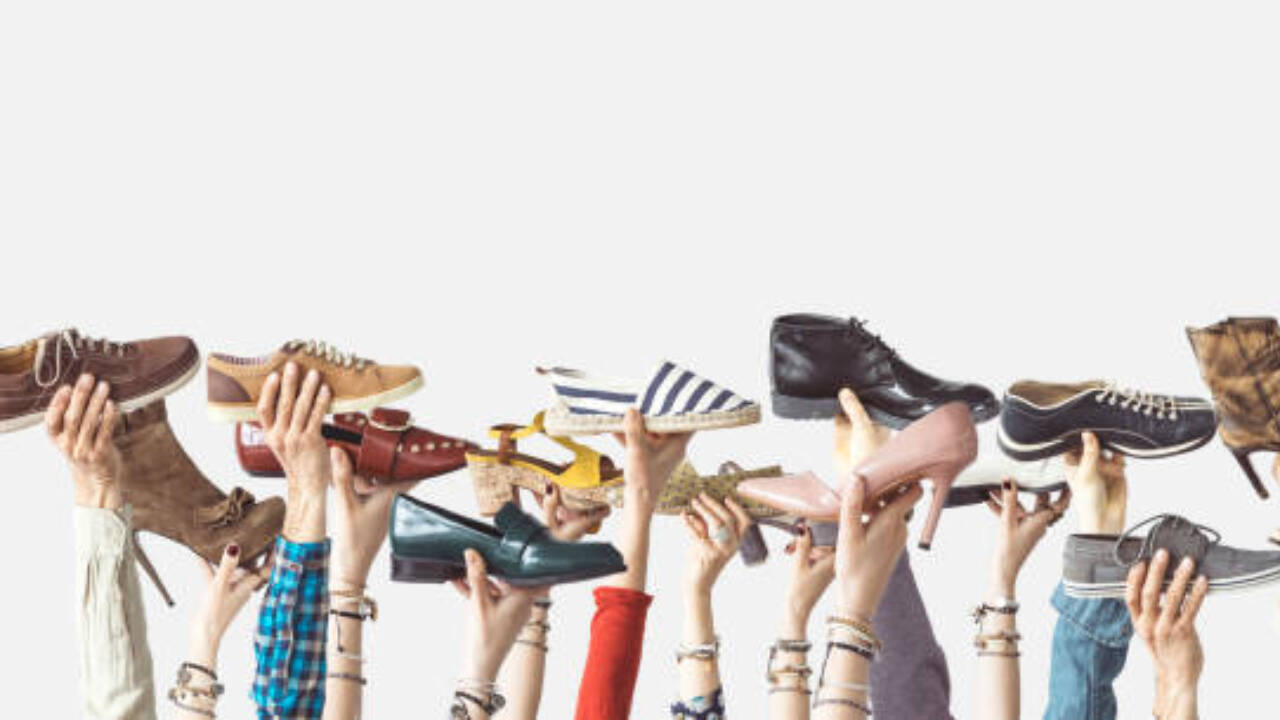
So when someone wears heels, it’s not always about fashion. Sometimes it’s about stepping into a version of themselves that feels more sharp, more seen, more in control.Of course, there’s also the reality - heels can be uncomfortable. But people still choose them because the psychological payoff can feel worth it in certain settings.
Slippers and flip-flops: the comfort-first mindset
Now let’s talk about the most underrated category - slippers.In India especially, slippers are not “lazy footwear”. They’re home identity. Quick errands identity. I’m-not-in-the-mood-for-anything-fancy identity.Psychologically, people who strongly prefer easy, slip-on footwear in most situations often score high on comfort-seeking behaviour and low on social image concern in casual settings.But that doesn’t mean they don’t care about appearance. It usually means they separate “public presentation” from “personal space” very clearly.At home, it’s slippers. Outside, it might be something very different.That boundary is actually quite healthy. It shows a distinction between self-comfort and social performance.
Formal shoes: structure, control, and authority
Formal shoes - loafers, oxfords, brogues - carry a very different psychological tone.They’re often associated with structure, discipline, and professional identity.In workplace psychology, clothing formality is linked with what researchers call “embodied cognition” - where physical cues like clothing subtly influence cognitive processing and behaviour.In simple terms, wearing structured shoes can make people feel more “switched on”. More alert. More professional.That’s why people often say they feel different in office shoes versus casual wear.
It’s not imagination, it’s association built over repetition.In India’s work culture, especially in corporate spaces, formal shoes still carry a strong signal of seriousness. Even when dress codes relax, the shoes often stay symbolic.
Colours and brands: what you’re trying to communicate (even quietly)
There’s also the visual layer - colour, design, brand.Bright colours often signal playfulness or individuality. Minimal neutrals suggest subtlety or preference for blending in.
High-end brands, even when not loudly displayed, can reflect status awareness.But here’s where psychology gets careful: none of this is absolute.A study in consumer psychology shows that luxury consumption is often tied not just to status, but self-expression and identity alignment.So a person buying expensive shoes isn’t always “showing off”. Sometimes they’re just buying something that feels like them at a certain stage of life.The Indian angle: shoes as shifting identityIn India, shoe culture has changed a lot in the last decade.Earlier, footwear was mostly functional - chappals, sandals, basic formal shoes for office. Now, shoes are identity markers.Sneakers with kurtas. Heels with sarees. Slides at airports. Loafers in startups.There’s more fluidity now, and psychology would say that reflects changing self-expression norms. People aren’t dressing for one fixed identity anymore.
They’re switching versions of themselves depending on context.And shoes are often the easiest part of that switch.
So what do your shoes actually say about you?
Not one fixed thing.That’s the honest answer.They can reflect comfort, confidence, discipline, identity, or even just habit. Sometimes all at once.Psychology doesn’t treat shoe preference as personality “truth”. It treats it as behavioural expression - small choices shaped by environment, mood, culture, and self-image.So the next time you slip into your shoes and head out, it’s not really about what they say about you.It’s more about what kind of day you’re preparing for.And honestly, that changes every morning anyway.








 English (US) ·