

 1 hour ago
7
1 hour ago
7
ARTICLE AD BOX
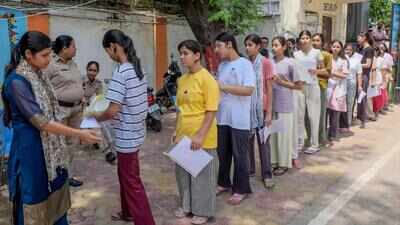
NEW DELHI: As concern grows over student stress, suicides in coaching hubs, dummy schools and safety lapses at private institutes, the Centre is weighing the possibility of both a national law to regulate the coaching sector and redesigning entrance exams to make private coaching less decisive in JEE, NEET-UG and CUET-UG.
The reason: a nine-member committee set up by the education ministry has concluded that dependence on coaching cannot be tackled only by inspecting institutes or penalising misleading advertisements. The problem, it found, is rooted as much in the design of entrance tests, weak confidence in board marks, dummy schooling and earlyage exam preparation as in the commercial practices of coaching centres. The proposals are part of a report being finalised by the committee, set up in June 2025 under higher education secretary Vineet Joshi to examine students’ dependence on coaching, spread of “dummy schools” and fairness of high-stakes entrance tests, said a source.
The final report is likely to be submitted to the govt in a couple of weeks with far-reaching recommendations. The draft’s approach is to regulate the industry and reduce its indispensability.It plans to achieve that through stronger schools, credible boards, entrance tests aligned more closely with classroom learning, and greater transparency in coaching claims. TOI learnt that based on the draft report, the committee recommended that the govt examine “a comprehensive regulatory framework for coaching centres — including consideration of legislative measures”.
Citing “the scale and systemic role of the coaching sector”, it calls for “uniform standards on transparency, accountability and student protection”. One of its sharpest proposals is to “mandate transparency — full disclosure of faculty qualifications and verified enrolment-versussuccess data, and curbs on misleading advertising”. According to an official, “The idea is to hit the topperclaim model in which institutes advertise ranks and selections without stating whether candidates were long-term classroom students, test-series users, scholarship students or only associated after results.
” The draft also recommends that the govt “examine limits on daily coaching hours for school-going students”, noting that “a two-tothree-hour cap was specifically proposed.” It suggests examining whether intensive coaching should be confined to the post-class XII stage, seeking “jurisdictional clarity between schools and coaching”, and using “real-time biometric attendance to address dummy schooling,” along with student-wellbeing safeguards.





 English (US) ·