

 2 days ago
8
2 days ago
8
ARTICLE AD BOX
4 min readChennaiFeb 19, 2026 07:19 AM IST
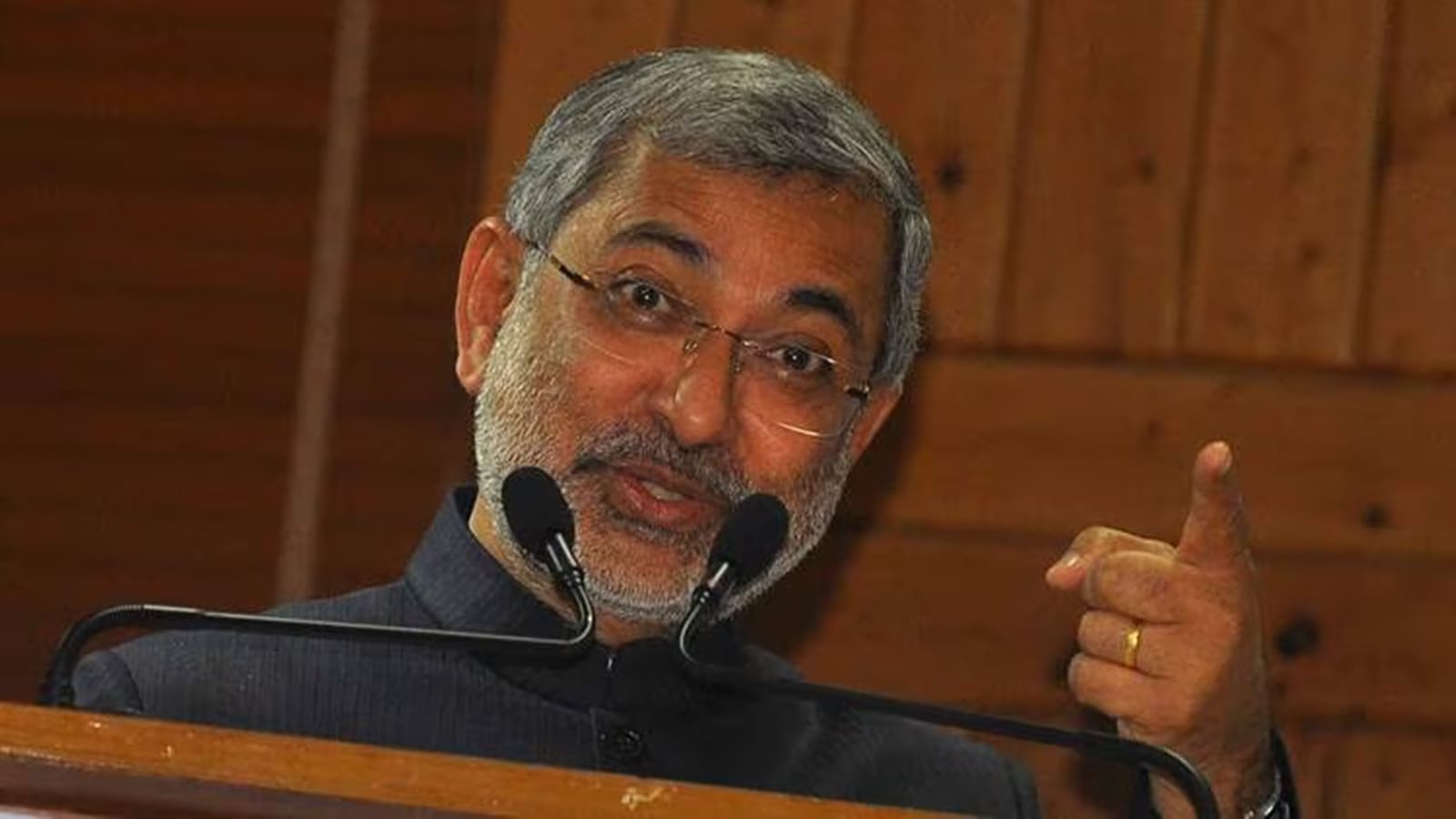 Part I of the report, chaired by Justice Kurian Joseph, a retired Supreme Court judge, was tabled in the Tamil Nadu Legislative Assembly on Wednesday by Chief Minister M K Stalin.
Calling for what it described as a “structural reset” of Indian federalism comparable in ambition to the economic reforms of 1991, a high-level committee appointed by the Tamil Nadu government has proposed wide-ranging constitutional amendments to recalibrate the balance of power between the Union and the states.
Part I of the report, chaired by Justice Kurian Joseph, a retired Supreme Court judge, was tabled in the Tamil Nadu Legislative Assembly on Wednesday by Chief Minister M K Stalin. The committee, constituted in April 2025, argues that India’s federal design, shaped by the anxieties of Partition and early nation-building, has hardened into a pattern of over-centralisation that no longer reflects the country’s political maturity.
“Federalism was never a borrowed theory or an ideological indulgence. It was a necessity,” the preface to the report states. Yet, it adds, centralisation now persists “as habit — an inherited reflex rather than a consciously renewed constitutional choice”.
The 387-page volume sets out eleven foundational arguments for decentralisation, including what it calls the “Liberty Argument”, the “Democracy Argument”, and the “Innovation Argument”, alongside critiques of what it terms the “Uniformity Fallacy” and the “Control Fallacy”. Together, the panel says, they form a “coherent and principled framework for rebalancing India’s federal order”.
Among its most consequential recommendations are changes to the Constitution’s amendment procedure. The committee proposes that virtually all constitutional amendments require ratification by not less than two-thirds of states representing two-thirds of India’s population. It also suggests codifying the Constitution’s “Basic Features” explicitly within Article 368 to prevent future dilution.
The report argues that Parliament’s power to alter state boundaries under Article 3 should be curbed, requiring state consent and, in some cases, referendums. It proposes a new Article 3A to bar the creation of new Union Territories and mandate periodic referendums for existing ones.
Language policy occupies a central place in the report’s critique. “India must abandon the ‘One Nation, One Language’ illusion,” it states. The committee recommends amending Article 343 to constitutionally entrench English as the permanent official language of the Union, deleting references to Hindi in Article 345, and omitting Article 347 altogether. It also calls for replacing the Special Officer for Linguistic Minorities with a National Language Commission.
Story continues below this ad
The office of the Governor, the panel says, has “increasingly departed from its intended role”. It recommends amending Article 155 to bind the President to appoint one of three names approved by the State Legislative Assembly, fixing a single non-renewable five-year term under Article 156, and codifying binding limits on gubernatorial discretion through a new “Instrument of Instructions”.
On fiscal federalism, the committee contends that the Goods and Services Tax (GST) regime has strained cooperative federalism. It proposes recalibrating voting structures within the GST Council and clarifying that the council’s recommendations are advisory, in line with the Supreme Court’s 2022 ruling in Mohit Minerals.
The report also urges extending the freeze on inter-state seat allocation in Lok Sabha until 2126 or until states’ fertility rates converge, separating Union and state election administration, moving education back to the State List, and restoring state control over medical education.
Indian federalism, the committee concludes, must be “right-sized” rather than weakened. “A federation that trusts its states… does not weaken sovereignty; it deepens democracy,” the preface says.
Story continues below this ad
Whether these recommendations will translate into national consensus remains to be seen. But in tabling the report, Tamil Nadu has signalled that the debate over the future shape of India’s Union is no longer a matter for academic seminars alone, but for legislative reckoning.

Arun Janardhanan is an experienced and authoritative Tamil Nadu correspondent for The Indian Express. Based in the state, his reporting combines ground-level access with long-form clarity, offering readers a nuanced understanding of South India’s political, judicial, and cultural life - work that reflects both depth of expertise and sustained authority. Expertise Geographic Focus: As Tamil Nadu Correspondent focused on politics, crime, faith and disputes, Janardhanan has been also reporting extensively on Sri Lanka, producing a decade-long body of work on its elections, governance, and the aftermath of the Easter Sunday bombings through detailed stories and interviews. Key Coverage Areas: State Politics and Governance: Close reporting on the DMK and AIADMK, the emergence of new political actors such as actor Vijay’s TVK, internal party churn, Centre–State tensions, and the role of the Governor. Legal and Judicial Affairs: Consistent coverage of the Madras High Court, including religion-linked disputes and cases involving state authority and civil liberties. Investigations: Deep-dive series on landmark cases and unresolved questions, including the Tirupati encounter and the Rajiv Gandhi assassination, alongside multiple investigative series from Tamil Nadu. Culture, Society, and Crisis: Reporting on cultural organisations, language debates, and disaster coverage—from cyclones to prolonged monsoon emergencies—anchored in on-the-ground detail. His reporting has been recognised with the Ramnath Goenka Award for Excellence in Journalism. Beyond journalism, Janardhanan is also a screenwriter; his Malayalam feature film Aarkkariyam was released in 2021. ... Read More
Stay updated with the latest - Click here to follow us on Instagram
© The Indian Express Pvt Ltd



 English (US) ·