

 1 hour ago
3
1 hour ago
3
ARTICLE AD BOX
“We are bringing in state participation in the central forum. In the UGC, AICTE, NCTE, there was no state participation. In the Adhishthan, states will play a role,” Pradhan said.
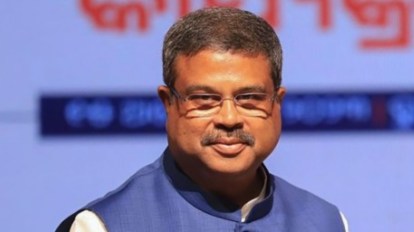 Pradhan ruled out any change in the name of the Bill, referred to it as a “bharatiya” name, and added that there is a need to get out of the “colonial mindset”.
STATES WILL have a role to play in the structure that the Viksit Bharat Shiksha Adhishthan Bill, 2025, envisages, while the existing system of the University Grants Commission (UGC), the All India Council for Technical Education (AICTE), and the National Council for Teacher Education (NCTE) did not involve state participation, Union Education Minister Dharmendra Pradhan said Tuesday.
Story continues below this ad
When the Bill, which seeks to set up an umbrella body for higher education with three councils for regulatory, standard-setting, and accreditation functions, along with the dissolution of the UGC, AICTE, and NCTE, was introduced in Lok Sabha on Monday, it came under fire from Opposition MPs who objected to “excessive centralisation of higher education”, and the nomenclature of the Bill.
“We are bringing in state participation in the central forum. In the UGC, AICTE, NCTE, there was no state participation. In the Adhishthan, states will play a role,” Pradhan said.
Story continues below this ad
The Bill provides for a commission, which will include two professors from state higher education institutions, and three councils. The regulatory council and standards council will each have one nominee of the states/UTs on a rotation basis, while the accreditation council will have two academicians from state higher education institutions.
“Earlier, there was an issue that in the UGC there is no role of the states. In entry 66, in the Union List, of the Constitution, the standard-setting role is of the Government of India. Yesterday, this matter was raised. That this is in the concurrent list and what will happen to state universities. State universities will remain as they are,” Pradhan said.
Story continues below this ad
On the Bill specifying that its provisions will apply to the institutes of national importance, which are autonomous institutes set up under an Act of Parliament, like the IITs, IIMs, and IISERs, Pradhan said that the basic autonomy of these institutes will continue. “But some data they will have to deposit with the regulatory regime, and they will participate in the standard of institutions that will be made. With their participation, a higher benchmark can be set. When such quality institutions are also part of a common framework…a higher benchmark will be set for other institutions,” he said.
On Tuesday, Pradhan moved a motion in Lok Sabha to refer the Bill to a House panel.
The Bill does not provide any grant-giving powers to the regulatory council, and mentions that disbursal of grants will be ensured through mechanisms devised by the Education Ministry. This makes it different from the UGC has the power to disburse grants to universities.
Story continues below this ad
On the funding aspect, Pradhan said the National Education Policy (NEP) recommended that a higher education grants council be established as a separate vertical of the commission to perform the funding function, but it has been left out for now. “We have left it out for now…and recognised that there are multiple sources of funding,” he said.
Sources in the Education Ministry said the feedback of the regulatory council on the institution’s performance will be a factor in deciding the funds to be distributed through the Ministry to the higher education institutions.
Pradhan ruled out any change in the name of the Bill, referred to it as a “bharatiya” name, and added that there is a need to get out of the “colonial mindset”. The NEP refers to an umbrella body of this sort as the Higher Education Commission of India (HECI), which is also what it was called when a Bill was drafted in 2018 to replace the UGC.



 English (US) ·